
On this countdown, we’ve covered two “Chrono” games — “Chrono Trigger” and “Chrono Cross” — two “Final Fantasy” games — “Final Fantasy 6” and “Final Fantasy 7” — the Nintendo-Squaresoft collaboration “Super Mario RPG” … and basically no other traditional role-playing games at all.
Every game in that list came from one company.
That might seem a little bonkers. And it is. In the entire realm of rpgs, we’ve so far centered our attention on one company.
Really?
Well, we will get to some others, I promise. But firstly, we have to make matters worse and go down the Squaresoft road once again to discuss “Final Fantasy Tactics.”
Why?
Easy:
- It’s insanely good.
- It’s really different from everything else we’ve talked about to date.
Deal with it, Square haters.

Final Fantasy Tactics at a glance:
Genre: Strategy RPG
Released: 1998
Platform: PlayStation
IGN’s 38th greatest game
Let’s address how it’s different right off the bat.
Firstly, it’s important to note that a traditional role-playing game leans into turn-based combat, where the player and their computer-controlled opponent literally take turns trying to wreck one another.
Now, part of the beauty of the games I listed above is that they each veer off that path, offering variance to that basic structure. But they still share a commonality in intent and design that got its start in Japan with the original “Dragon Quest” (“Dragon Warrior”) and “Final Fantasy,” among others.
They adhere to the spirit of the structure if not the details.
This style of game is appropriately dubbed the Japanese role-playing game, or “jrpg” for short.
Final Fantasy Tactics differs from that approach by introducing tactical and strategy elements such as troop customization and deployment across terrain, making it a (yep, you guessed it) “tactical” or “strategy” rpg.
Certainly not the first game of its type, preceded to market by games like “Fire Emblem,” “Nobunaga’s Ambition,” “Shining Force,” and “Ogre Battle,” Tactics nonetheless managed to shine brighter with its refined grid-based gameplay and ambitious story, both of which elevated the game into instant classic status.*
* In a different universe, you’d see games from any/all of these series listed in this countdown, as they truly paved the way for Tactics’ success. The proverbial coin flip here – as is so often the case – came up in favor of refinement instead of innovation. But I wanted to shout these games out, because they justifiably have their devotees, and we don’t want to ignore the innovation that preceded Tactics’ success.
Tactics was developed by a team at Squaresoft helmed by former Ogre Battle supervisor Yasumi Matsuno, who brought his unique flair for srpg development to the best company in the business for traditional jrpgs.
The result was a title that when it was released in 1997 married the best aspects of each type of game and received rave reviews from the critics.*
* I don’t think it hurt that the “brand” was stupidly strong at this point either, fresh off the wild success of Final Fantasy 7.
Battles take place on an isometric landscape which is divided up into a grid, like a chessboard. That’s appropriate, since your characters vary in class and ability in addition to their differences in stats like hit points, charge time, and so forth.
It is very much akin to having “knights,” “bishops,” and “rooks” in your party, each possessing individual strengths and weaknesses.
The depth of options goes well beyond chess, though, and is sort of ridiculous, as you have over 20 different jobs to choose from for each of your 24 roster slots, four to five of whom you can deploy in any given battle.
These fights generally are not a layup either, with each battle necessitating a different strategy to prevail.
One battle may require you to win under a certain condition (such as the death or survival of a particular character), while another will simply feature a group of brutes so challenging you’ll have to mix up your normal tactics to emerge with the victory.
The Squaresoft touches included a wonderful soundtrack and visual style surrounding a rich world called “Invalice,” which featured compelling characters and a fantastic story with political intrigue, war, and revenge.
It’s weighty, challenging stuff. And it has endured, thanks to the timelessness of the visual design and the story itself. The folks in charge were so taken with the story and setting, in fact, that this world has been revisited several times in subsequent Square video games, in games like “Vagrant Story” and “Final Fantasy XII.”
The environments and characters are interesting, and that’s important, because the game itself is very much uninviting in its depth and challenge.
It certainly wasn’t unusual for me when I first played the game to get into a battle which could turn into a test of willpower. Fighting a steadily losing battle over the course of an hour or so only to have to then turn around and try again … well, that’s not for everyone.
(You are very much motivated after losing an hour-long battle NOT to do that again.)
As I said, many of the other details that pull the gamer in (such as the story and setting) help a lot.
But the true beauty of a game like this is that it does eventually reward study and understanding. As you play, you learn, and as you win, you level up. Levelling up allows you to create more and more powerful team members.
This is done through basic levelling up at the character level, but also through the ability to leverage pretty basic jobs into more powerful ones.
A white mage is more powerful than a knight, for example, but a calculator or summoner … well, those bastards can do some real damage.
Truly, learning the jobs system in Tactics to create a nigh-invincible team of mutant overlords is an unbelievably outstanding experience in gaming.
I first gave Tactics a try in the early 00s when I was able to get the game on mega-sale. A friend of mine had sung its virtues a few years earlier, and I’d already found my way to both the Chrono and Final Fantasy games, and figured, “Why not?”
This was a good decision.
I was at times baffled by the thing, and at other times frustrated. But I persisted, and it became one of my favorite games in the process.
What’s the point of gaming? I mean, there’s a lot of meat on that bone to point to, not the least of which is general entertainment.
But isn’t the challenge part of the point?
The high cost of admission for a game like Final Fantasy Tactics, which demands an investment of time and thought, works for the game as well as against it.
I’d rather that any day of the week over a game that fails to challenge my skill, brainpower, or beliefs.
Final Fantasy Tactics does all three.
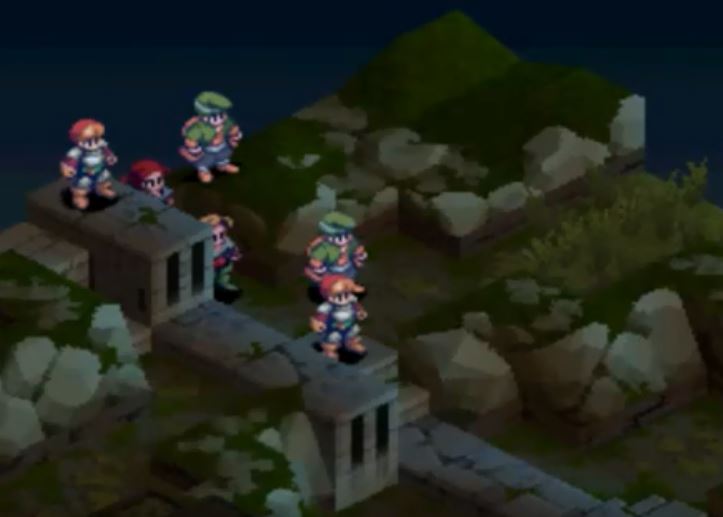
So what makes it worth playing today?
If you’re a fan of the Invalice storyline or even its generalized look, you pretty much owe it to yourself to check out the beginning steps right here.
Even better, Final Fantasy Tactics challenges you in all the best ways, making it probably the greatest strategy rpg of all time (or at least in the conversation).
Plus, it’s easy to get a hold of.
The original game was released for the PlayStation in Japan in 1997 and made the system’s “Greatest Hits” line. It was later ported to the PSP before gaining a super wide release last year, landing on basically every modern platform.
Those subsequent releases have some minor changes for people to contend with, but the overall look and feel of the game isn’t altered very much.
In short, you have a lot of freedom to pick your platform without having to worry about not playing an optimized version.
So, there’s your case. Final Fantasy Tactics represents a refinement of an entire genre to perhaps its best possible form. Its design, story, setting, and characters have influenced a number of games since. And you really don’t have an excuse to avoid it … other than an aversion to long-ass games.
On that final point, I will reiterate that Tactics rewards your investment. Sure, you get to see how the story ends (no small thing with a narrative this great), but more importantly, you get to see your motley crew of peasants and squires become god-killing badasses.
Cloud wishes he could become a maxed-out calculator.
Dave’s Score: 9/10
Check out the whole Retro Gaming Essentials list here!
How to play
- Original hardware (PlayStation)
- 2007 “The War of the Lions” release (PlayStation Portable)
- 2025 “The Invalice Chronicles” release (PlayStation 4, PlayStation 5, Nintendo Switch, Nintendo Switch 2, Xbox Series X/S, Windows)