
(Last updated July 15, 2026. Originally published Sept. 18, 2018.)
The ranking of my top NES games has traditionally been one of the more popular posts on this blog, so I thought I’d invest some time and expand it from 40 games to a full 100.
I do this out of love for the game(s). The original Nintendo Entertainment System deserves that level of love, to be honest. I’ve played a ton of games on this system, and these are games that merit a look from modern gamers. Bonus: many of the games are short enough to allow for almost any gamer to engage with them without much issue.
These, by and large, are not 200-hour commitments.
But also, this is a list of 100 good games.
Are they really the 100 best NES games of all time?
I mean, to me, sure.
I wanted to bold that part – this is one person’s ranking of 100 Nintendo games. Don’t take any of this too personally. If your favorite game didn’t make the ranking, I may still have some affection for it. This library, after all, is deeper than many people might think. And that’s even if you remove all Famicon games from consideration, as I did.
(Sorry, that means no “Earthbound Beginnings,” “Super Mario Lost Levels,” and so forth – just North American releases.)
This all was meant to be fun and to help expose younger gamers to some true bangers, originally inspired by my acquisition of an NES Classic (and yes, I still love that little guy, nearly ten years later).
Retro gaming is good, in all its forms.
You’ll see for each game a big number with a previous ranking listed – pretty self-explanatory that. The games are color-coded, with the pink/purple denoting new additions, the green being games that have been a part of the ranking for a bit, and the blue being games on the rise.
If any of that seems familiar, it’s purely by accident.
Anyhow, if you enjoy my best NES games ranking, feel free to check out some of my other rankings, including my “Retro Gaming Essentials,” where I wax poetic on some of my all-time favorites.
And here are some more video game rankings for specific systems:
Super NES | Genesis Mini | Turbografx-16 Mini
So without further delay, here are the Top 100 NES games of all time.
Honorable Mentions:
(These are games that are generally well thought of and often included in these sorts of lists. I haven’t played any of these enough to fairly evaluate them, but I wanted to shout them out here as games lots of people will go to bat for and they mostly seem like great fun to me.)
A Boy and his Blob, Baseball Stars, Dragon Warrior II-IV, Faxanadu, Gargoyle’s Quest II, Goonies II, Gremlins 2, The Guardian Legend, Gun-Nac, Jackal, Kickle Cubicle, Kid Niki, Kung Fu, Life Force (I’ve only played the PC Engine port), Little Samson (I don’t have a million dollars), Lode Runner, Princess Tomato in the Salad Kingdom, Shadowgate, Ufouria: THE SAGA, Willow

100. Double Dribble
This is my line-in-the-sand game. Anything worse than this probably has a dubious argument for being played nowadays (my list of possible exceptions are included in the honorable mention section above). “Double Dribble” itself barely deserves to be played, since it’s not very good. But I suppose historical merit does a fair bit of heavy lifting here, as it was just about the only noteworthy basketball game until “NBA Jam” rolled around, and it features these crazy cut scenes that are super dramatic and impressive (kind of like if “Ninja Gaiden” were a sports game). I think I can recommend people experience the game for the sheer novelty of all of the above, while also acknowledging, yes, this game is the final game listed in our countdown for a reason.
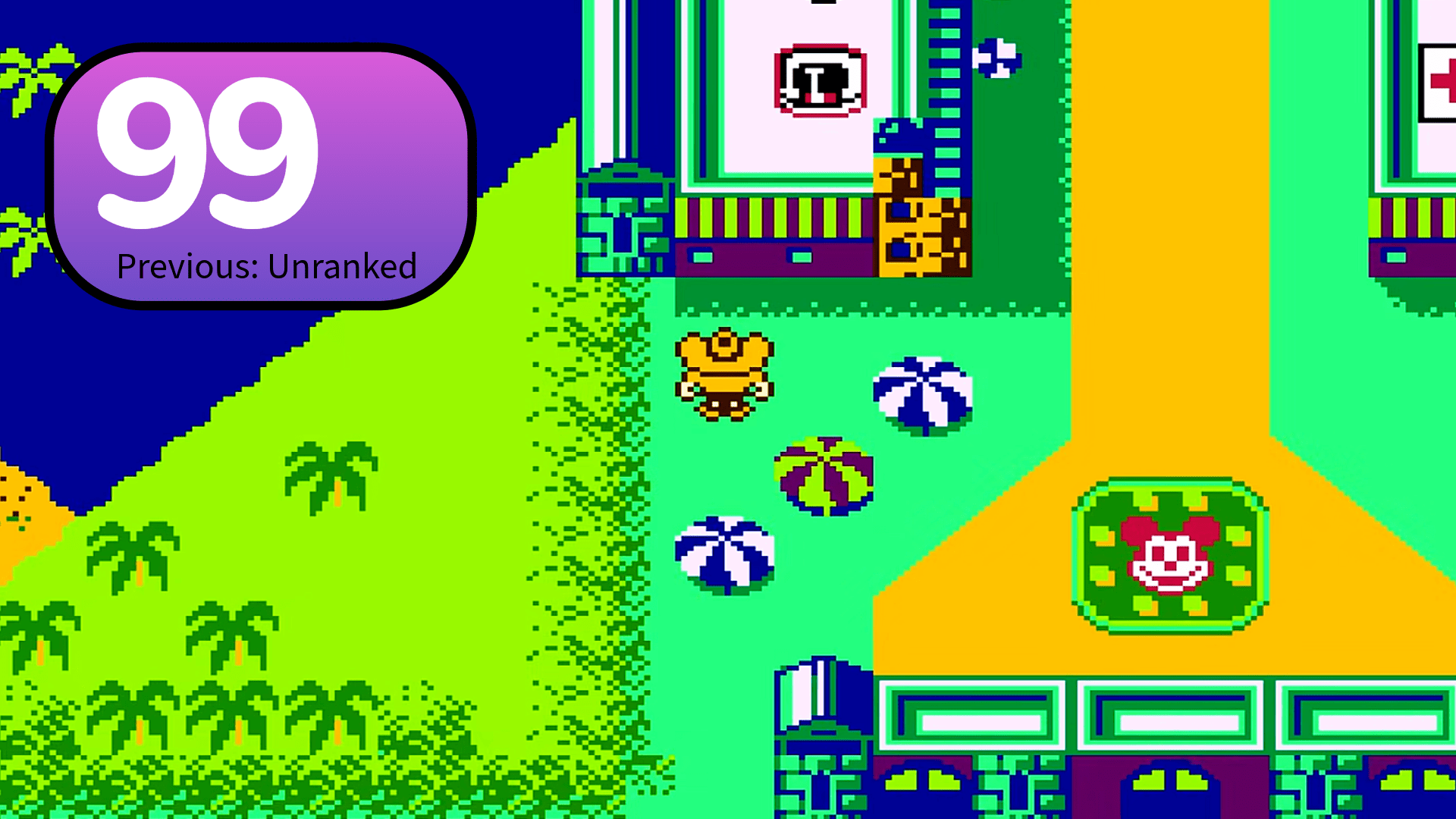
99. Adventures in Magic Kingdom
Certainly devised as a shameless marketing ploy to hype Disney’s theme parks, “Adventures in Magic Kingdom” is essentially a collection of mini-games, similar to more modern fare like “Mario Party” or “Warioware,” though naturally more limited. Instead of a by-the-numbers platformer, the gamer is presented with a variety of games … and okay, some of those mini-games are by-the-numbers platformers. In terms of variety, one of these games is a trivia game. Others are based around navigating various vehicles or “rides” to safety. It’s all executed in a frankly inconsistent manner, with some of the mini-games being enjoyable and others inspiring pain and misery. So, it ain’t great. But it’s certainly weird. And weird goes a long way.
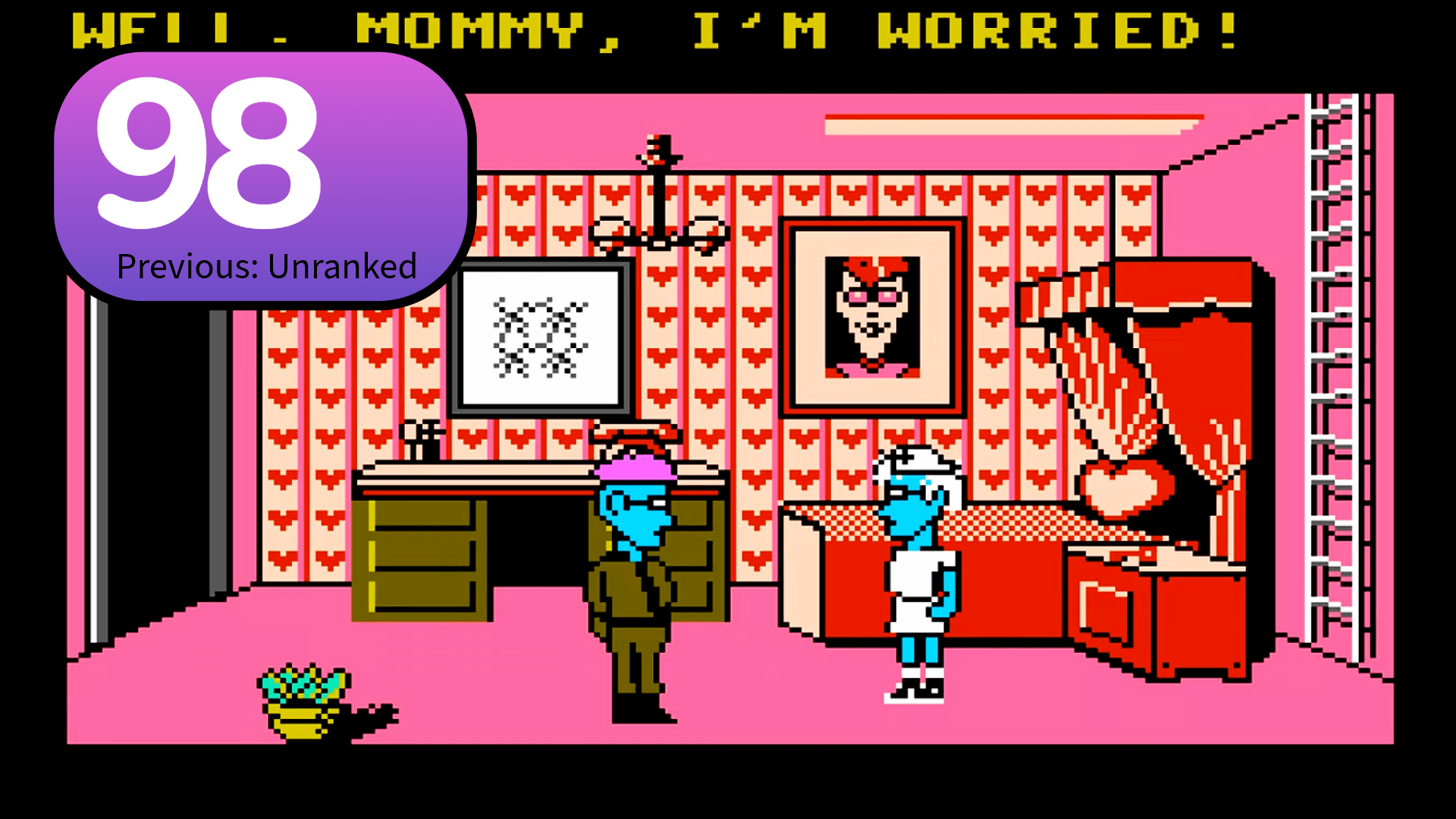
98. Maniac Mansion
I can list off a dozen LucasArts games off the top of my head I’d rather engage with than “Maniac Mansion,” which is less about the quality of the game at its core and more about the fact they tried to do a point-and-click on the NES to begin with. Trying to move an on-screen pointer around just doesn’t work super well with a standard d-pad controller. Yet the sharp wit, enjoyable mystery elements, and creative game mechanics from your usual LucasArts point-and-clicks (e.g. Monkey Island, Zak McKrakin) are still here. So, I’ll include the game as an important piece of NES history whilst also acknowledging that actually trying to play it today might drive you somewhat insane.
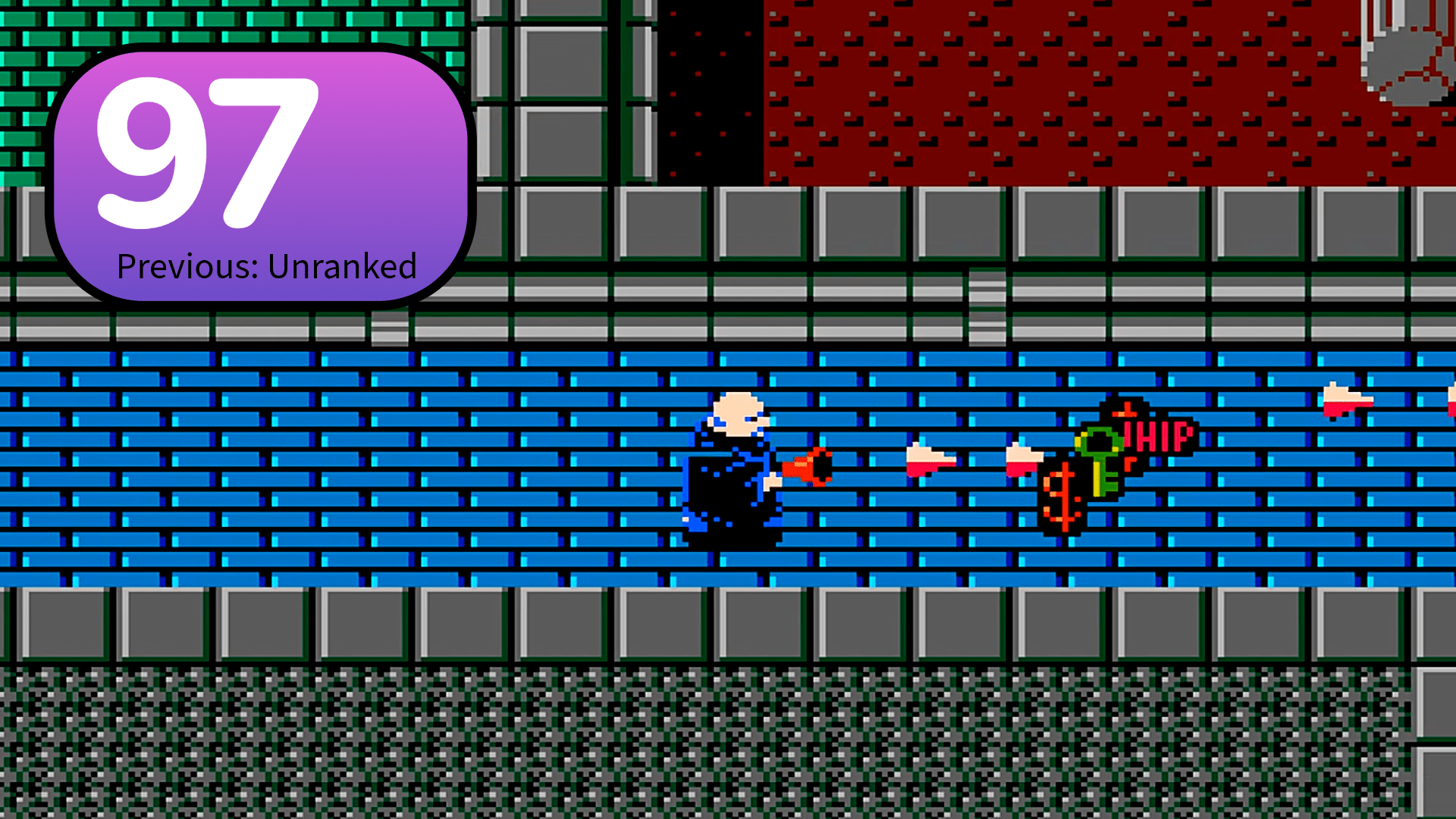
97. Fester’s Quest
A brutally difficult experience, notorious in gaming circles for being “NES hard,” I was always more struck by the choice of the licensing for “Fester’s Quest,” which resuscitated “The Addams Family” property a full two years before the movie with Raul Julia and Anjelica Huston hit theaters. That oddity alone makes the game compelling, and I like it being an overhead shooter in the same realm as something like “Zombies Ate My Neighbors,” a decision that ups the frenetic energy of the story while also allowing the weirdness and color to shine through. I think a little balancing/tweaking might have made this game into a true classic. As currently constructed, it just sneaks into the ranking.
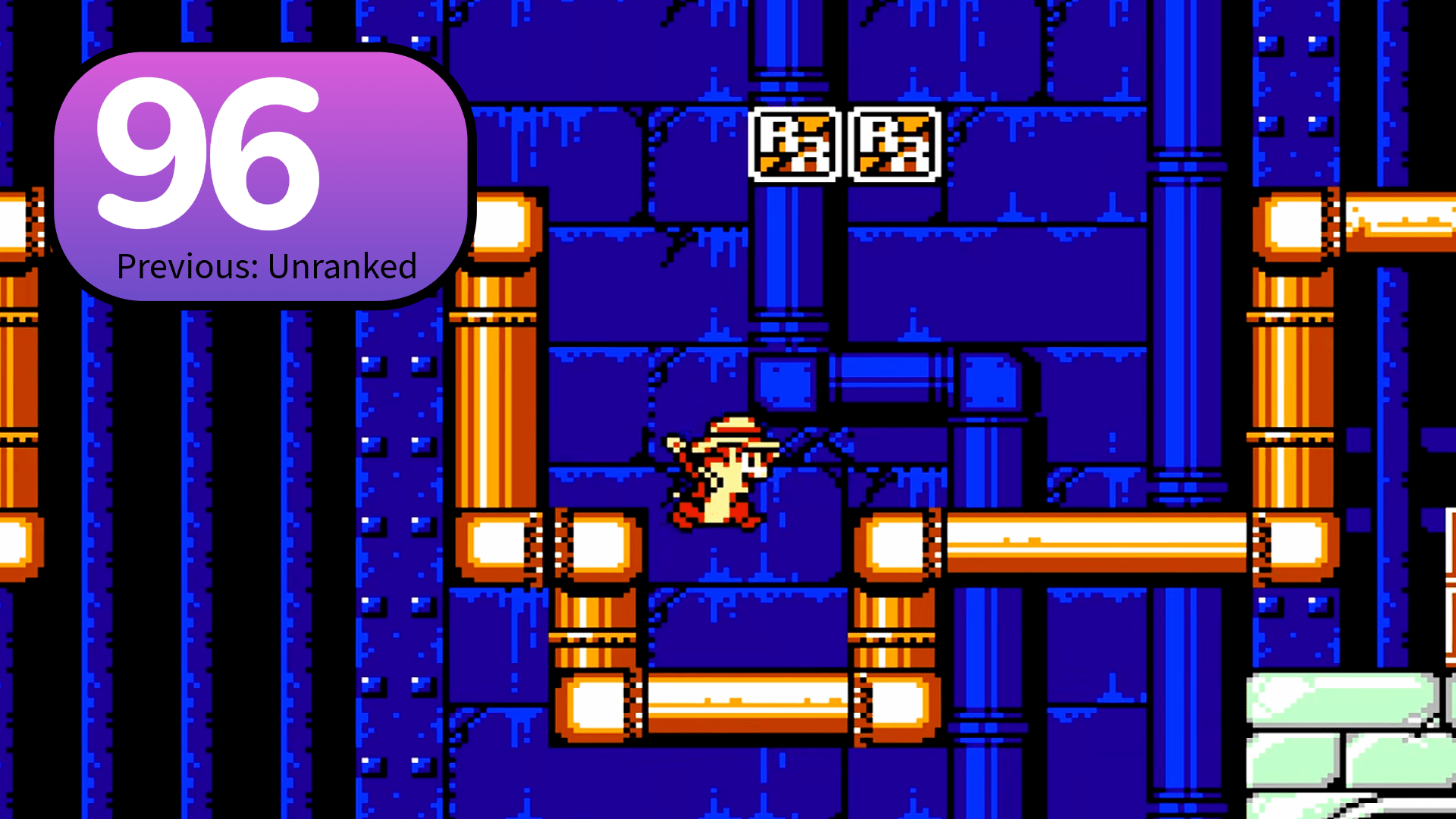
96. Chip ‘n Dale Rescue Rangers 2
Crafting a sequel to one of the NES’s best two-player games with that winning combo of Capcom and Disney would seem to be a bit of a no-brainer, but sadly this game falls short of its predecessor’s lofty standards. I wouldn’t call it an actual failure – otherwise it wouldn’t be included here – but it definitely gives off the impression of being a little half-baked. On the positive side, it continues the tradition from the first game of keeping things light, but big, bright, and chaotic. And ultimately, I’d rather play this than anything listed below it, so here it sits.
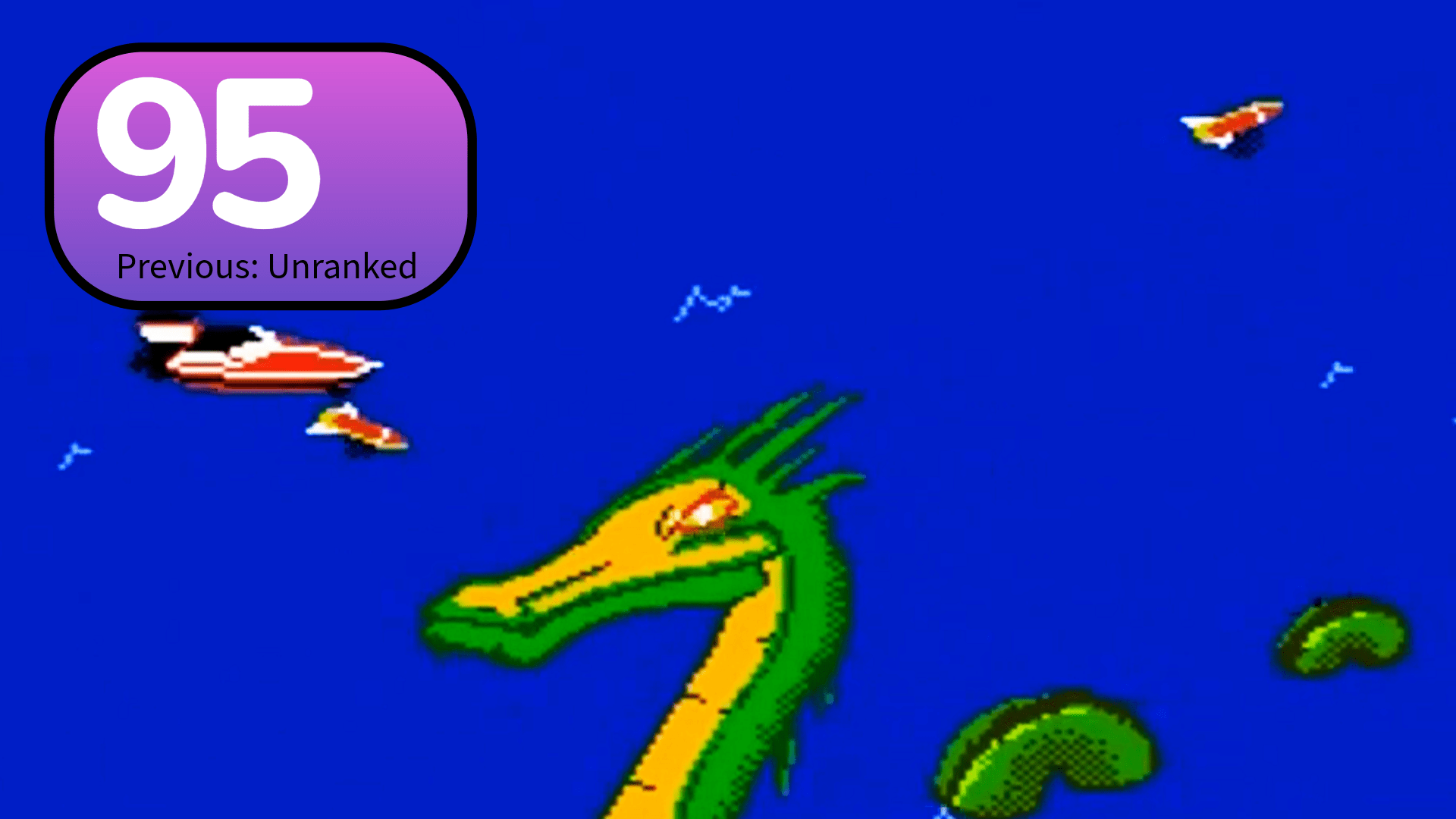
95. Cobra Triangle
I went in thinking this would be like “R.C. Pro-Am” in water, just a really straightforward racer with boats, but instead it got weird really fast. There’s basically a different objective on every level, and yeah, some are races, but other times you’re trying to hit challenging jumps, avoid icebergs, rescue people in peril, or fight a dang sea creature that looks like a budget Nessie. As I said, it got weird. But as we’ve noted already, weird is generally good, so that’s actually a point in the game’s favor. The whole affair is a little too challenging/sadistic to give it an overwhelmingly positive recommendation, but it’s a decent enough time (if you can deal with some frustration).
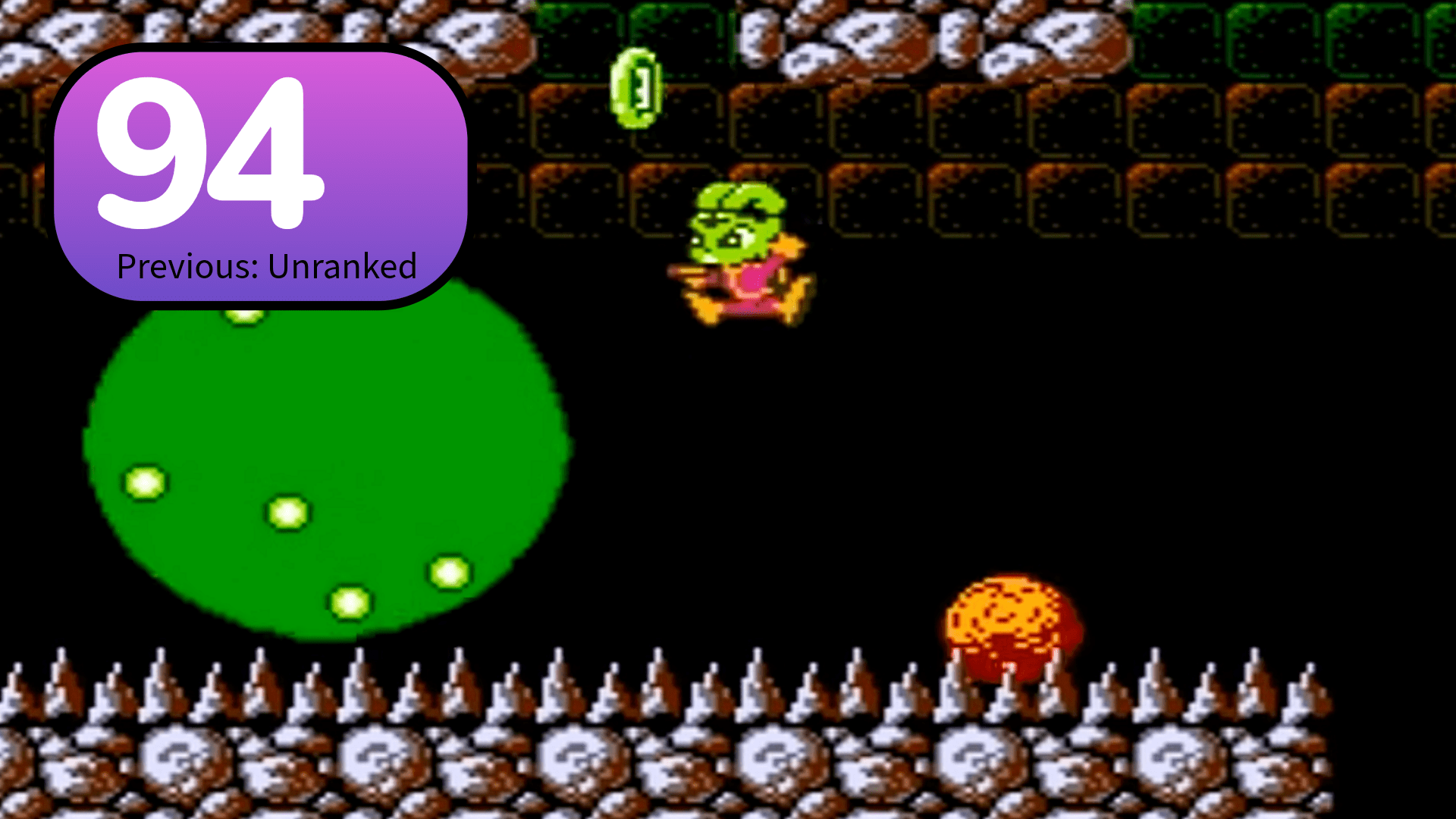
94. Bucky O’Hare
Having become something of a cult classic for a lot of gamers, I have to be honest with myself here: I never really clicked with this one. I mean, it’s got huge, gorgeous sprites, a creative world pulled from a comic book and cartoon series, and a solid take on the standard NES platformer, with stages that can be attacked in any order and a variety of characters to utilize throughout the adventure. Perhaps part of the issue here was the license didn’t do a ton for me to begin with, and as will be mentioned here many, many times, there are a LOT of platformers on the NES.
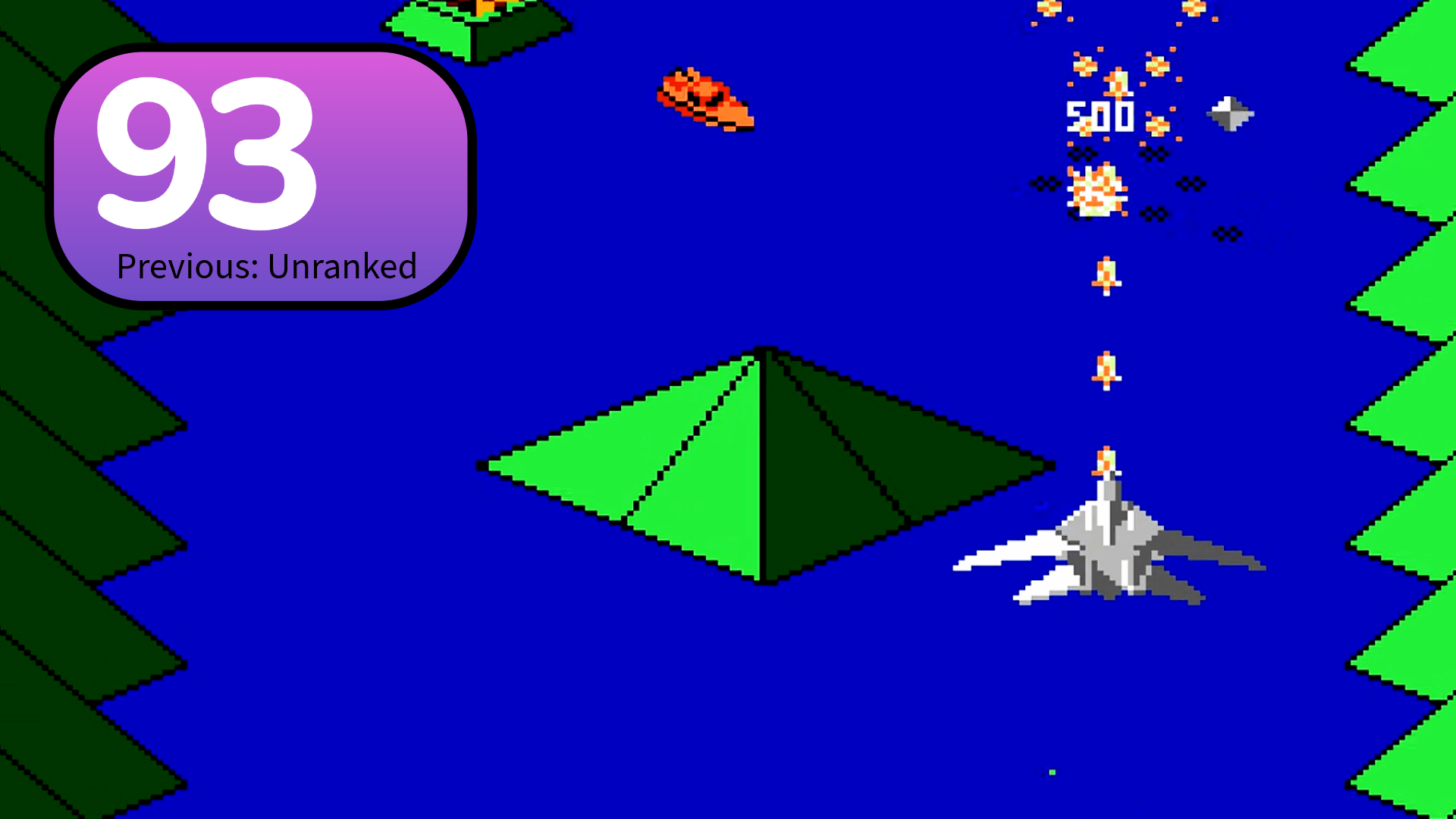
93. Captain Skyhawk
For gamers of a certain age, there was this very strong impulse to recreate the “After-Burner” experience at home. The trouble was, nothing could really come close to capturing the intensity of that arcade experience (including its own ports!). The NES had a “Top Gun” game tied into the movie, which for most people was a truly miserable experience of trying (and failing) to land your jet on an aircraft carrier. It also had “Captain Skyhawk,” which thankfully didn’t make the silly aircraft carrier mistake and instead offered a weird isometric perspective of a grid-like landscape for an alternative viewpoint. I’m still kind of mixed on that choice (it feels like you’re playing “Marble Madness” with a jet), but It did get the basics – e.g. “Blow up lots of stuff!” – right.
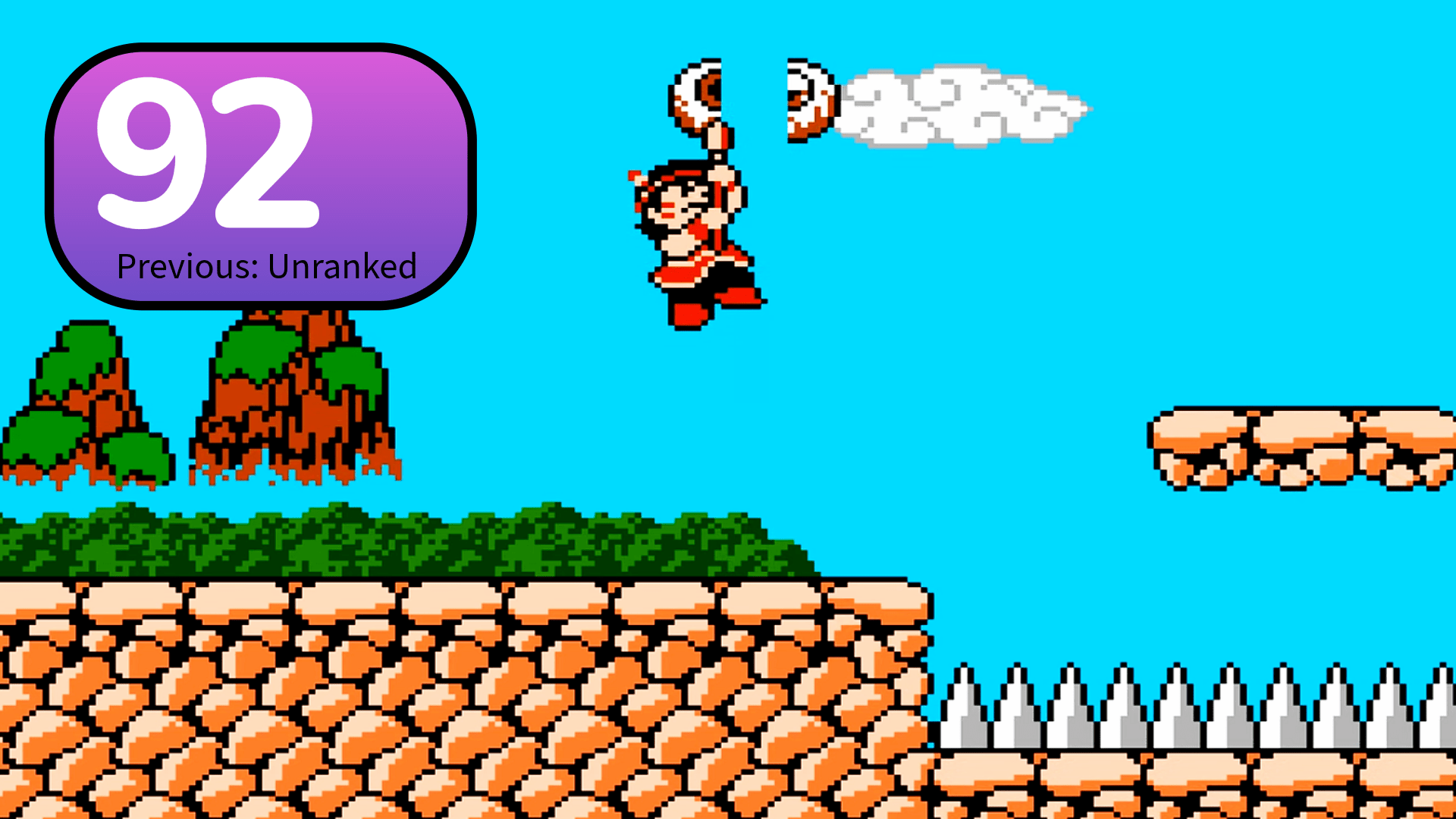
92. Whomp ‘Em
I don’t know if this is a particularly problematic title given all the stereotypes on display, but that wasn’t a disqualifier for “Punch-Out!!,” so we’ll roll with it here too. At the end of the day, some of this stuff is worth looking at with a critical eye. And the game itself is a fun (wait for it) … platformer. Yeah, I know. But what’s going on here is basically Mega Man light, with cool anime-style design, peppy music, free choice in picking levels, and cool upgrades for your character when you complete each level. I’m not going to call it a must-play or anything, but it definitely clears the bar for an NES Top 100.
91. Solar Jetman
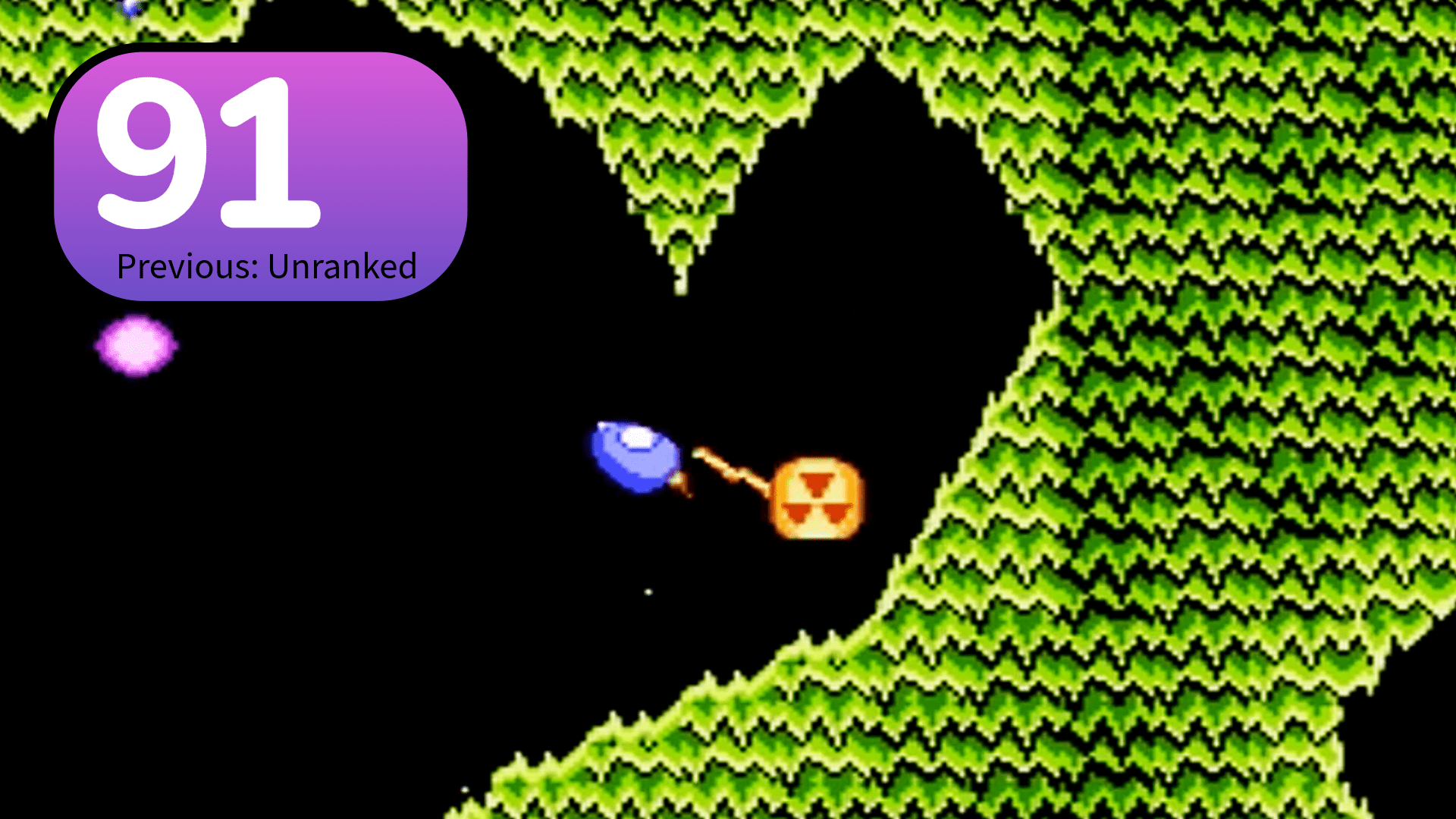
Blending some fairly typical shoot-em-up tropes with a divergent “fix your ship with missing parts” objective akin to something you’d experience in “ToeJam and Earl,” while also demanding the player navigate two distinct styles of play with a gravity-ridden environment like a juiced up “Lunar Landar,” “Solar Jetman” is certainly unique as NES games go. Indeed, I’ve not seen these particular elements blended together in quite this same way anywhere else. I’m not a true believer in the game – it can get a little frustrating and you’ve gotta have an itchy trigger finger to make the thrusters in your ship reach a baseline of bare functionality – but it deserves a play for being so strange an amalgamation.

90. Wario’s Woods
It starts off innocently enough, as this capable falling block puzzler that is charming and interesting. A couple of problems arose over a longer length of play, however. For one, and maybe most frustratingly, the theme music is kind of irritating. It’s just the one song, pasted over every level, and I don’t like it. The game also gets pretty evil relatively quickly, throwing trick blocks at you that can’t be disposed of in the usual way. Okay, that’s fine in principle … unless you’re stacking the field with a bunch of debris to start the level off and speeding the rate of drop to a pretty unreasonable level, and well shit, they did all of that. Ultimately, this is a game that is meant to be enjoyed for a short time, methinks, because it works on that level. Marathon sessions = less good.

89. Xevious
“Xevious” made its name in the arcades as a vertically-scrolling shooter that incorporated backgrounds that weren’t a simple starfield, but rather earth-based topography surrounding various military installations. This was a fairly big deal at the time as it hadn’t really been done before. The spawned enemies were also determined by your level of play (so, more difficult enemies if you were performing at a high level, and so forth) … another novel concept for its time. Of course, by the time this port to the NES rolled around, all of this was old news, but this is still a solid version of the original game. Just know going in that there’s no way to defeat it – it’s only concerned with high scores, not with giving you a satisfactory ending. Alas.
88. Paperboy
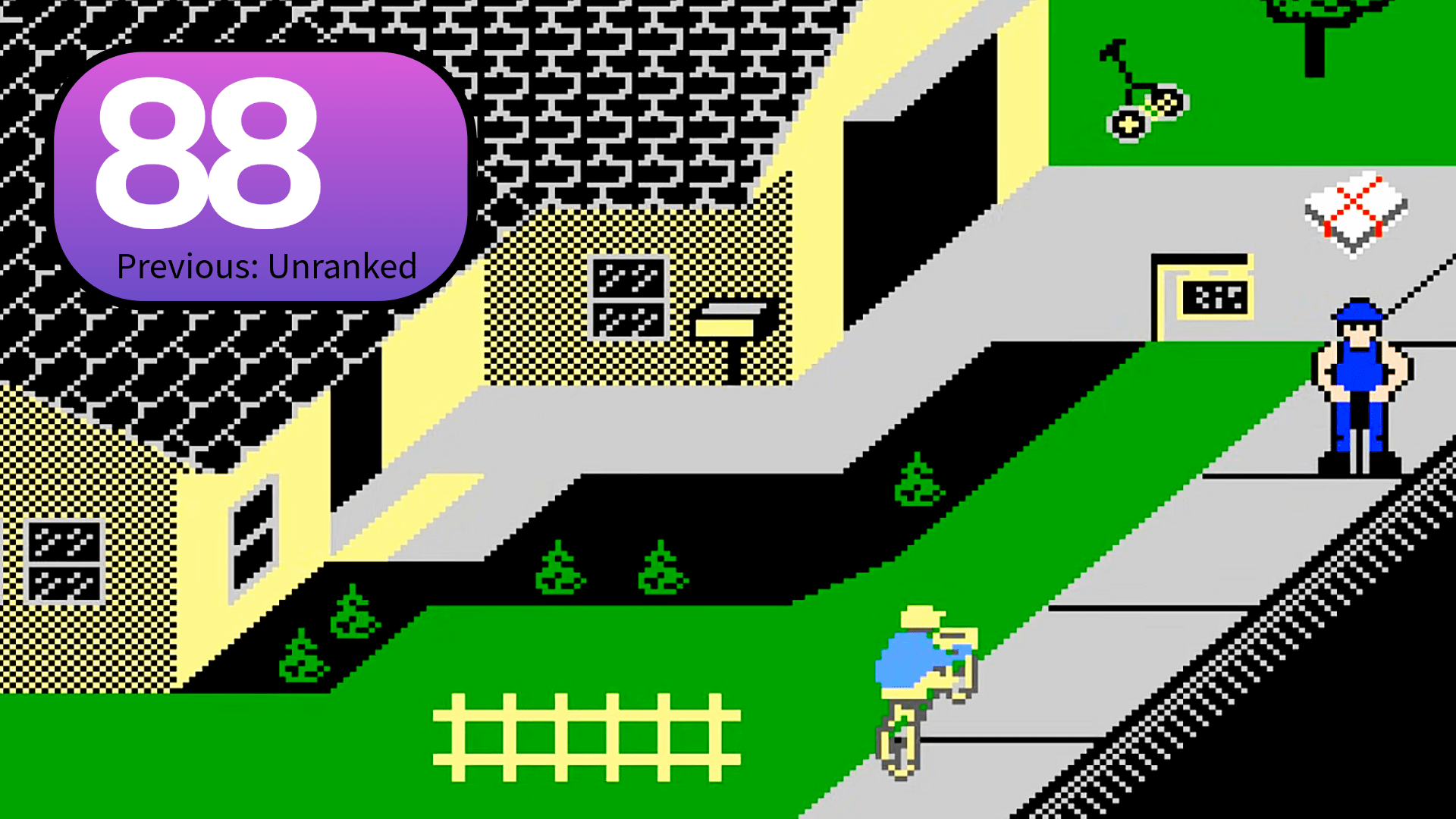
A pretty faithful port of the arcade original, “Paperboy” on NES is a wild time for those who’ve never experienced it. Basically, the game asks you to deliver papers via bicycle, then hurls every horrifying obstacle one can conceive at you to derail your objective. Cars, strollers, angry dogs, runaway lawnmowers, even tornadoes and the grim reaper are out to get you, and they can not only cause you to wipe out (and lose a life), but also interfere with your delivery attempts by distracting you or getting in the way. The game very quickly ramps up in difficulty quite a bit, to the point where it all collapses inward upon itself like a black hole, but the sheer wackiness of the whole affair definitely keeps it afloat for awhile.

87. Galaga
I think a person, if they were so inclined, could probably cobble together a “Top NES games” list using ports only, which would be silly and pretty useless, but I mention this to acknowledge that the system had a LOT of games that got started somewhere else. Evaluating the quality of the port itself in relation to its source material is half the battle in trying to decide whether to include it here. As an example, I would never in a million years include “Donkey Kong” on this list because it’s missing a whole farkin’ level. Like seriously, WTH, Nintendo? “Galaga,” by comparison, is a really solid version of the arcade classic. I don’t love said arcade classic to begin with (though it does remind me of childhood visits to Pizza Hut, which is a good thing). The concept was also a little dated by the time it migrated over to the NES in 1985, hence it not ranking higher on this list, but this IS a solid way to play Galaga.

86. Pinball
There aren’t a lot of frills here, to the point that any music is completely absent and the theming is bizarrely mismatched across a plain black background. The physics, always important in a video pinball game, are also a little off, leaving the ball more floaty than is appropriate. So why include it? Well, the game is still basically a good time at its core. The physics, though floaty, are consistent, and I frankly love the surprise that greets you after you hit a score of 100,000, as it mixes up the formula in such a way that freshens the experience up. “Pinball” is not especially important or excellent, but it lets you get into that trance-like state that pinball typically offers, and that’s enough.
85. The Flintstones: The Rescue of Dino & Hoppy
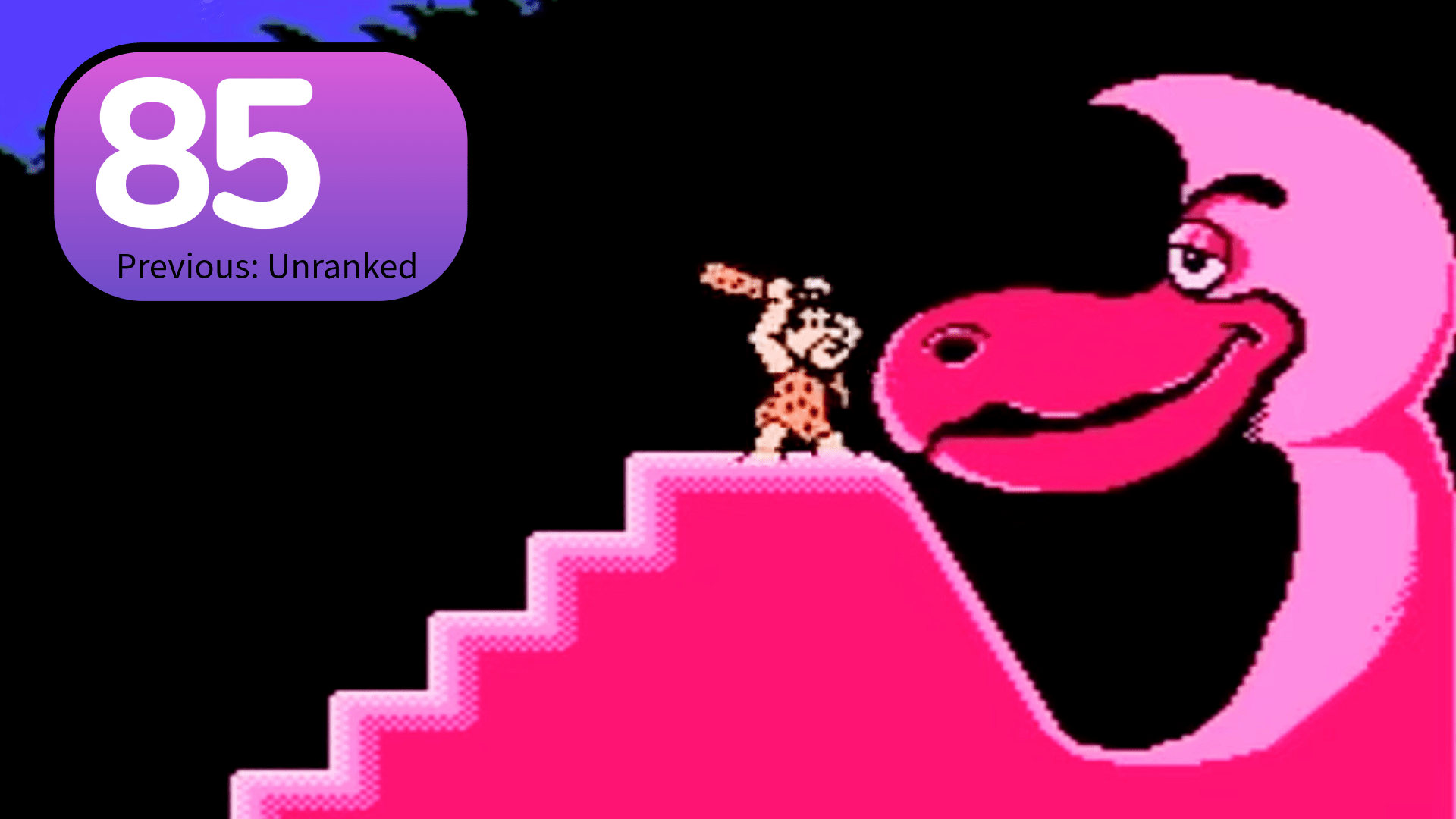
There were two Flintstones games on the NES, but I only ever played the first one. It’s a pretty by-the-book platformer, though it has a few points in its favor for sure. Fred’s clubbing dynamic is fairly unique as these games go, and it’s satisfying to use. There’s a fun mini-basketball game, and the cartoon-like visuals are also aces since this was a late-life release for the NES. On that end, this game has become pretty rare nowadays so the price has spiked. I don’t know that it’s worth seeking out within that context, but if you already have access to it (perhaps via other methods I won’t officially sanction), it should be worth a playthrough. I enjoyed it quite a lot as a rental back in the day and the game retains reasonable review scores today.
84. S.C.A.T.
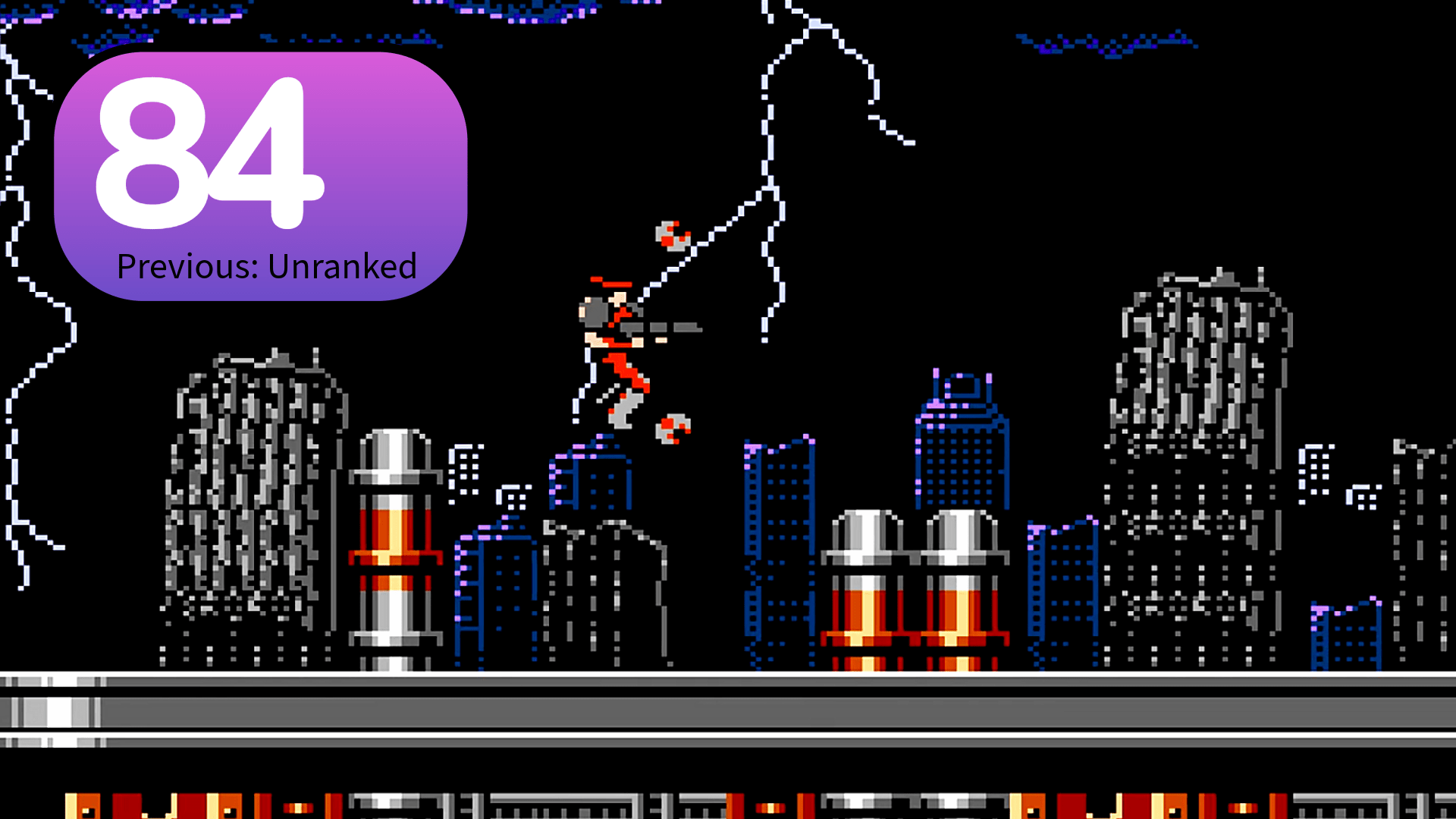
This is a post-apocalyptic shooter where you control a person who’s sort of jetpacking around instead of flying a spaceship, which differs from most shooters at the outset. The other gimmick in “S.C.A.T.” is you can point yourself either left or right to shoot that direction, an unusual offering in a side-scrolling shoot-em-up. Here it actually works pretty well, thanks to a rotating secondary weapon that will blow crap up that tries to sneak up on you from behind, above, or what have you. It’s a short game, but I almost think the brevity works in its favor, since there’s no time to get irritated with the unusual setup. It still feels relatively novel by the time you’ve rolled credits. Solid.
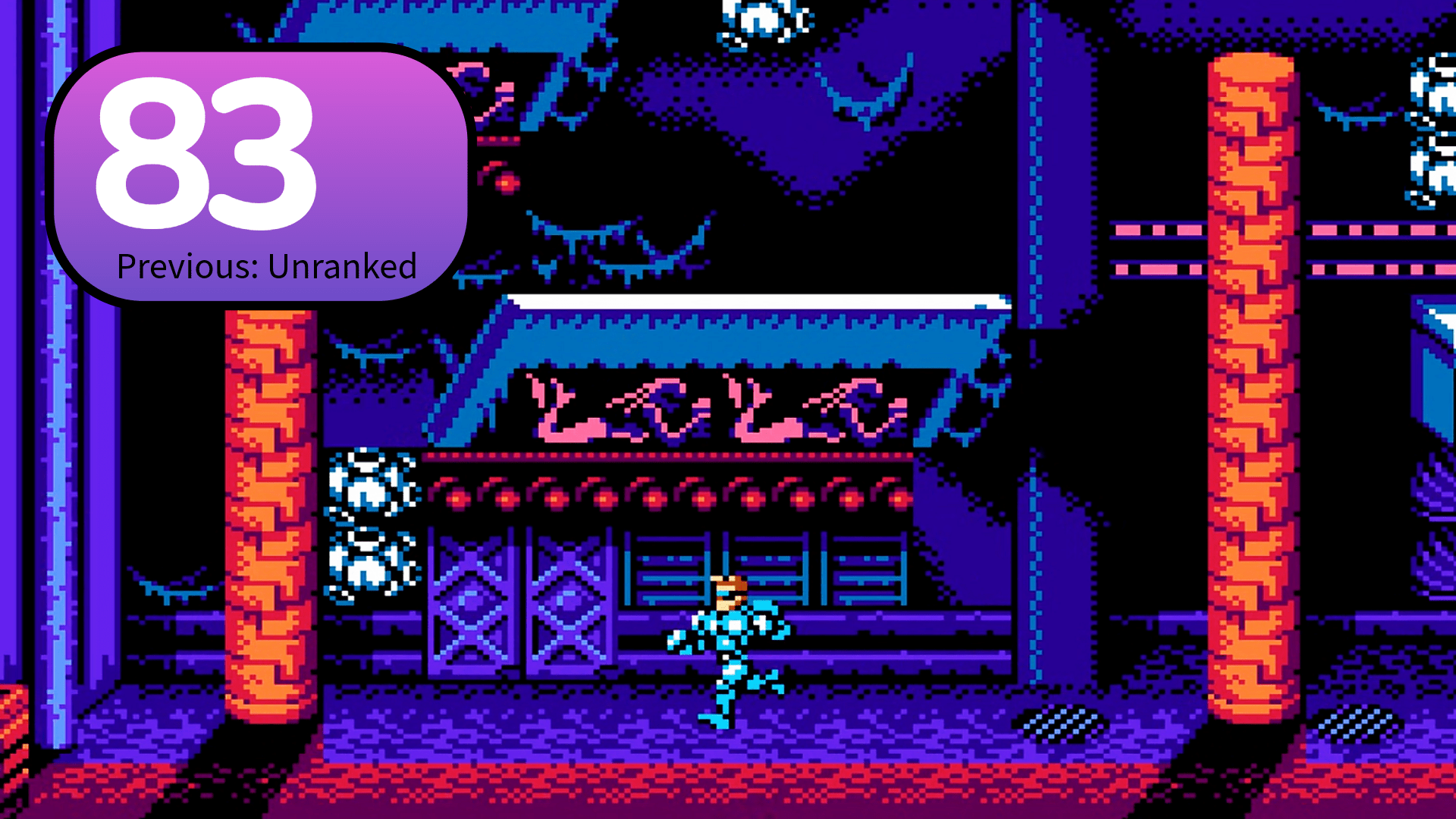
83. Street Fighter 2010: The Final Fight
It gives off the impression of being yet another so-so platformer, and the licensing/theming/title here don’t do it any favors, as one goes in thinking it will be a shameless cashgrab by Capcom. But credit where credit is due: this game is really unusual. The objective on most stages is to defeat a specific foe(s), rather than try to reach an arbitrary physical location, immediately making this game stand out from other platformers. Even better is the designers’ dedication to keeping variety in play from stage to stage, with the objectives, visuals, and music offering an impressive array for the senses. The game is a little less essential or important than some of its Capcom brethren like Mega Man or Bionic Commando, and ultimately it is still just “another platformer” … but this bugger is way more creative than you’d expect.

82. Yoshi
Another “falling object” puzzler to spawn from the loins of “Tetris,” “Yoshi” is a decent enough time and capable of holding interest for small intervals of time, which is in keeping with the style of game it is. It also has the benefit of not annoying the piss out of me like other falling object puzzle games (*cough* Wario’s Woods *cough*). The gimmick here is you try to match different characters who tumble from the sky to others that have collected along the ground, which you do by swapping the columns of characters with the adjacent ones (instead of moving the falling critters themselves). There’s also this dynamic of trying to get all the characters inserted between two halves of a Yoshi eggshell, which smushes the whole lot together and eats it all up. I dunno, I’m probably not doing it justice. It’s another Tetris clone, and it’s pretty fun. That’s really what you need to know.
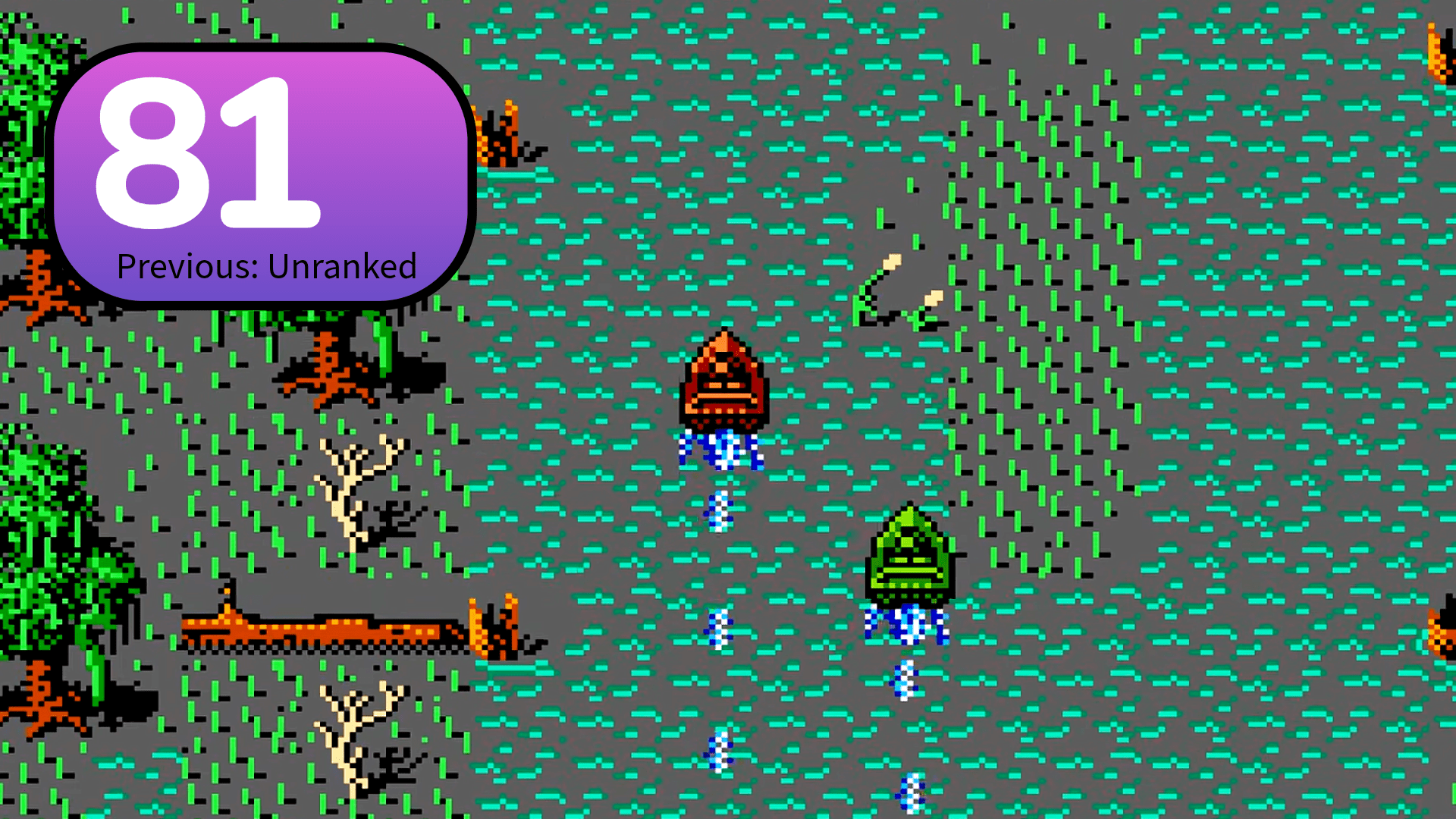
81. Eliminator Boat Duel
It seems like a pretty simple racing game on the surface, and “Eliminator Boat Duel” does lean into some pretty standard tropes (such as the need to upgrade your vehicle through winning earnings via won races), but it’s unique in its decision to intentionally swap between two different viewpoints … in the middle of the actual races. It’s kind of wild, but it works, since the developers did a good job with each mode: an overhead “Micro Machines” style viewpoint and an over-the-shoulder angle like you’d see in “Rad Racer” or something … except, you know, it’s boats. The game also does a good job of varying the environments and has a bunch of weirdos talking trash on you between races which adds a lot of color to the proceedings. It’s a short game, but an enjoyable one.
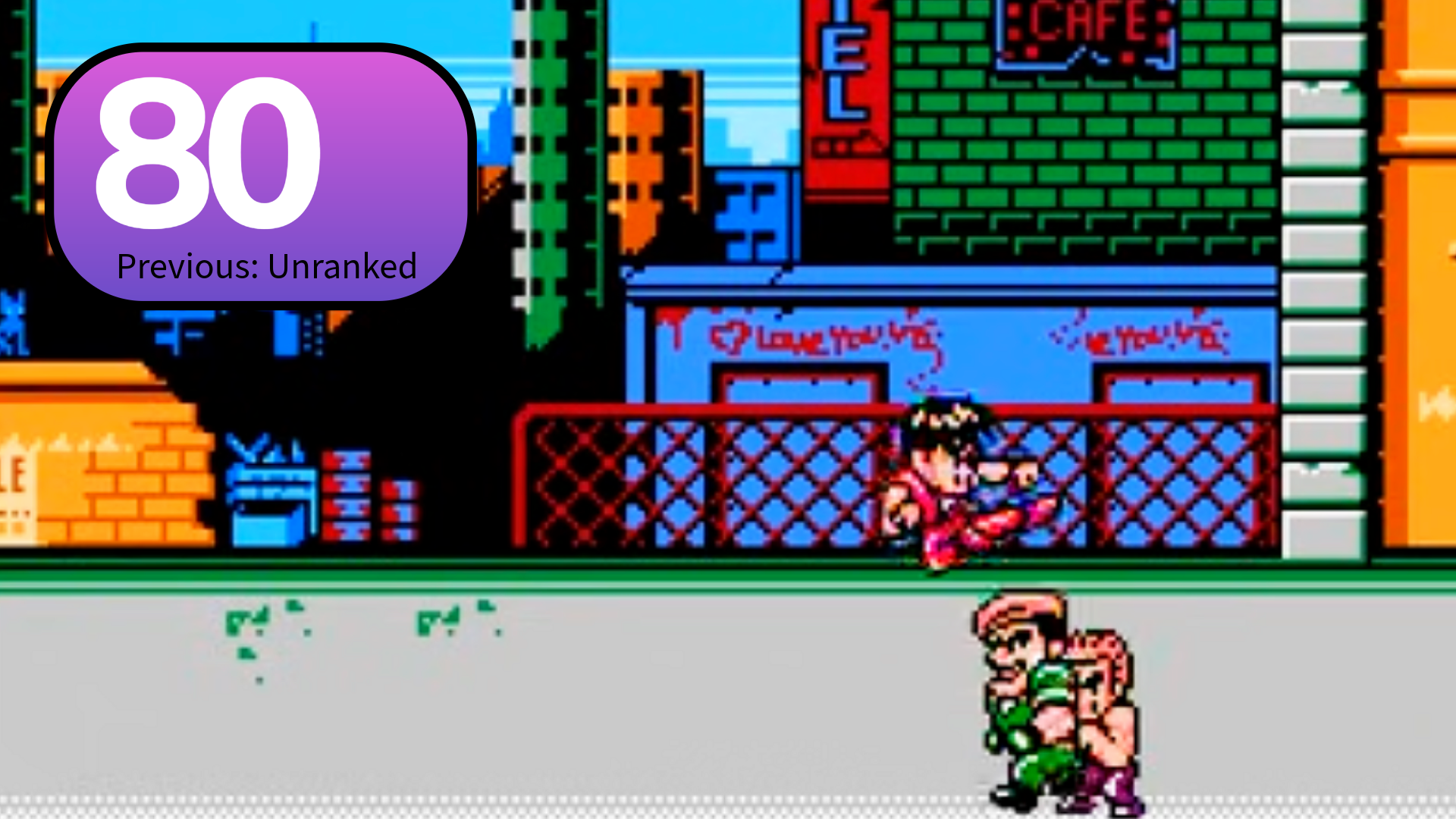
80. Mighty Final Fight
Brawlers on the NES are indeed a mixed bag, as the big, bold visuals and rocking soundtrack are half the battle in trying to craft a winning brawler, and the NES ain’t the best machine for making basically any of that work. One of the better efforts was Capcom’s attempt to scale down its hit arcade title “Final Fight” in a way that made sense for the weaker hardware. They dumbed down some of the attacks in favor of a system that functioned well while also eschewing the huge sprites of the arcade for a more cartoonish style that would display reasonably well. It’s a smart game because of these smart decisions, and as a result, though it’s simple, it’s fun to play.
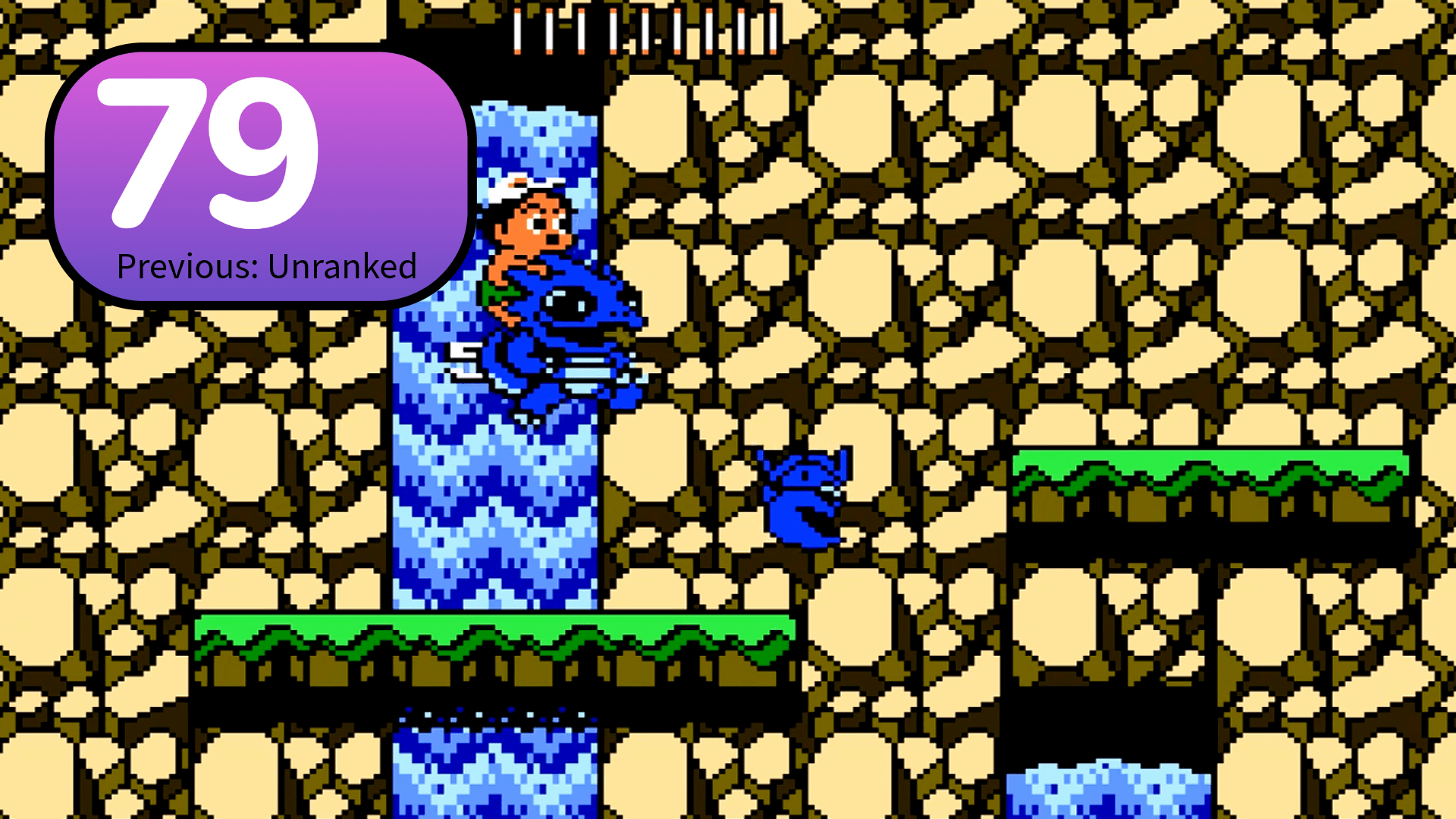
79. Adventure Island 3
I’m not going to say I remember the finer details of this game, which is one I rented back in the day and seemed awfully similar to “Adventure Island II.” Indeed, looking back at pictures and gameplay footage today, it does look a lot like its predecessor. I liked both games at the time, but Part 2 made the bigger impression on me in real time (probably because it was first), so it gets higher placement on this list. Both are better than the original game, for one primary reason: Dinosaurs. Yes, you get dinosaurs here, just like you do in the second game, so that gives the game a leg up on the competition. Give our hero a dinosaur to ride, and you’re A-okay in my book. Sorry, I don’t make the rules. Actually, I do. Whatever. Play games with rideable dinosaurs.
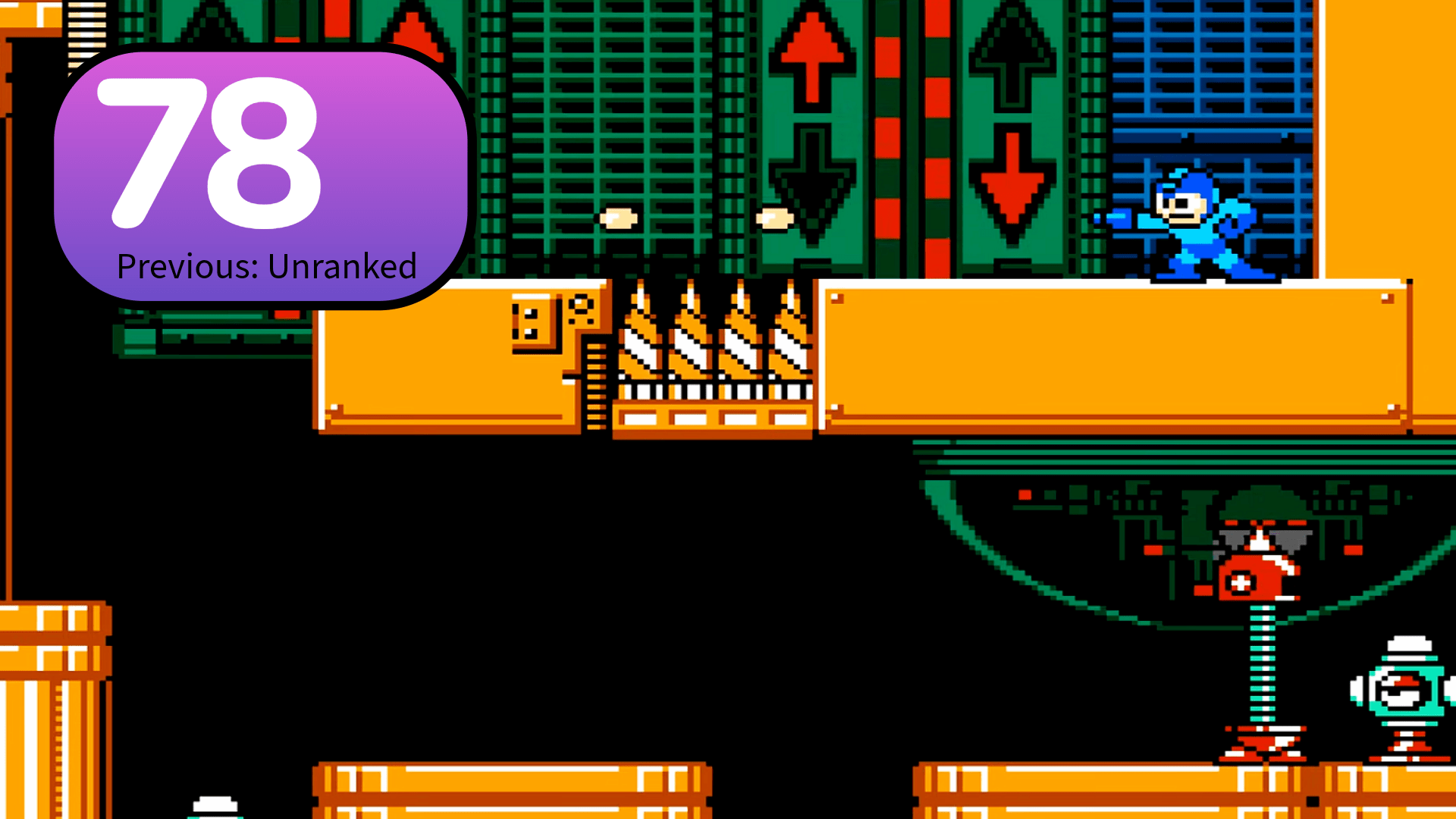
78. Mega Man 5
I don’t think this is a poor game, and certainly by making this list you can infer I still recommend it. But one of the “Mega Man” games had to come in last, and this one is it for me. The redundancy is of course a major problem the further into the series you go, but I also find this entry a little uninspired with some of its art direction, which feels somewhat muted compared to its brethren. Even some of its best gimmicks (like the gravity switching) are pulled from other games. I could have used more brightness in general, and the game almost comes off as less colorful than maybe a Mega Man game should be. It’s still quite good and worth a play, but it comes in last for me.

77. Mega Man 6
There’s a small uptick in vibrancy in “Mega Man 6” that gives it the slightest of nods from me over “Mega Man 5.” The colors are a little brighter, the robot masters and stages are slightly more creative, and the music slaps just a smidge harder. It’s not enough to totally overcome the depressing “sameness” that the series had succumbed to by this point, but it’s got just a tiny bit more lagniappe around the edges – such as the ancillary power-ups not tied to the bosses – that give the game more of a feeling of “the developers still gave a damn.”
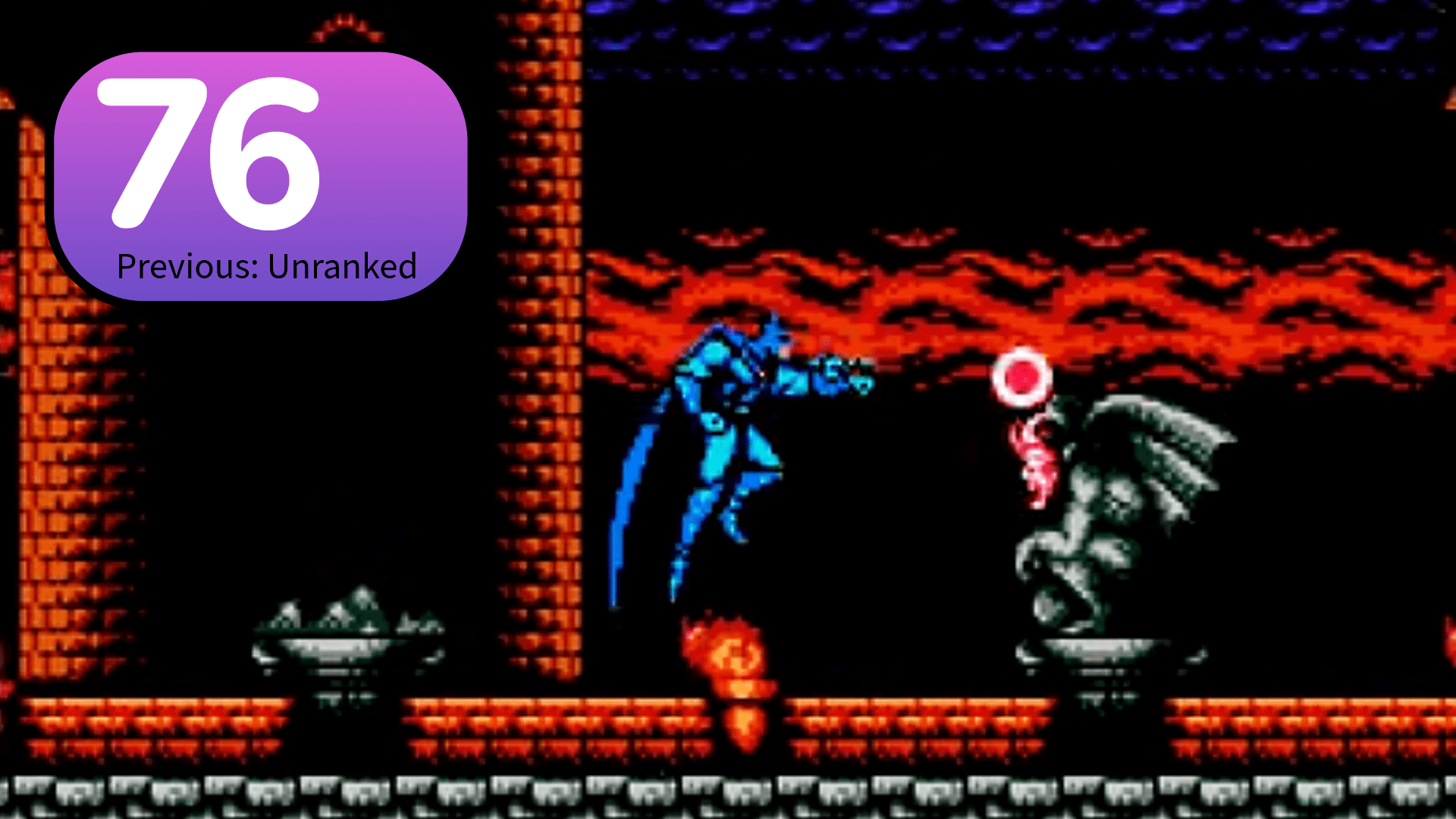
76. Batman: Return of the Joker
A sequel to the original NES Batman game, “Return of the Joker” features much bigger sprites, more weaponry designed to be utilized at longer ranges (making the game into more of a run ‘n gun), and impressive backgrounds to go along with other nice visual touches. Also, since it’s an original story, it doesn’t have the problem of deviating from the source material that the first game does. On the downside, it’s a little too easy, and making Batman into a guy who shoots everyone rather than a melee fighter makes the affair seem a little weird/mismatched. I think that’s the ultimate takeaway: it’s pretty weird. I liked it (I’ve previously owned it!), but I like other Batman games even more.

75. Adventures of Lolo
“Adventures of Lolo” was a platform puzzler from Kirby creator Hal Laboratories you saw all over the place back in the day, in advertisements, at the rental store, what have you, and despite it gaining a level of popularity that inspired a pair of North America sequels (This is actually selling the series short – this series ran 10 deep in Japan!), I personally never jumped in until recently. I think the rudimentary design of the main character – a blue dot with a pair of eyes and feet – might have scared me off some. But I’m happy to report it’s a clever and enjoyable game, demanding you use your brains to advance past the variety of challenges and puzzles it throws at you.
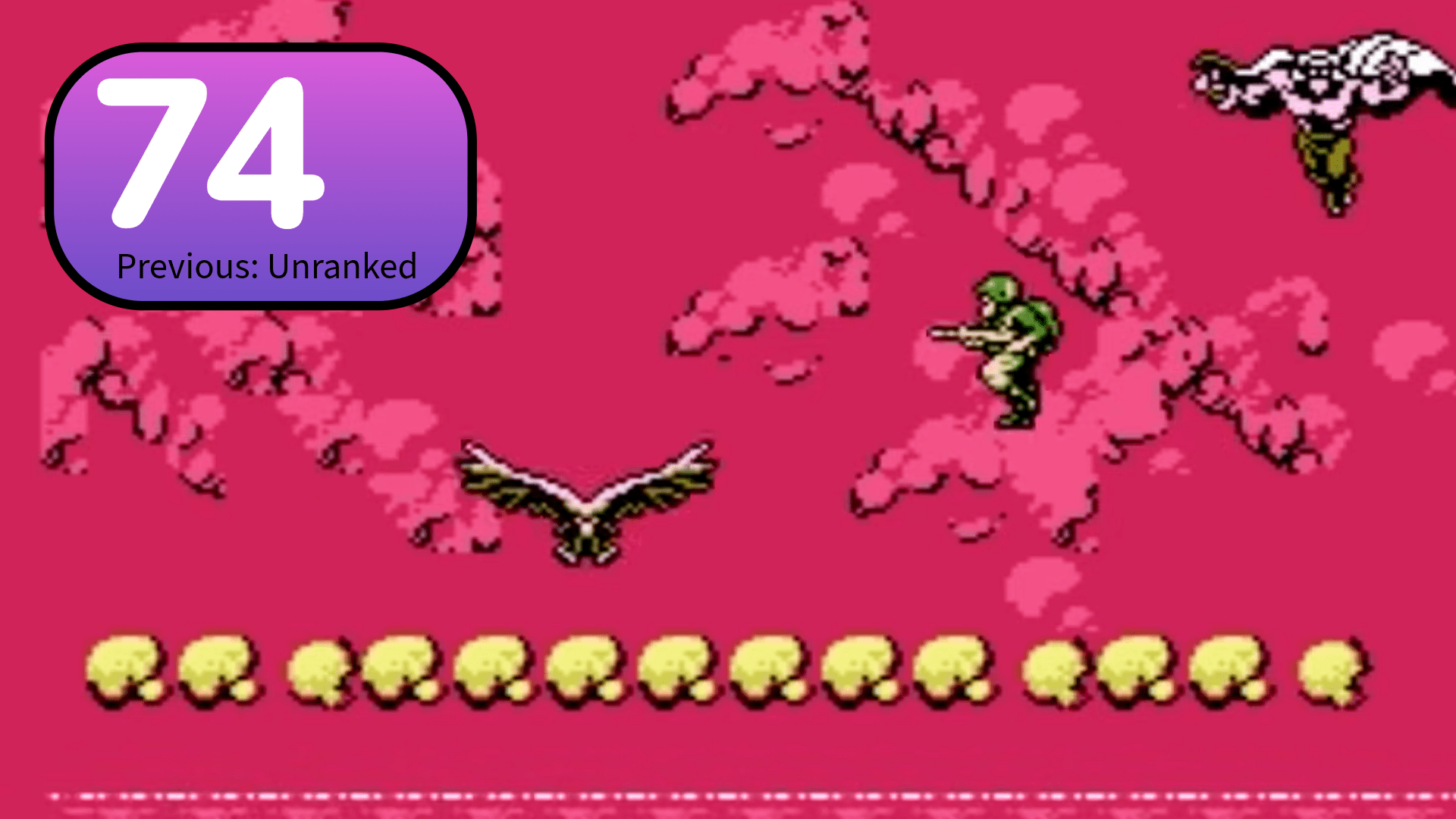
74. G.I. Joe: A Real American Hero
A good way to give gamers an experience they won’t get bored with is to provide different styles of gameplay throughout your adventure. One of the ways many classic franchises (e.g. Mario, Mega Man, Ninja Gaiden, Contra) have achieved this is through the utilization of power-ups, which provide a boost in abilities. Other games – like “Tiny Toon Adventures,” Castlevania III,” or “Super Mario Bros. 2” – attempt to lean into actual character swapping – the ability to choose multiple people with different strengths – to achieve this sense of variety. “G.I. Joe” does BOTH of those things, mixing power-ups with character selection to provide what is ultimately a fairly invigorating time. It’s got some flaws for sure, but you won’t get bored, and that’s a win.
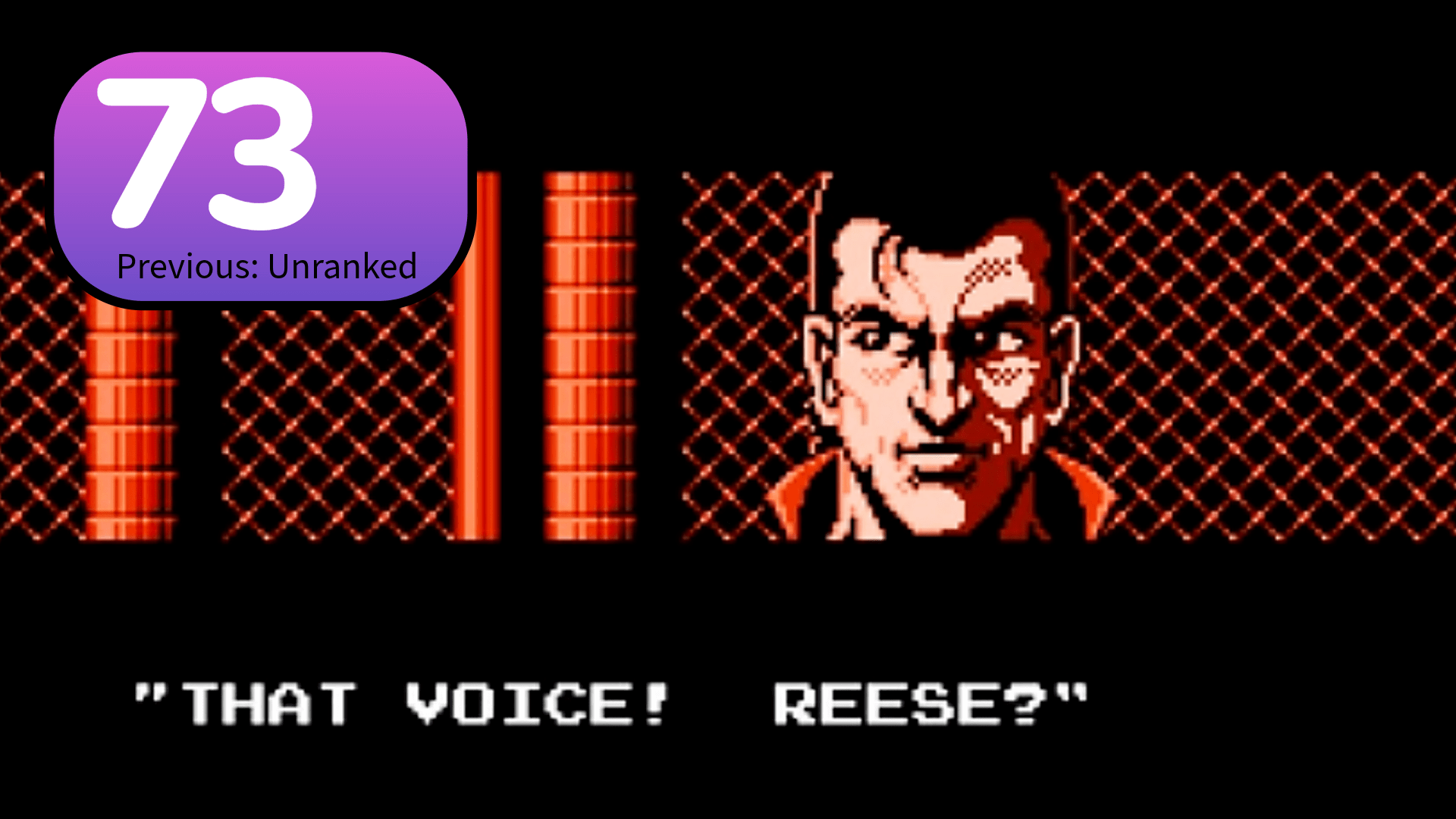
73. Vice: Project Doom
Another NES platformer, “Vice: Project Doom” tries to stand out from the pack by cramming in every gimmick it can. You’ve got an over-the-top plot involving mechs and clones and general absurdity. You’ve got cinematics in the style of “Ninja Gaiden” with a bright, colorful style. You’ve got driving stages with a car that blows things up, and shooting stages where you gun down ninjas. Pretty much the only thing it doesn’t do is give you a rideable dinosaur (Adventure Island laughs in its general direction!). It ultimately comes off as a little try-hard (because it is), but it’s still a solid couple of hours of entertainment because it does the basics (like hit detection) right.
72. Power Blade
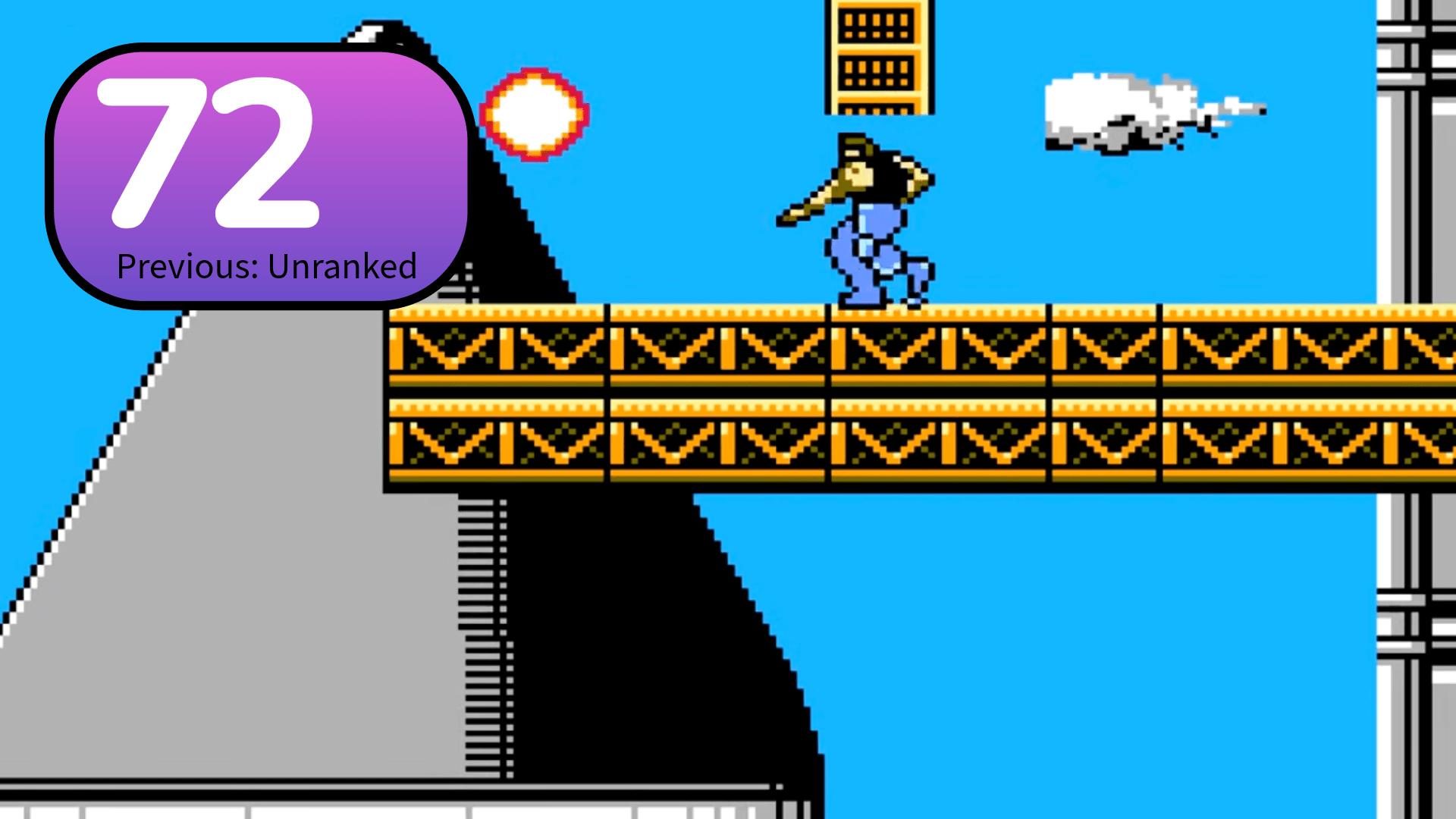
I had to go back and watch some gameplay footage to jog the memory banks on this bad boy, which doesn’t speak well to the kind of lasting impression it made. Yet I feel comfortable not only including it, but also putting it higher than some pretty solid games. Amongst the sea of generic NES platformers, this one ultimately had a fair bit going for it. The soundtrack was pretty boss for one, and the basic concept of your guy using a giant boomerang to take down artillery cannons and dudes with machine guns is so absurd and hilarious – and somehow workable – it gets bonus points for its audacity alone. Yes, it’s another NES platformer. But it’s a good one.
71. Shatterhand
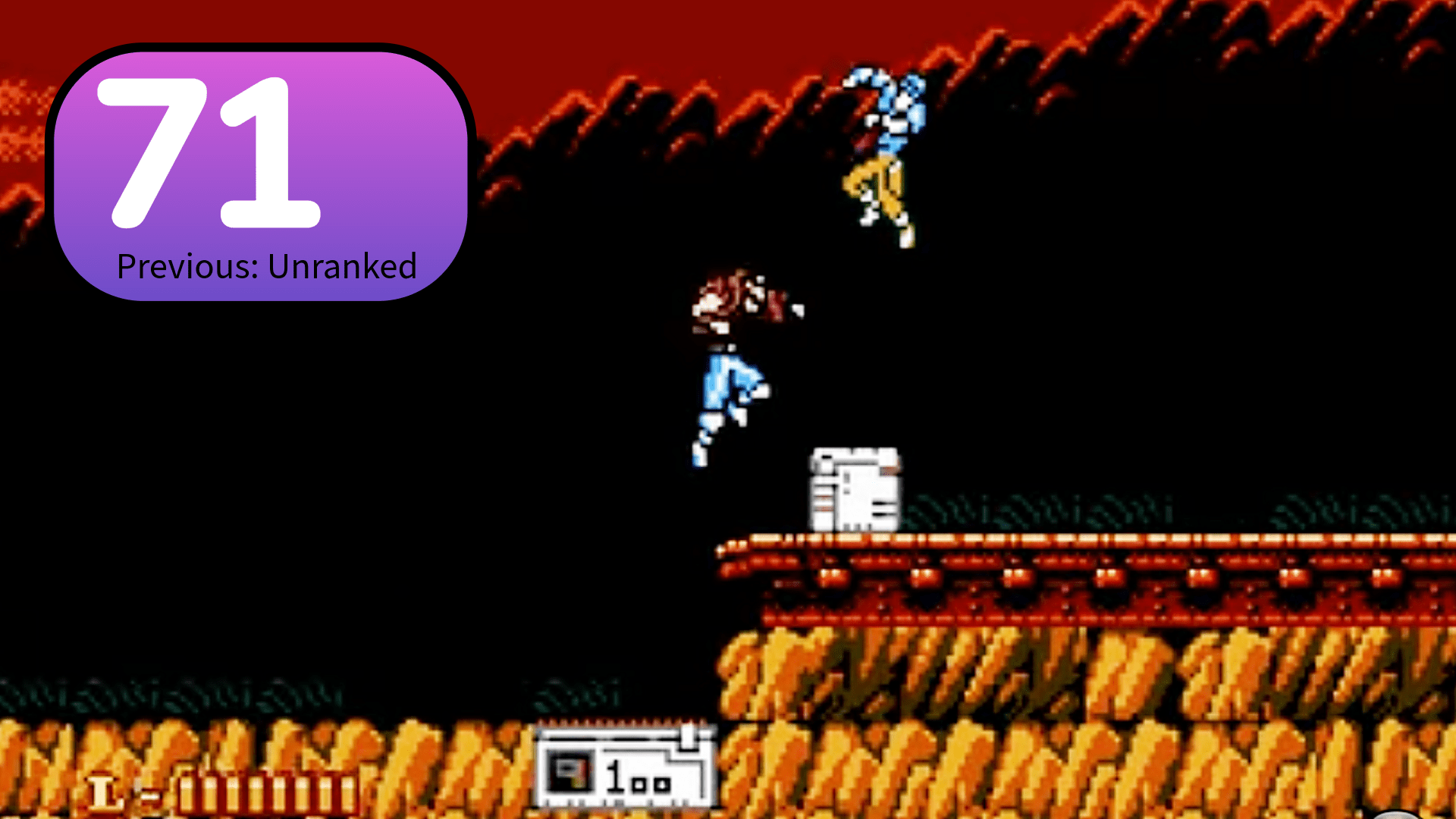
With “Super Mario Bros.,” Nintendo showed developers they could rock side-scrolling platformers on the NES hardware, and so a gazillion of those kinds of games launched on the system. Go figure. If you don’t like that style of game, an exploration of the NES library might not be in the cards for you. But if you’re like me and you do like that style of game, “Shatterhand” is another good example of the genre being done justice. In this one, you control a dude who punches things to destroy them, and this mechanic is pretty darn satisfying. There are of course additions to the gameplay beyond that, but the idea and execution are unique enough on their own to make this game stand out from the crowd for being more melee-focused.
70. Gradius
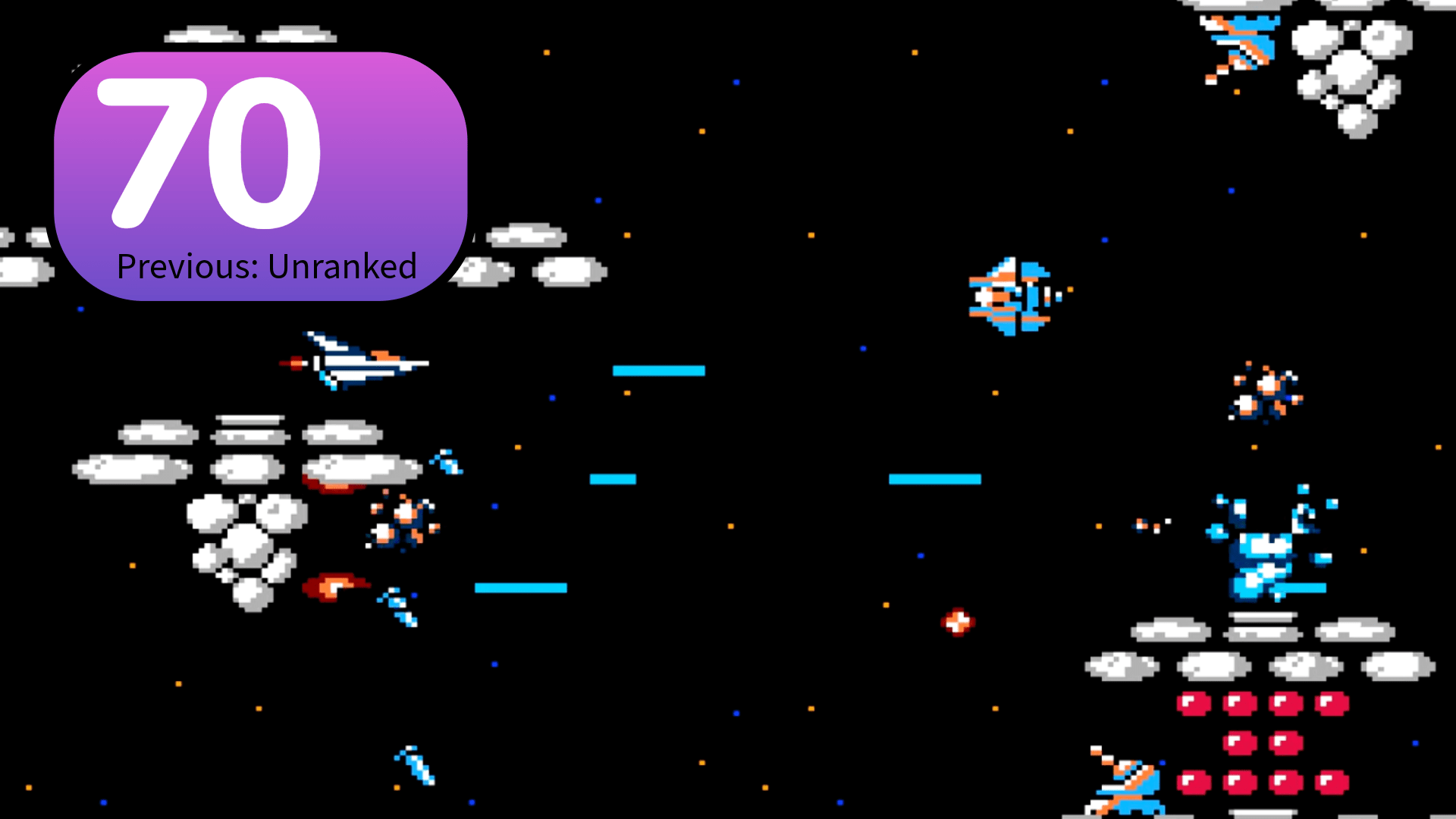
“Gradius” is, of course, a classic. It was the start of one of the greatest side-scrolling shooter series of all time, grafting several enjoyable power-ups onto what begins as an overwhelming experience, but then when those power-ups are compounded, they turn the thing into quite an enjoyable time, where you are highly incentivized to avoid death (because you then lose said power-ups). The legendary Konami code also got its start here. My critiques, and why it doesn’t rank higher, center on this not being the best possible game to play in the series (I enjoy the direct sequel “Gradius II” and offshoot “Life Force”/”Salamandar” SO much more) and it likewise not being the best possible version of itself (the arcade and PC Engine port are better). All that said, it’s an impressive port.

69. Metal Gear
Similar to “Gradius,” I lean toward giving “Metal Gear” a historical relevance bonus. Objectively, is this a better game than something like “Shatterhand?” Probably not (and it’s probably not close, either). But this game was popular as hell, innovative as hell, and it helped spawn one of gaming’s most important series. (And yes, I know a better version of the game existed on the MSX.) So, you grit your teeth a little to bear the irritants, such as the hidden doorways, the unavoidable damage, and allllllll the backtracking through an intentionally confusing layout. In return, you get to experience some enjoyable sneaking around, some kooky storytelling, and even the occasional puzzle that makes sense.
68. Fire ‘n Ice
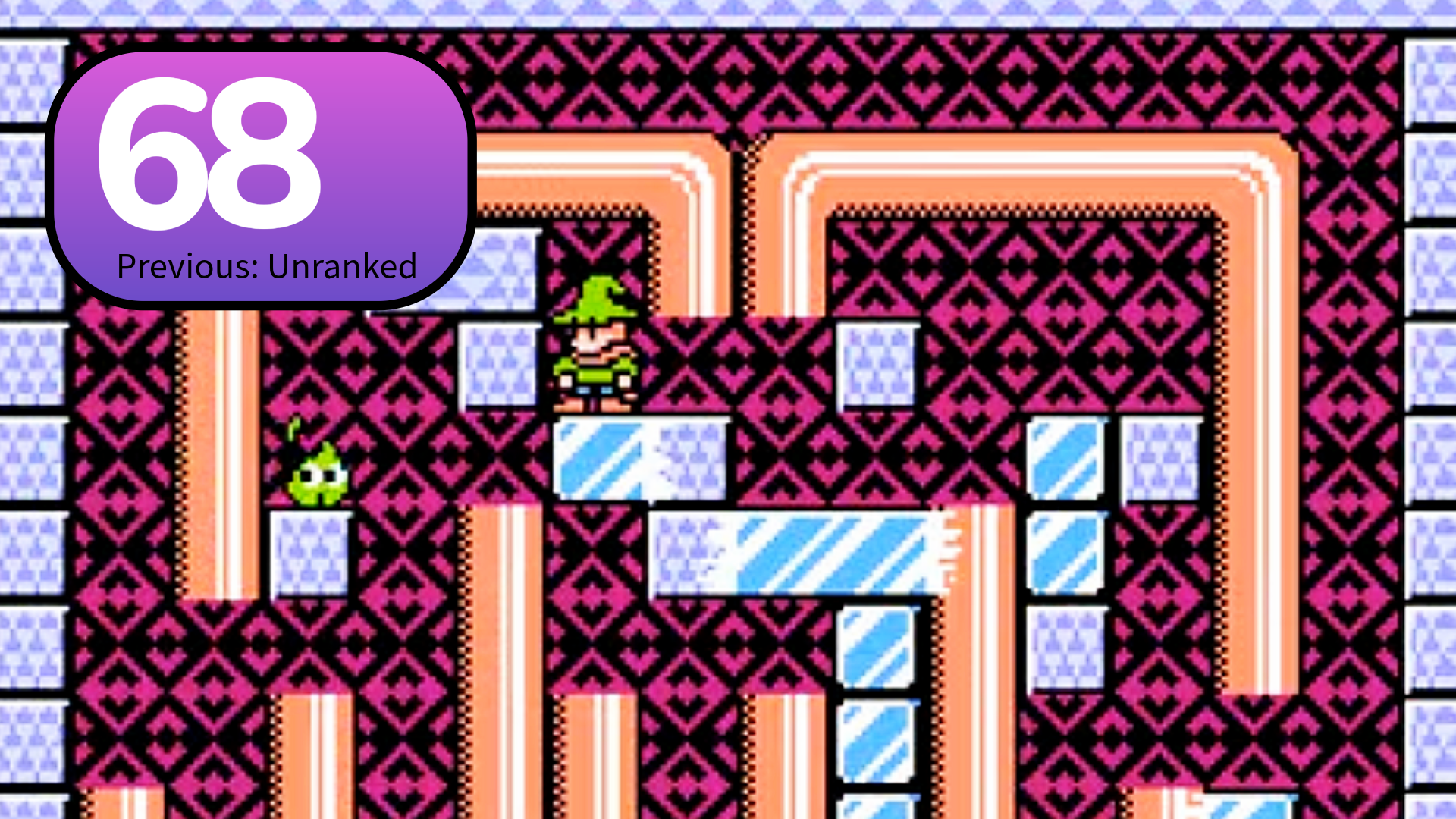
A prequel to “Solomon’s Key,” this is an interesting little puzzle platformer wherein your little gnome guy you control is trying to put out fires to advance to new stages, but he cannot do much in the way of movement other than kicking some ice blocks around and climbing on top of said ice blocks (provided they’re not too tall). These limitations create puzzle solving opportunities, which become more and more complex the further into the game you go. The great thing about a game like this is you can choose to engage with it for a bit or try to see it all the way through … or if you’re like me, get frustrated with it partway through and have to take a break before revisiting (I did this more than once). It’s a good time, and in my view, it’s better than Solomon’s Key (which feels busy and chaotic in comparison).
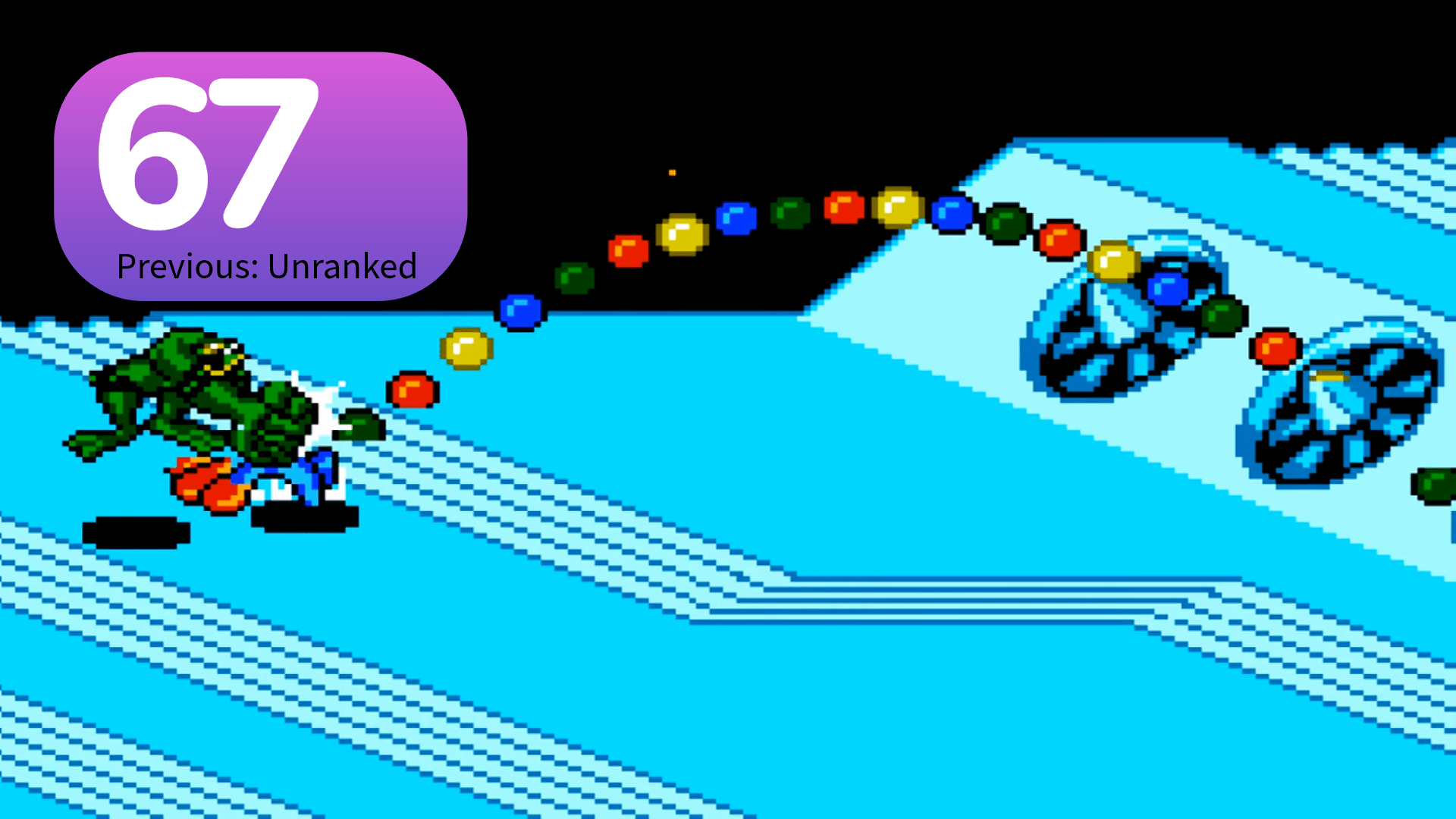
67. Battletoads & Double Dragon: The Ultimate Team
It is a weird experience to roll into a game as a consumer and instantly recognize that the thing is kinda sloppy. That’s what was going on here, as this odd amalgamation of two different properties clearly didn’t have the level of polish that either party had previously received on its own. But warts and all, I do think the gameplay felt good and impactful, and that’s the most important bit. Plus, let’s also give it bonus points for being one of the first marketed crossovers seen in gaming. In an era when kids were like “Wouldn’t it be cool if these folks crossed paths?” and the only times that EVER got paid off was in the comics, it was awesome to have that in a video game.
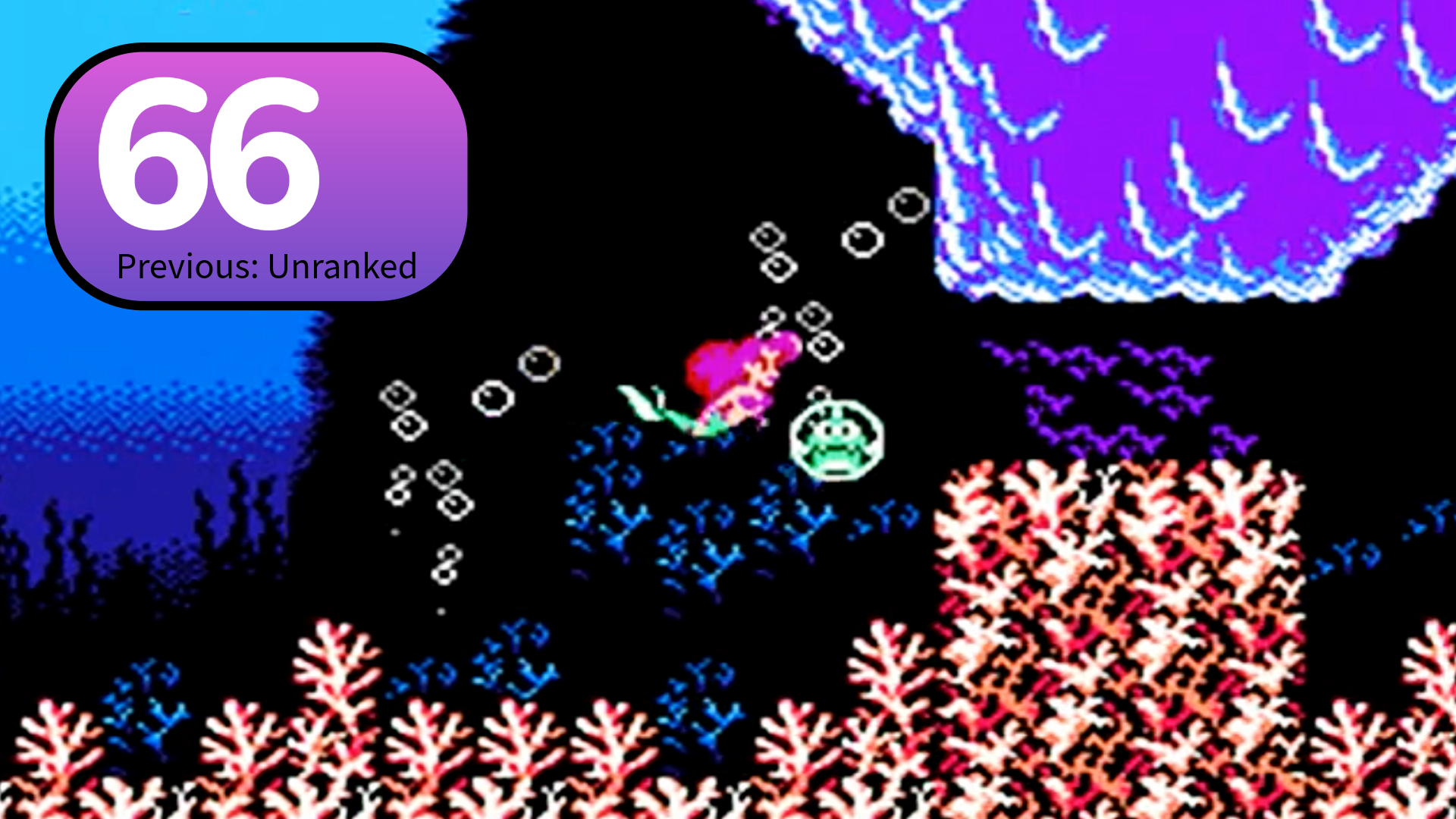
66. The Little Mermaid
Capcom’s reputation involving its Disney collaborations is justifiably stellar, because the games are just by and large highly playable, colorfully designed, and in the case of a few titles in particular, among some of the best games of all time. But it should also be noted that once you get past the two “DuckTales” games and the first “Rescue Rangers,” there is a decline in enjoyment to contend with. “The Little Mermaid” was basically a game that HAD to be made, since that movie was a phenomenon and Disney and Capcom were chugging along quite nicely at the time. And fortunately I think this game might be the fourth-best to emerge from the companies’ teamup. It’s really easy, but it is also creative as heck and has some positively gorgeous sprite-work going on – seriously, this looks like a modern game styled as an NES offering. They didn’t just go through the motions in trying to churn this sucker out, and I like that about it.
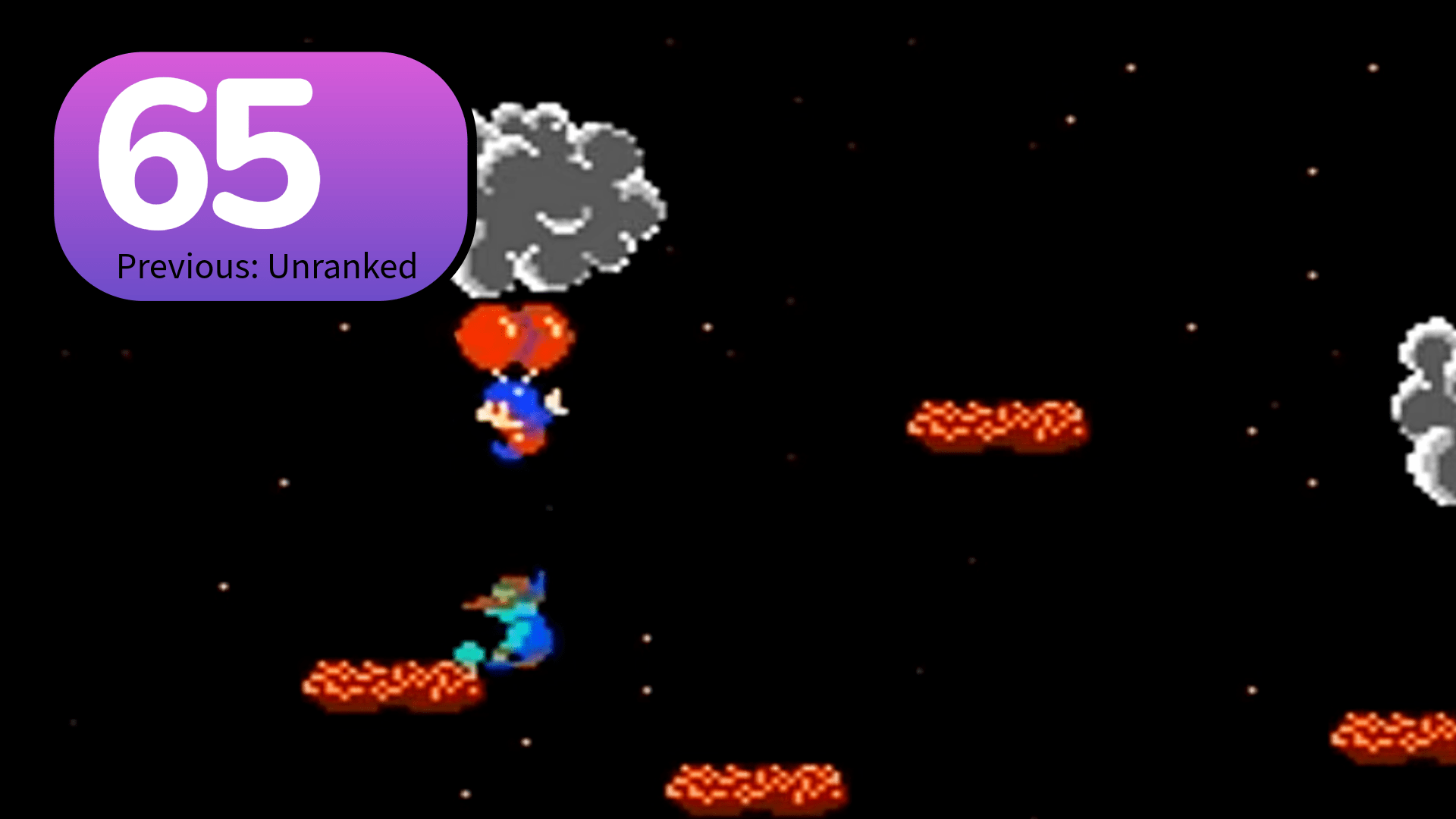
65. Balloon Fight
This is one of those Nintendo “classics” that struggles to live up to that moniker, if we’re keeping things 100%. To be sure, “Balloon Fight” achieves what it sets out to do, and it is to be lauded for that. The concept of floating about via balloon and popping the balloons of the other folks onscreen before your balloons get popped instead might be a really simple one, but the experience resembles the idea. I think the only problem is that the ambition might have been set a smidge low, because the game gets old fairly quickly. Yes, like similar arcade-style platformers, you can try to beat your high score and get some value out of that. But I don’t expect modern gamers to stick it out for very long.
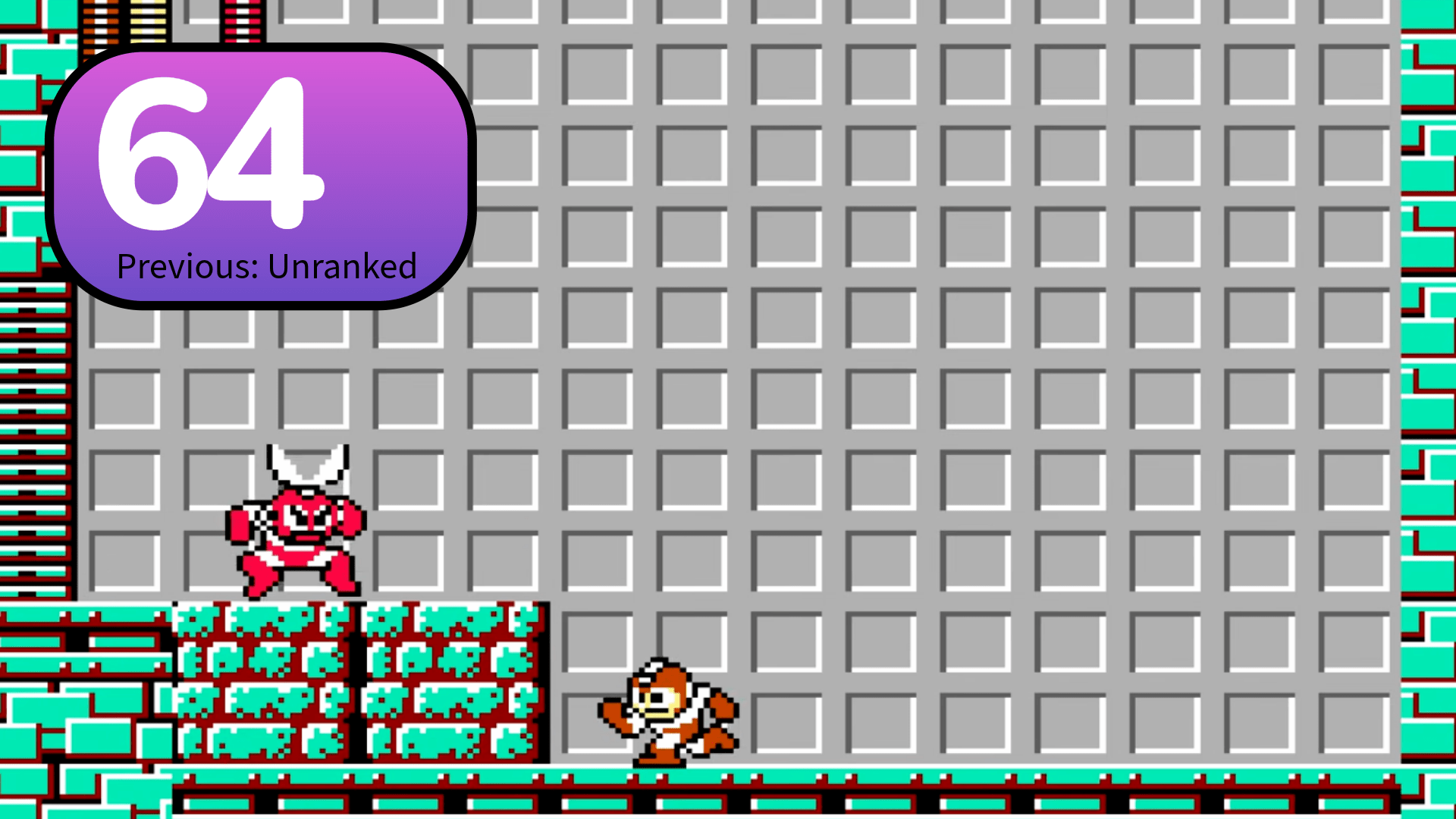
64. Mega Man
The original “Mega Man” gets bonus points for starting the whole affair, and it’s a quaint adventure, laying much of the groundwork that ensuing entries would employ to great effect, such as the rock-paper-scissors deployment of special abilities against the bosses, the banging soundtrack, as well as the cartoonish, anime-style look. It’s also fun to engage with these bosses, who are by now iconic. The game is quite rough around the edges, however, as Mega Man controls like a tarp bag full of bricks on an icy patch of ground (the game reinforces this point by giving you an icy stage that somehow makes the controls even worse). Give it a whirl if you’re okay with challenging platformers and a fan of video game history, but be aware it’s a toughie with loose controls.
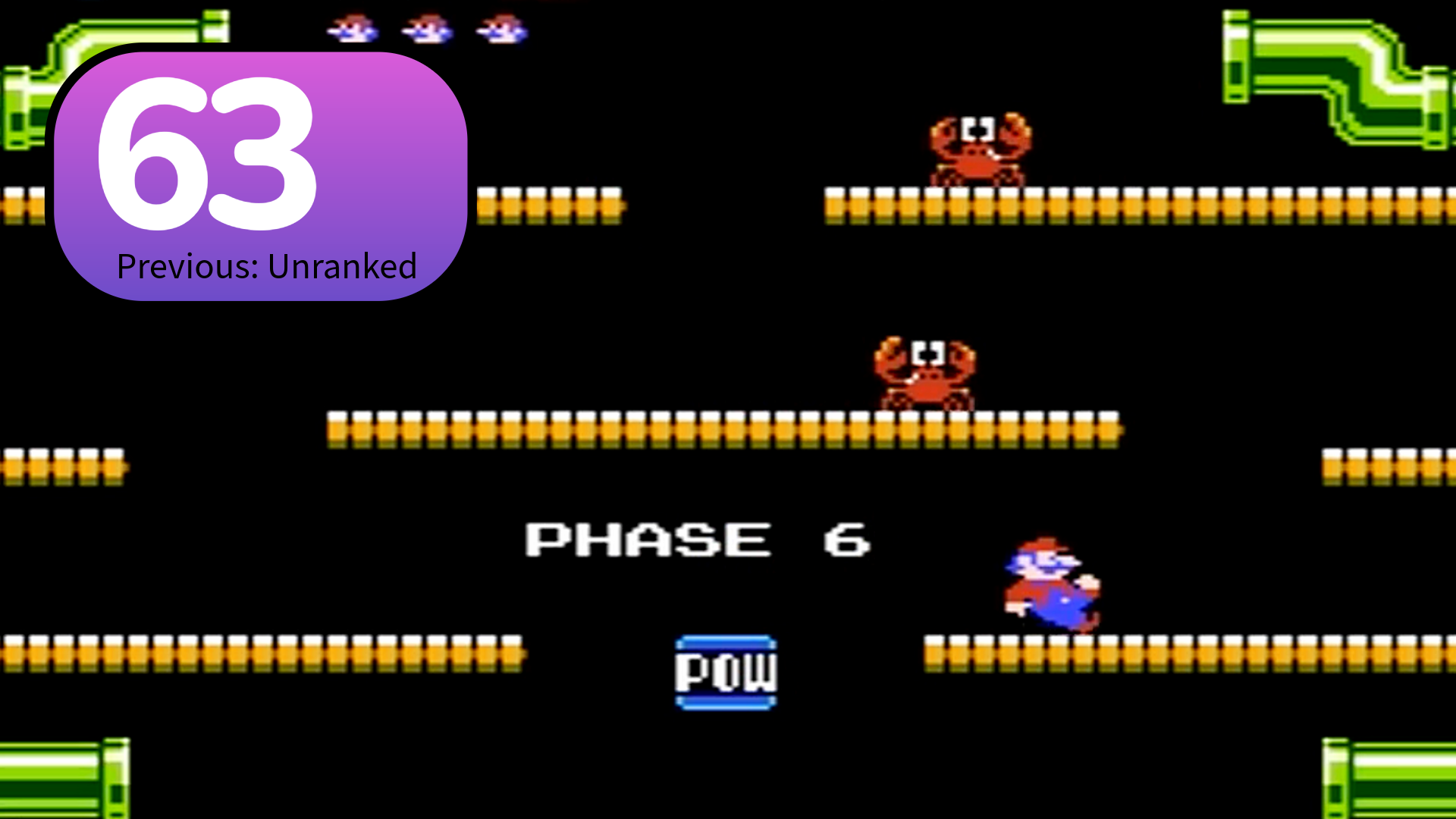
63. Mario Bros.
“It’s a me! Mario! I promise!” The original “Mario Bros.,” while not buried in the desert like a copy of “E.T.,” has mostly been forgotten to time and history, at least in relation to the Super Mario and Donkey Kong games (and to a lesser extent, even some of Mario’s cameos elsewhere). In so much as it’s possible for Mario to ever go under the radar, this is where he has. The game itself is a quality port of the arcade experience, and while perhaps it’s best known for being a mini-game throw-in elsewhere (like in “Super Mario Bros. 3”), it is a decent single-screen platformer all by its lonesome. And hey, being a quality port still counts for something as there are a LOT of arcade ports on the NES that have no business being anywhere near this list.
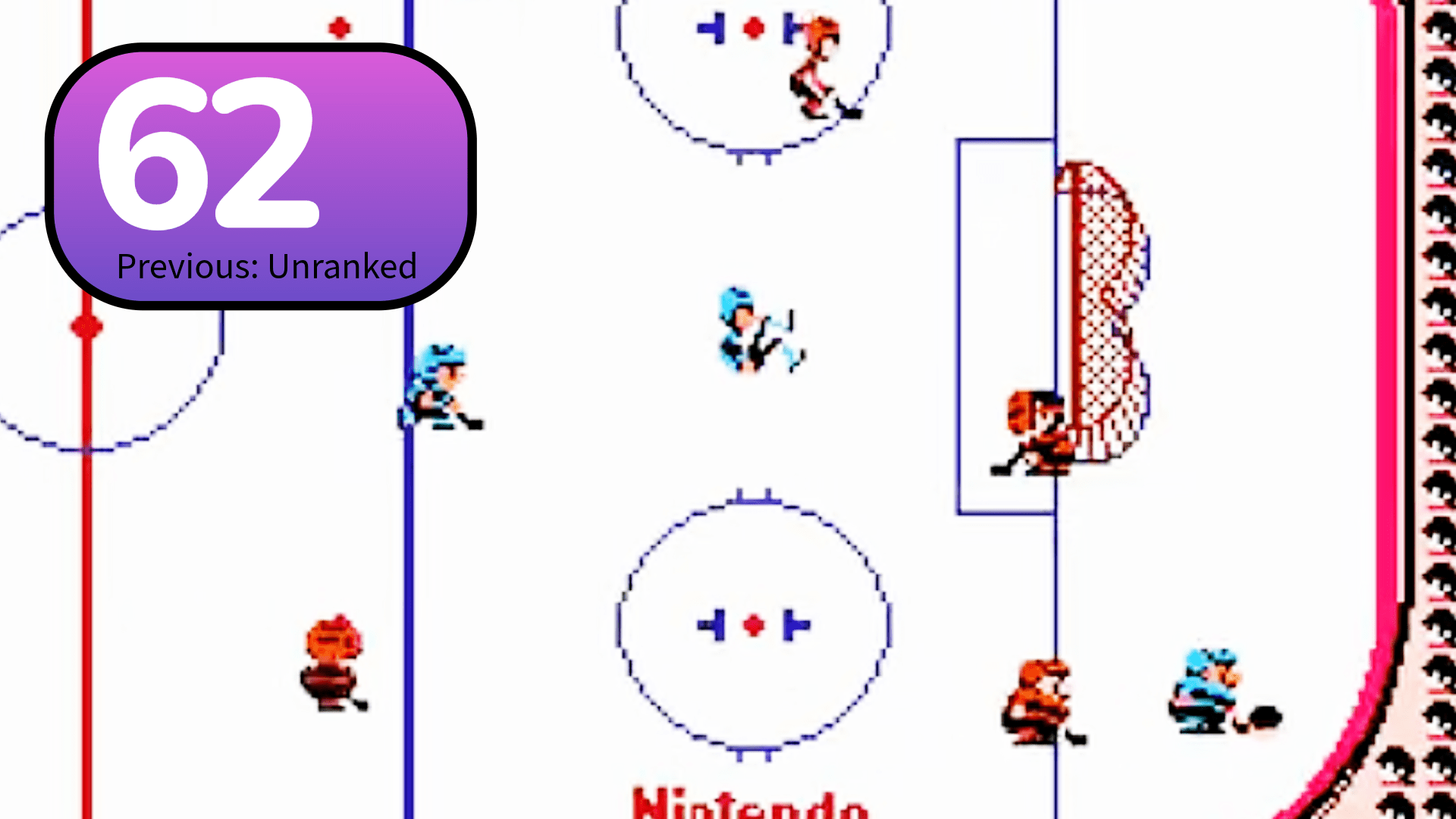
62. Ice Hockey
I can acknowledge that the NES had two pretty fun ice hockey simulations, to the extent that I’d recommend people play both. The reasons to engage with this one are two-fold in my view. Firstly, I think it’s neat that “Ice Hockey” uses national rosters, so that you can get your Olympics fanboy going here. Most other hockey games use NHL teams or NHL proxies. The second, bigger point in its favor is the different style of player you can deploy on the ice. There are basically three types: big, slow, and strong; fast, little, and weak; and Goldilocks. Having these types to choose from affects the experience a fair amount and adds to the strategy (at least until you get too good for it to matter … about a game in).
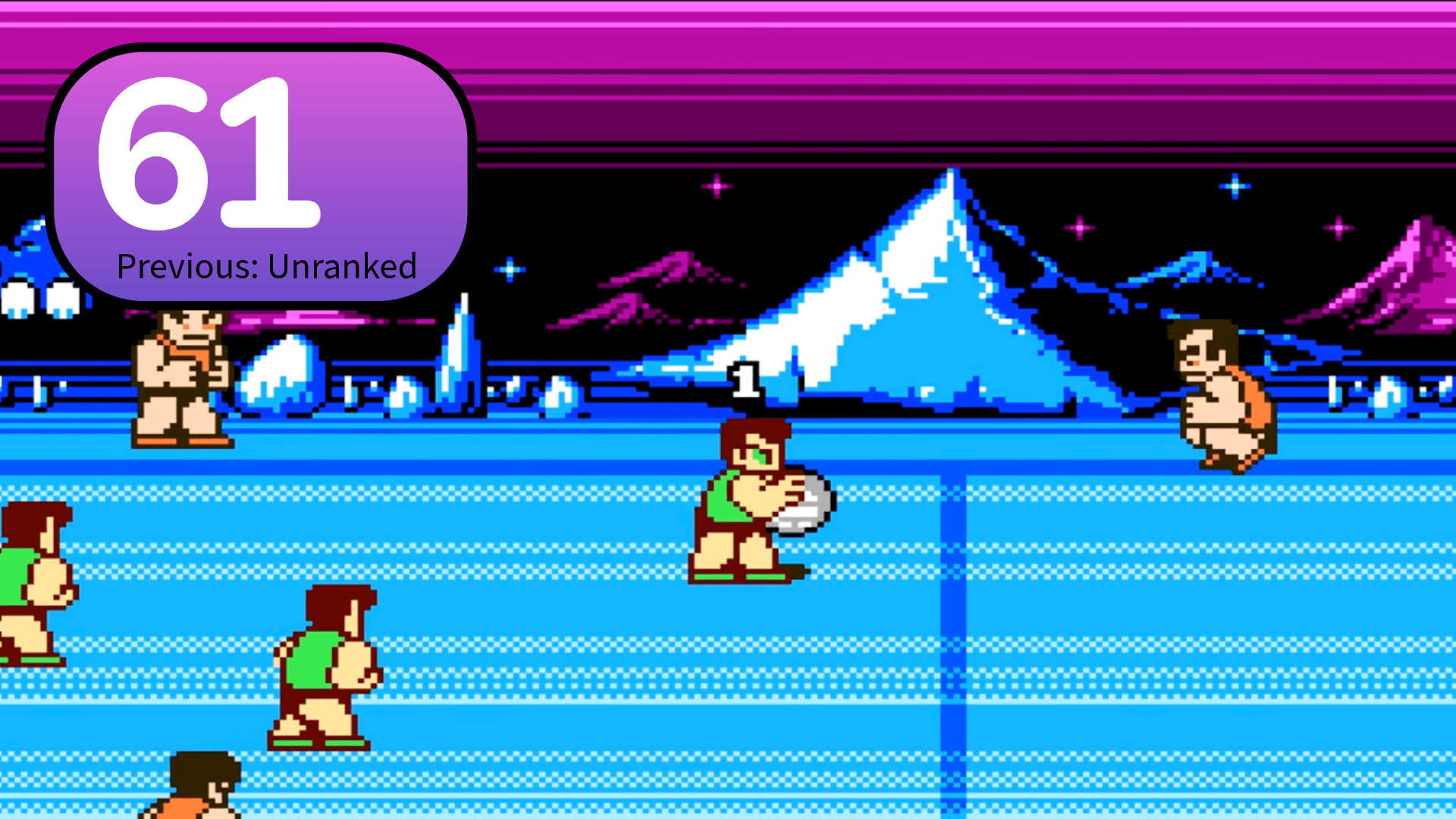
61. Super Dodge Ball
Let’s all laugh and get our “The Ocho” jokes in right off the bat. Seriously though, I think this game makes a good case for itself as a multiplayer affair. There’s an inherent problem with the game in that it comes off as too challenging when you aren’t employing special moves, and then much too easy once you do. But if you’re taking on a human opponent, well, now you’re cooking with gas. For a previous time, we would have called “Super Dodge Ball” a good rental. In a modern context, it’s a cool curiosity for a little while. Either way, it’s fun in smaller doses. Let’s see if you can dodge a wrench!
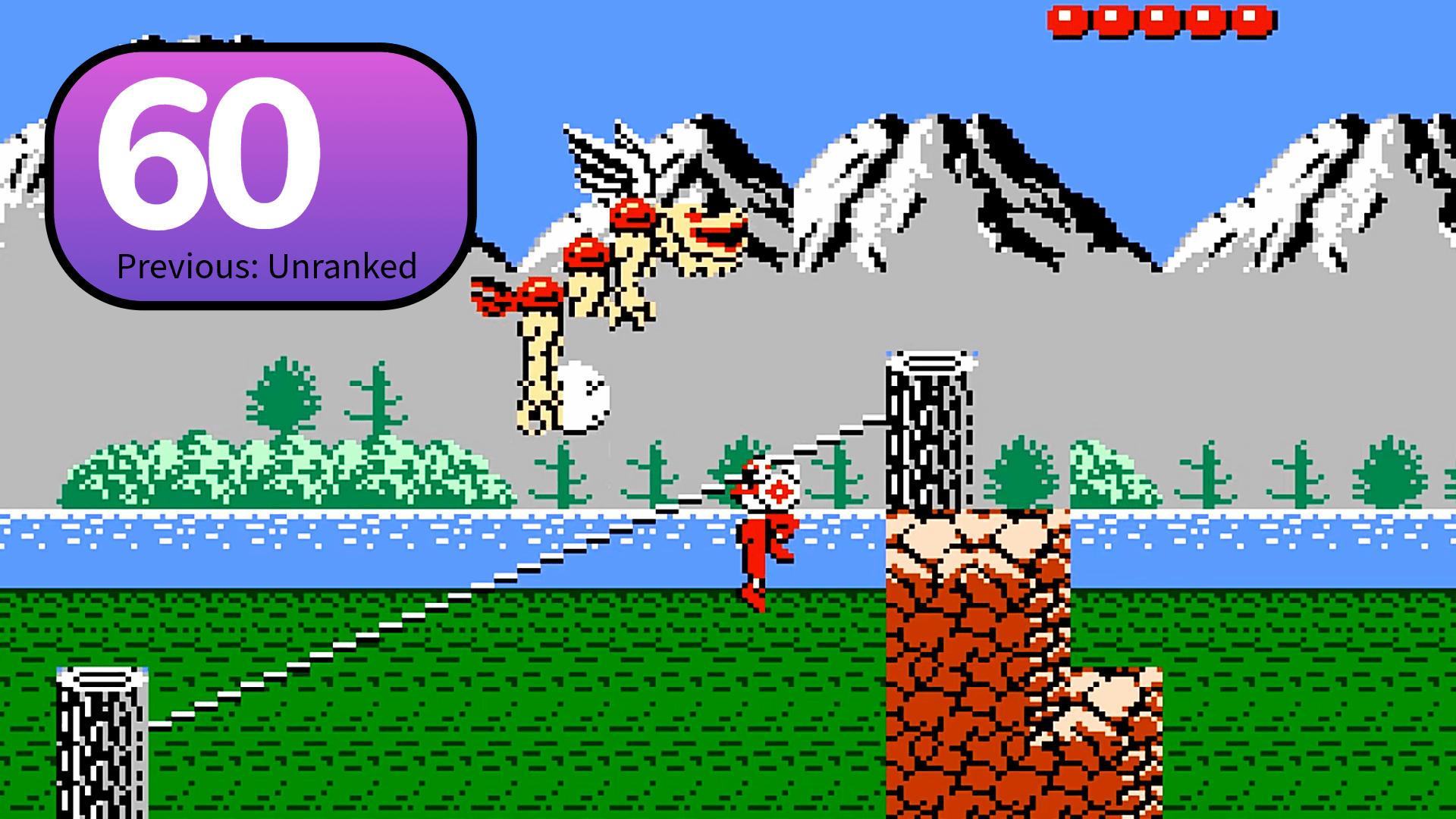
60. Rygar
It mixes perspectives and play-styles, combining overhead platformy areas with sidescrolling actiony areas and an overarching fetch-quest that allows for variance from a typical action platformer. “Rygar” absolutely deserves a lot of credit for trying to innovate and should be mentioned alongside some of the other early exploring platformers as creating a whole-ass sub genre that endures today. Having replayed it fairly recently, I don’t think it is ultimately as successful as some of its spiritual brethren listed higher on this list, but it certainly has an argument for a few hours of your attention. It’s neat.
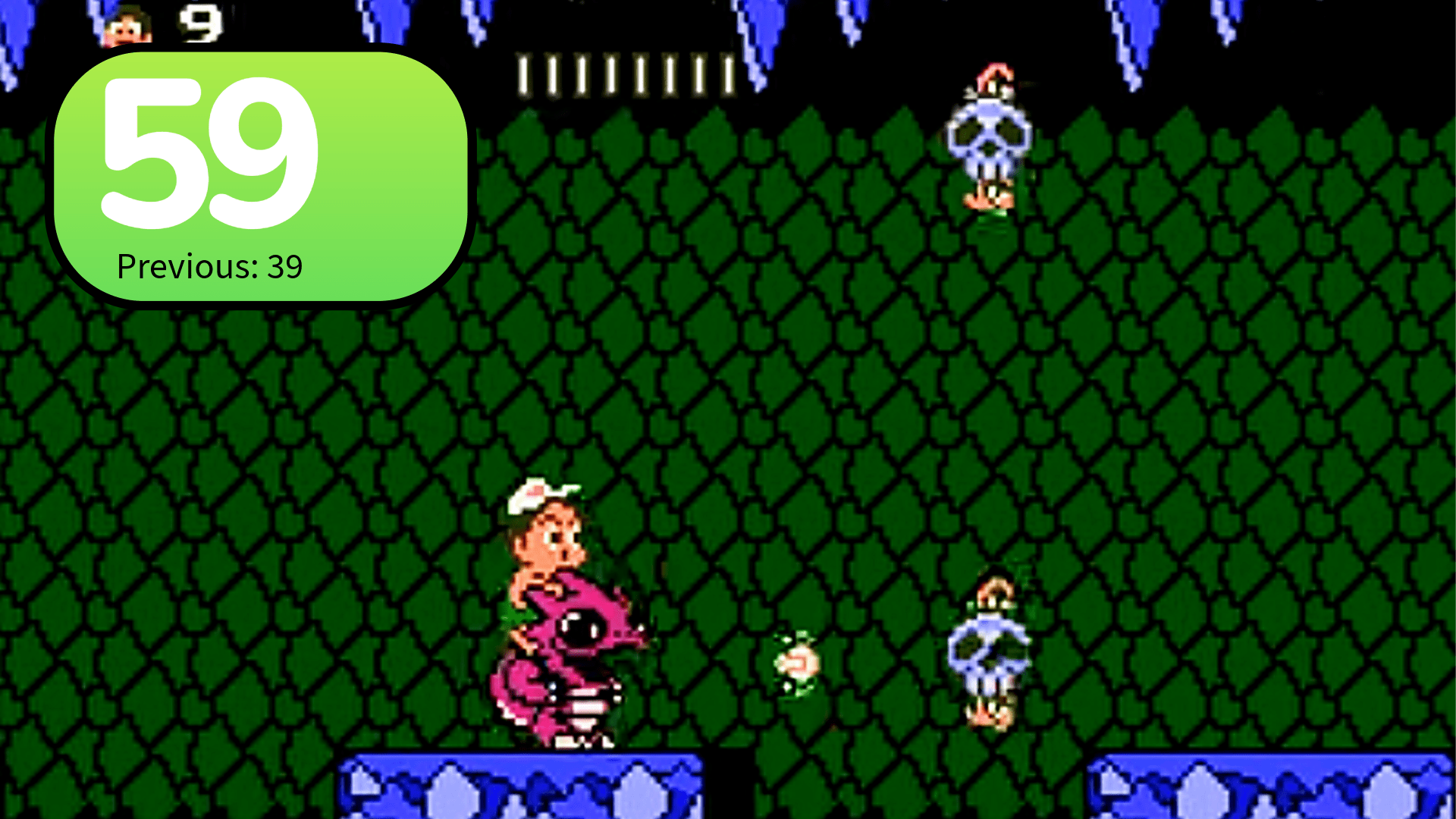
59. Adventure Island II
Similar to other titles like “Little Nemo” and “Super Mario World,” this game introduced the concept of being able to “ride” a friendly animal companion to boost your abilities and complete the game. I liked the first Adventure Island game, but it always felt a little incomplete to me, especially in the graphics and gameplay arenas. Adventure Island II added this dinosaur-riding dynamic and polished things up considerably, making this sequel a much-appreciated step forward. And hey, who doesn’t like riding dinosaurs around? It’s a time-tested truth.

58. Journey to Silius
Originally planned as a game based on the “Terminator” license, “Journey to Silius” instead went to market without the license and had to stand on its own two feet. It mostly managed to do so, remarkably enough. I mean, it wasn’t a huge seller or anything, but the game is a solid platformer. Nowadays, it has a reputation for being hard, and make no mistake, it’s not an easy time. But I learned how to play it super quickly: If you try to race through it, you won’t get far. You have to inch forward, taking out enemies before they can ambush you. Maybe that artificially lengthens the game, and maybe people don’t like inching forward in general, but I found the expectation to be perfectly acceptable. If anything, it helps make the game stand out in a sea of platformers.
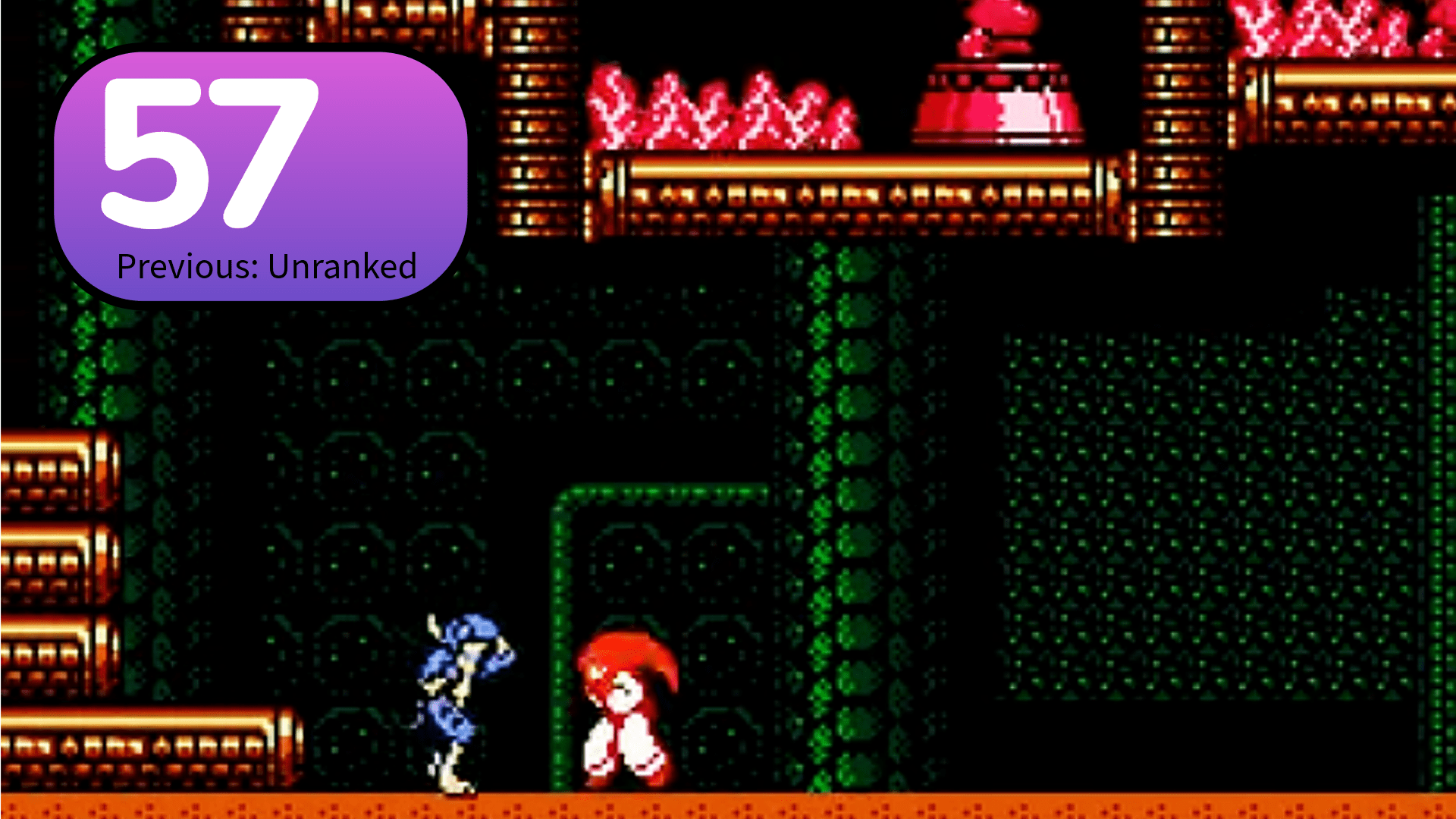
57. Kabuki: Quantum Fighter
This game made its mark by featuring a protagonist who attacked people with his hair, like a reject from “MTV Headbanger’s Ball” who decided to venture out on a journey of revenge, whipping everything in sight. The actual plot involved some “Tron”-like story about going inside a computer to fight a computer virus threatening the world or something, but let’s be real: the star attraction was the red glowing mane of destruction. The game got all the basics right, and the hair whip dynamic felt good to use, so this odd little bugger makes a solid lasting impression.
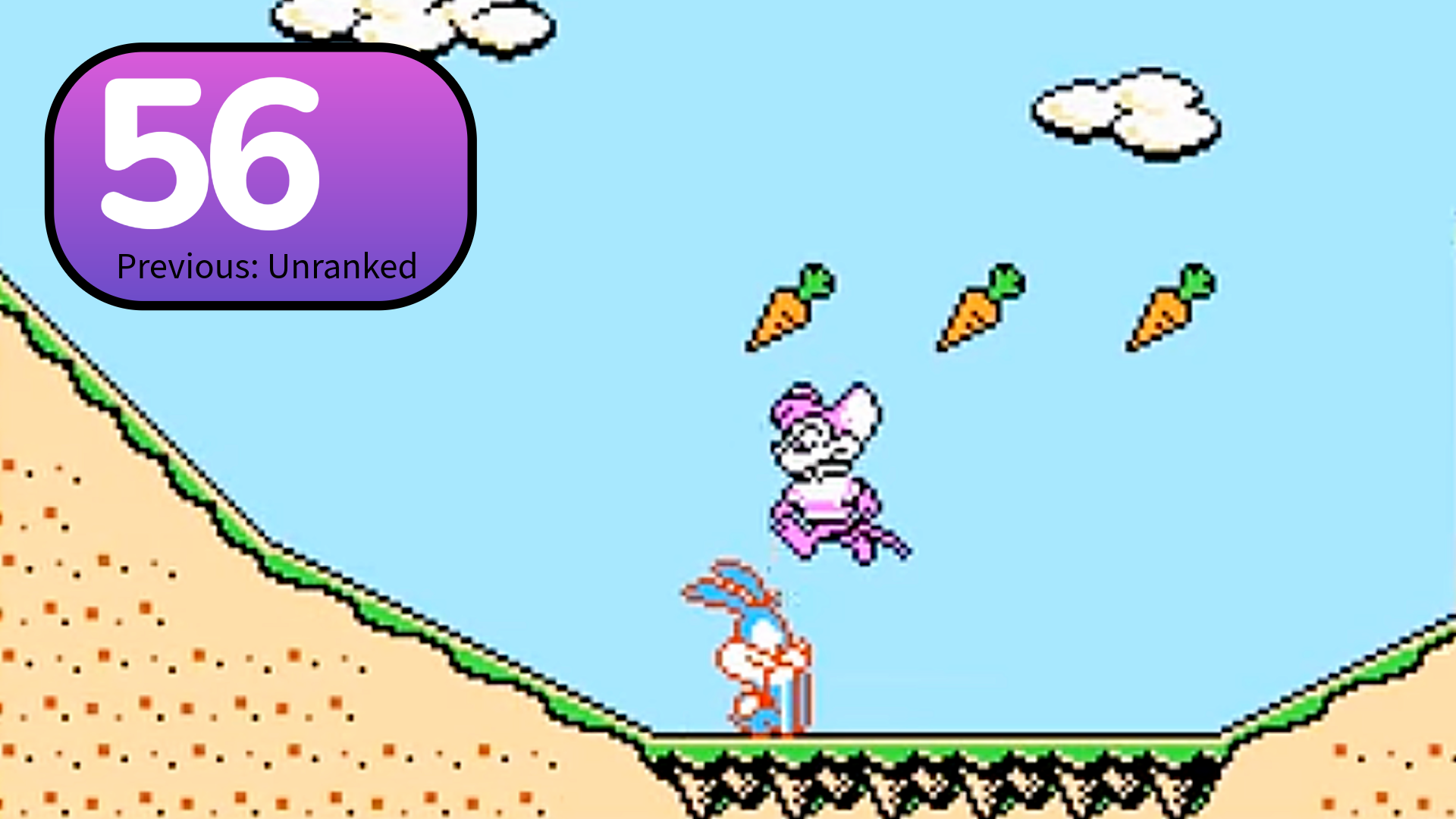
56. Tiny Toon Adventures
Based on the “Looney Toons” animated spinoff series that aired in the early 1990s, living under the Looney Toons umbrella of mostly so-so video games, and since relegated to the dustbin of history, this platformer would be easy to dismiss nowadays. Yet, if you run into a copy out in the wild for cheap, you could do so much worse. The game gives you several characters to swap between and designs its levels around their individual abilities and talents. It’s brightly colored, follows familiar convention in stage layout (this all feels very Super Mario Bros. inspired), and the enemies are pushovers, so it’s super accessible, and while easy, the character swapping (mostly) keeps boredom at bay.
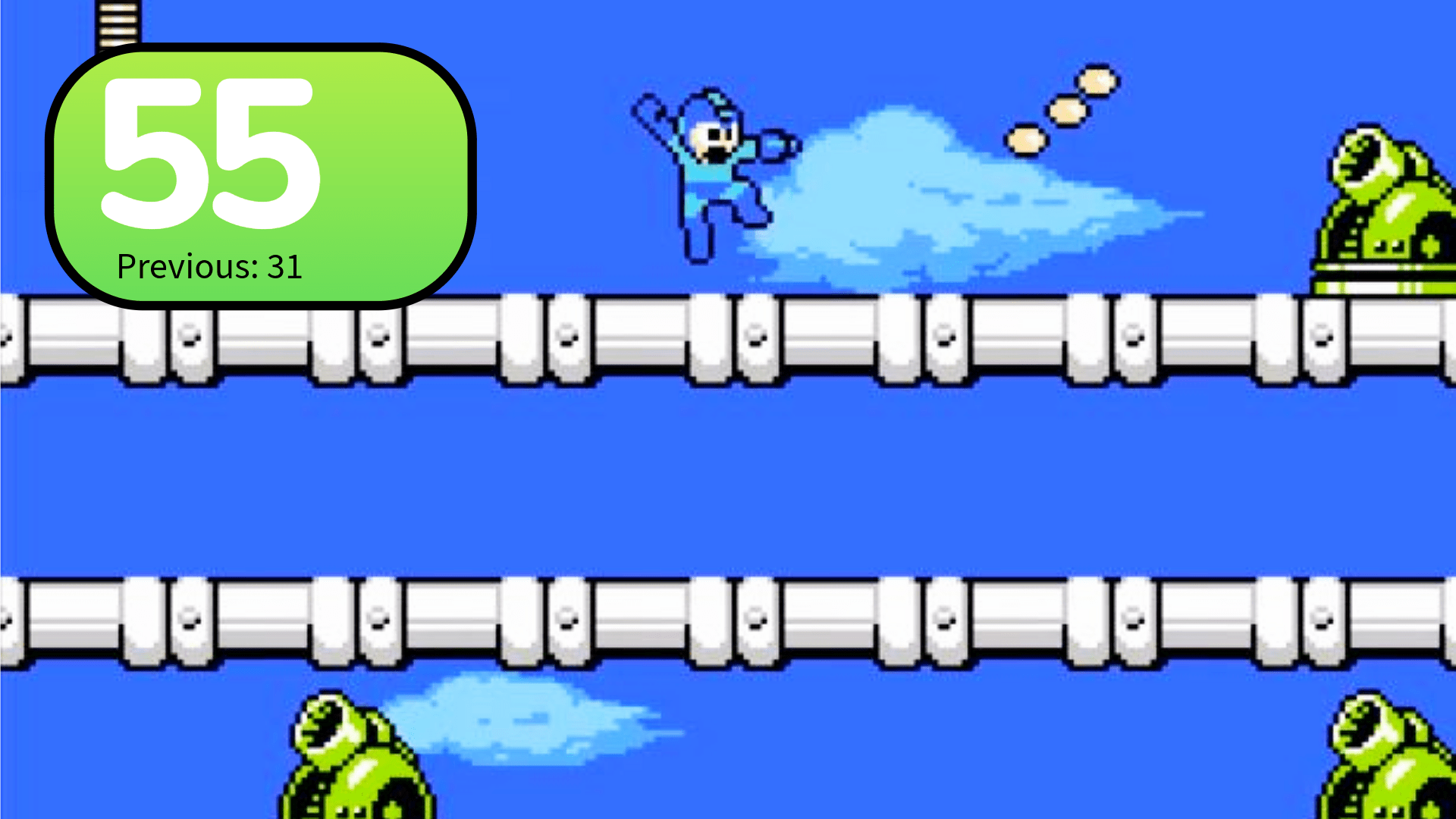
55. Mega Man 4
There’s an everlasting debate among old-school gamers over whether “Mega Man 2” or “Mega Man 3” is the best game in the series. I offer my own take on that argument later in this article (teaser!), but there’s a secondary question that stems from that discussion that I think is almost as worthy a debate: Which game is third best? For me, it’s this one. The original “Mega Man” is difficult and sloppy, while “Mega Man 5” and “Mega Man 6” just feel derivative. “Mega Man 4” introduced the mega-buster (the ability to charge your default shot), most of the bosses had yet to become comically strained (*cough* Centaur Man? *cough*), and I enjoyed the overall package/polish.
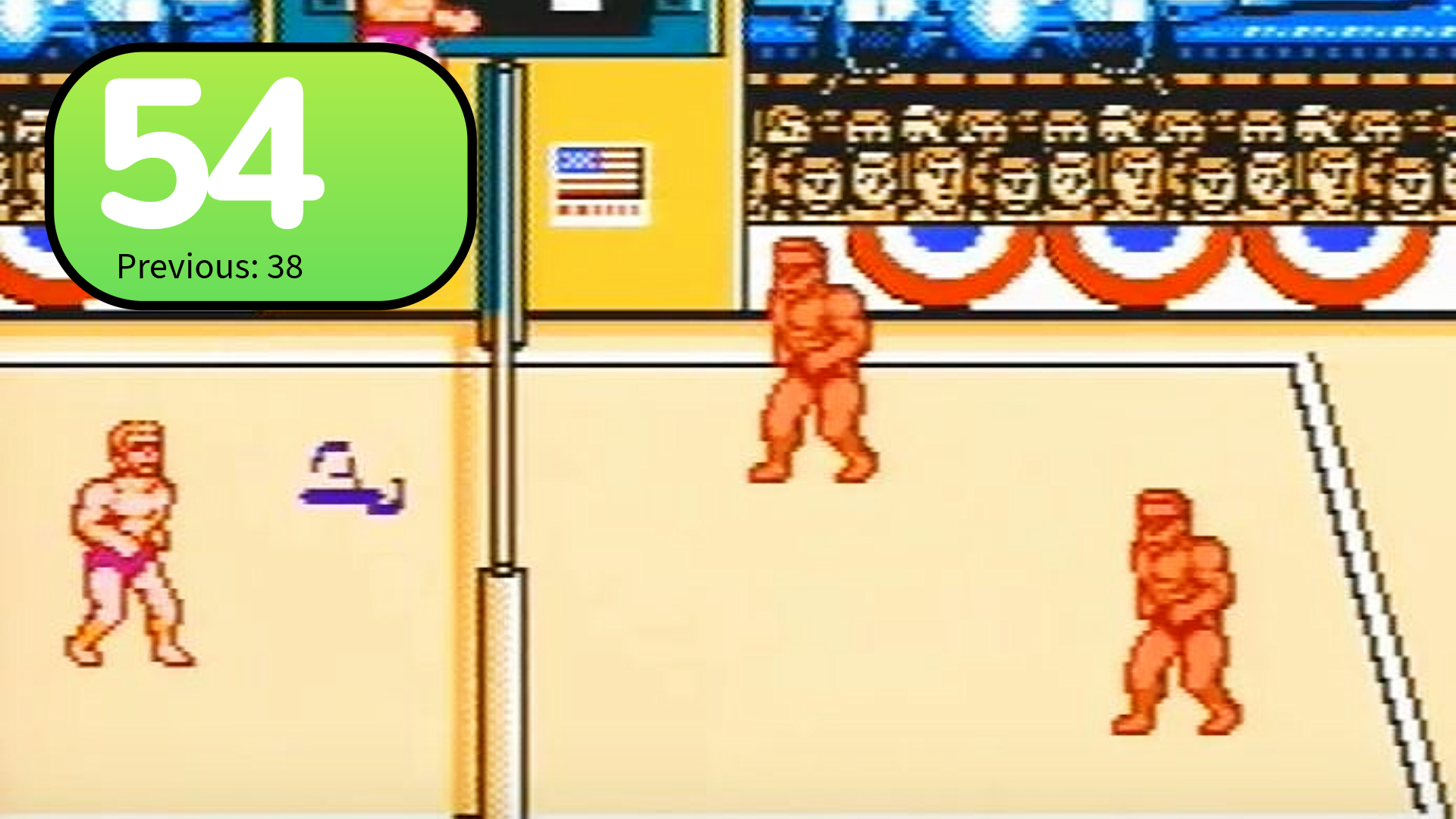
54. Super Spike V’Ball
Developed in the same general style as another NES favorite, “Super Dodge Ball,” this game — like many other NES games — really soared once you got into two-player mode. And it perfectly captured the sensation of nailing a monster spike that either doinked off your opponent’s body in some way or left them eating sand. Either way, it felt satisfying as heck. “Super Spike V’Ball” was one of those games (like its dodge ball cousin) that could fall apart on you if you tried to play it too long, but it was perfect for a weekend rental. And there’s nothing wrong with any of that.
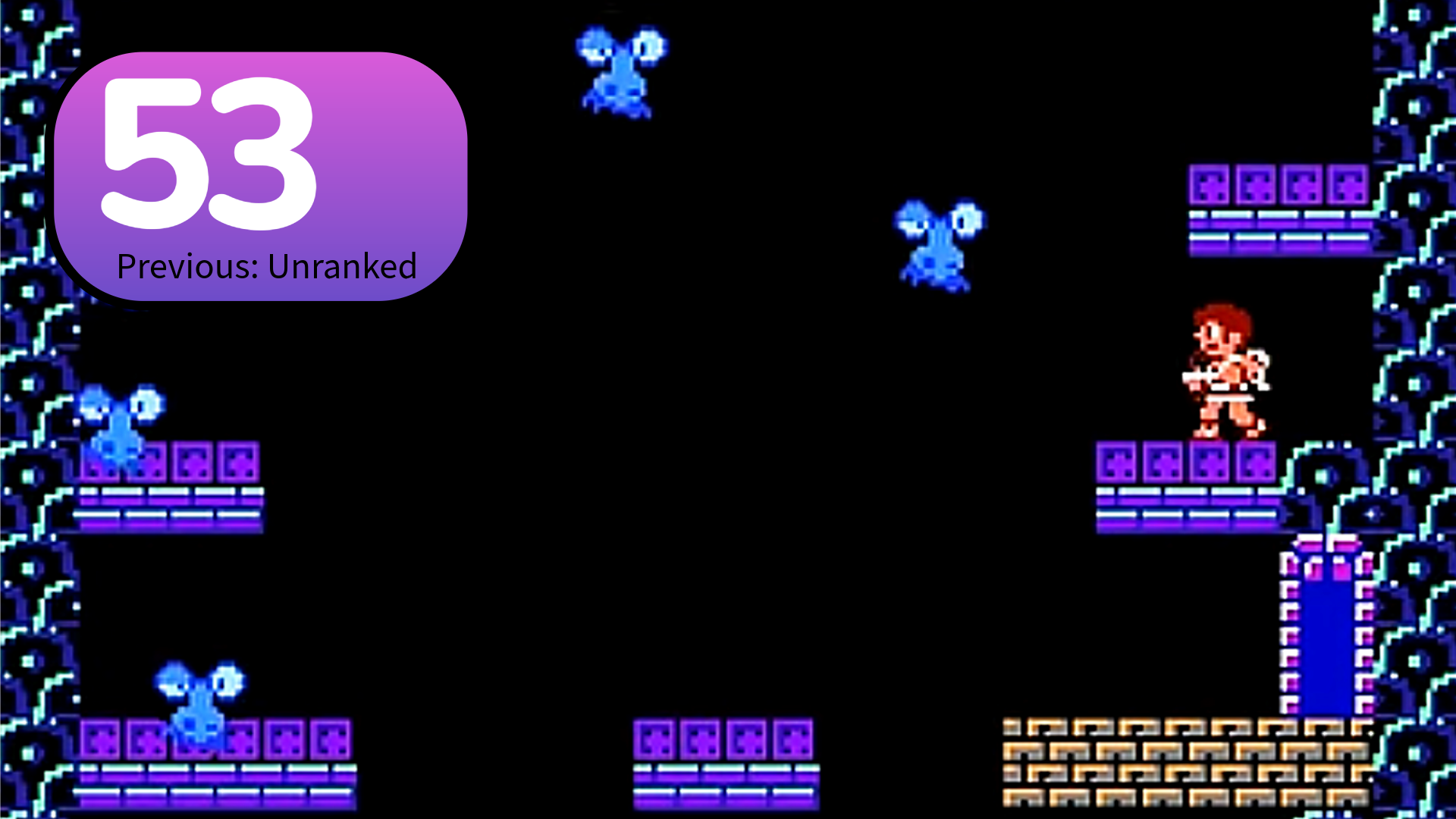
53. Kid Icarus
“Kid Icarus” rises to the level of Nintendo icon thanks to the main character’s representation in the esteemable “Captain N: The Game Master” television series. Okay, my tongue is planted in cheek, but … only kind of. I mean, when I think back to that era, Kid Icarus was promoted in such a way that Nintendo clearly thought it would rise to the status of other important brands like “Metroid,” “Punch-Out!!,” and “Zelda.” The game, ultimately, couldn’t deliver on those expectations. But it’s also not a complete catastrophe, despite its general jankiness, hence its placement here around the middle of the countdown. I had a decent enough time on a recent playthrough, and while it’s challenging, I think it’s doable for most folks. And the brand, despite itself, endures. Worth playing to see what the fuss was all about.
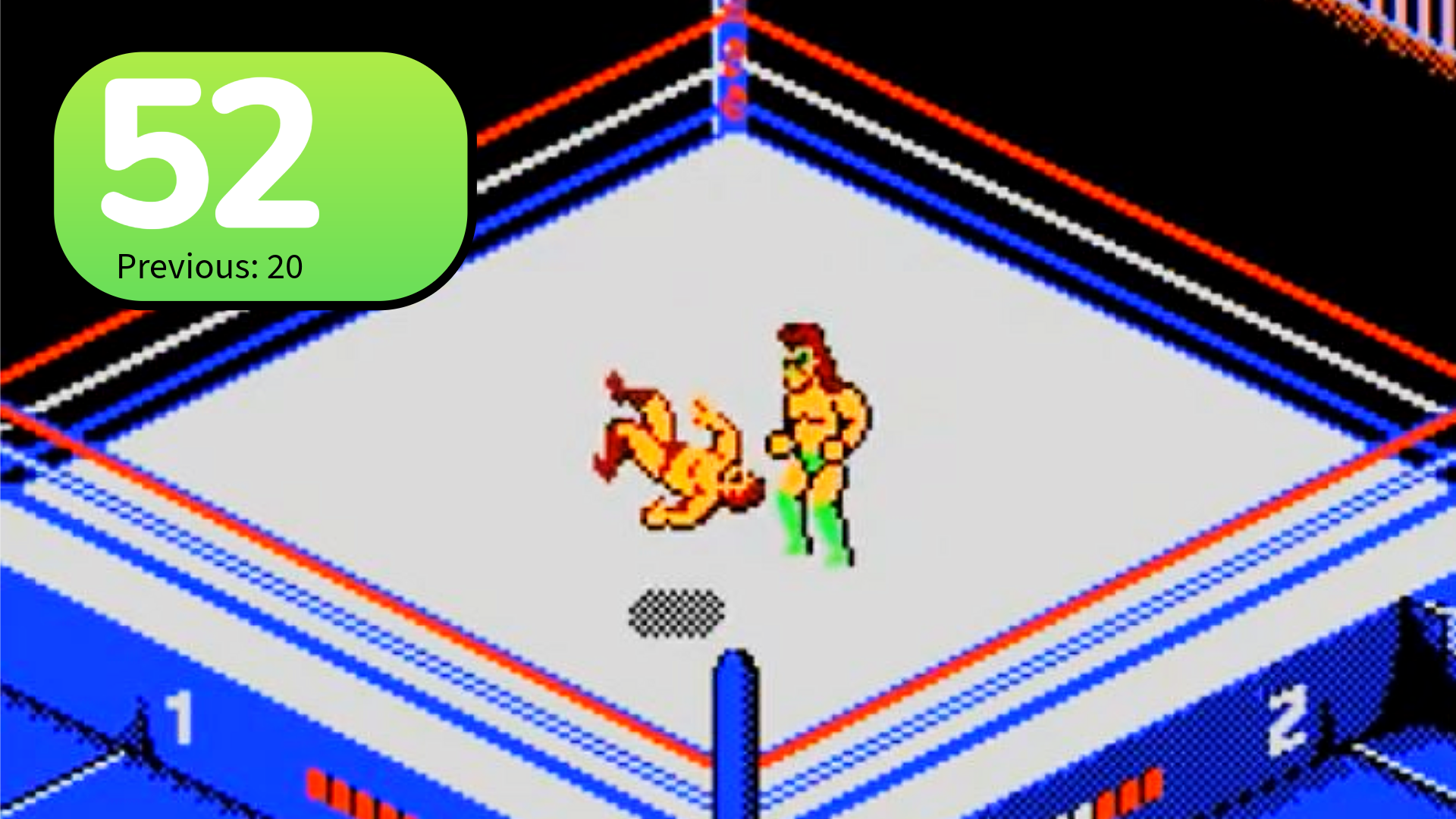
52. WWF: WrestleMania Challenge
Every child of the ‘80s or ‘90s had at least one game that they constantly rented from the video store but never pulled the trigger on buying. This was that game for my brother and me. “WrestleMania Challenge” is a pretty straightforward wrestling game, with little in the way of frills or polish, but it was a true button masher (in the best way), and the licensing here made a big difference. I liked the isometric viewpoint (which provided a clear view of the action), and the out-of-the ring action was incorporated well … but having access to favorite wrestlers like Macho Man and the Ultimate Warrior (and their special moves!) and then beating your kid brother’s head in with them was a truly satisfying experience. Yes, this is a nostalgia pick. Yes, there are other wrestling games to choose from on the system. Fight me.
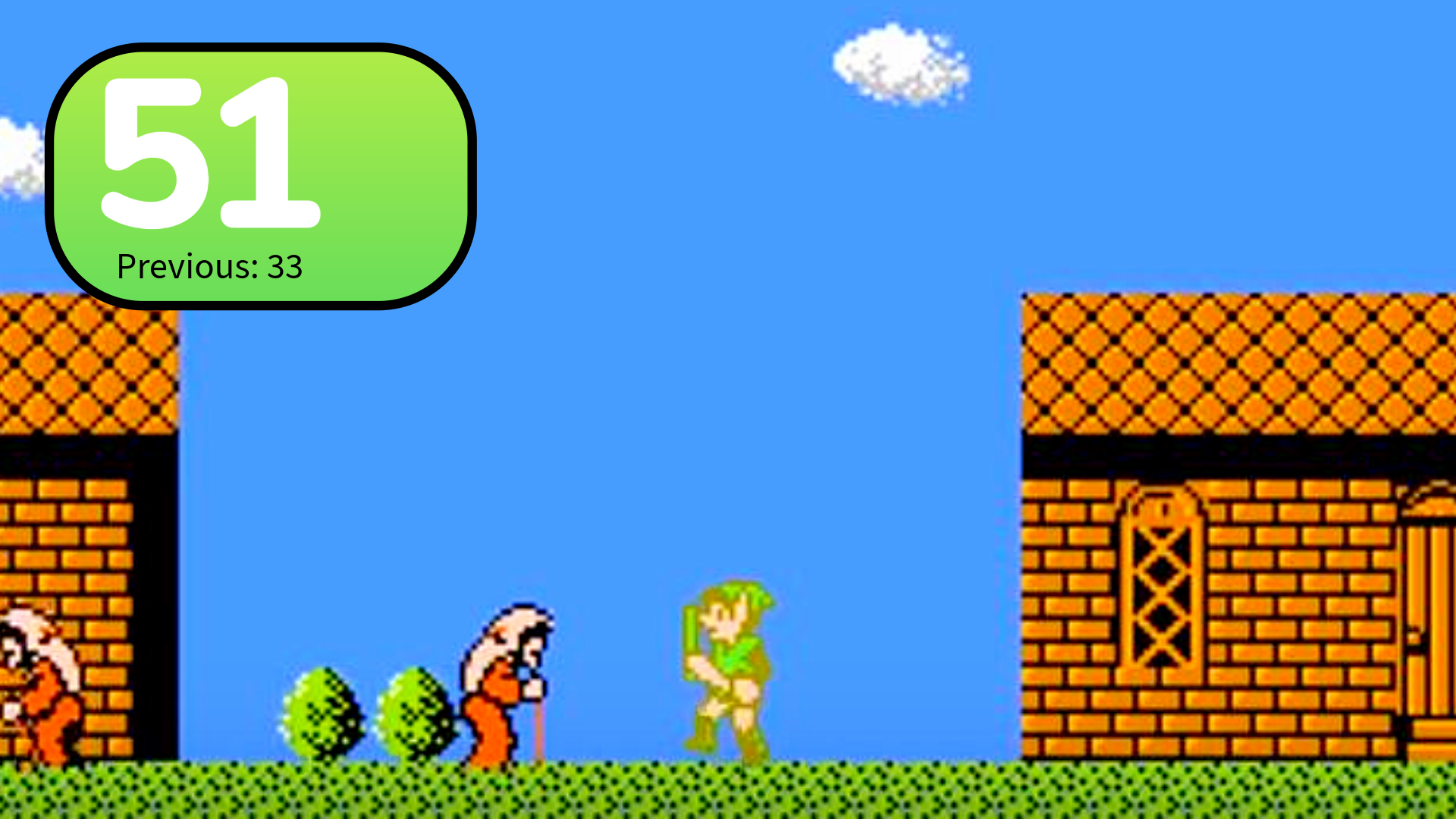
51. Zelda II: The Adventure of Link
Ah, Nintendo’s first stab at reinventing one of its main mascots, Link. Leaning more heavily into the RPG elements of the first game and eschewing the overhead perspective for a side-scrolling adventure instead, this game is weird and difficult. My first memory of “Zelda II” was watching a friend play it at his house, and him refusing to relinquish the controller for the justifiable fear that I would immediately die (I mentioned the game was difficult, right?). I eventually convinced him otherwise … and promptly died. So yes, I think it’s worthwhile, but it’s weird AND difficult (the ensuing years/sequels have yet to convince me otherwise). You have been warned.
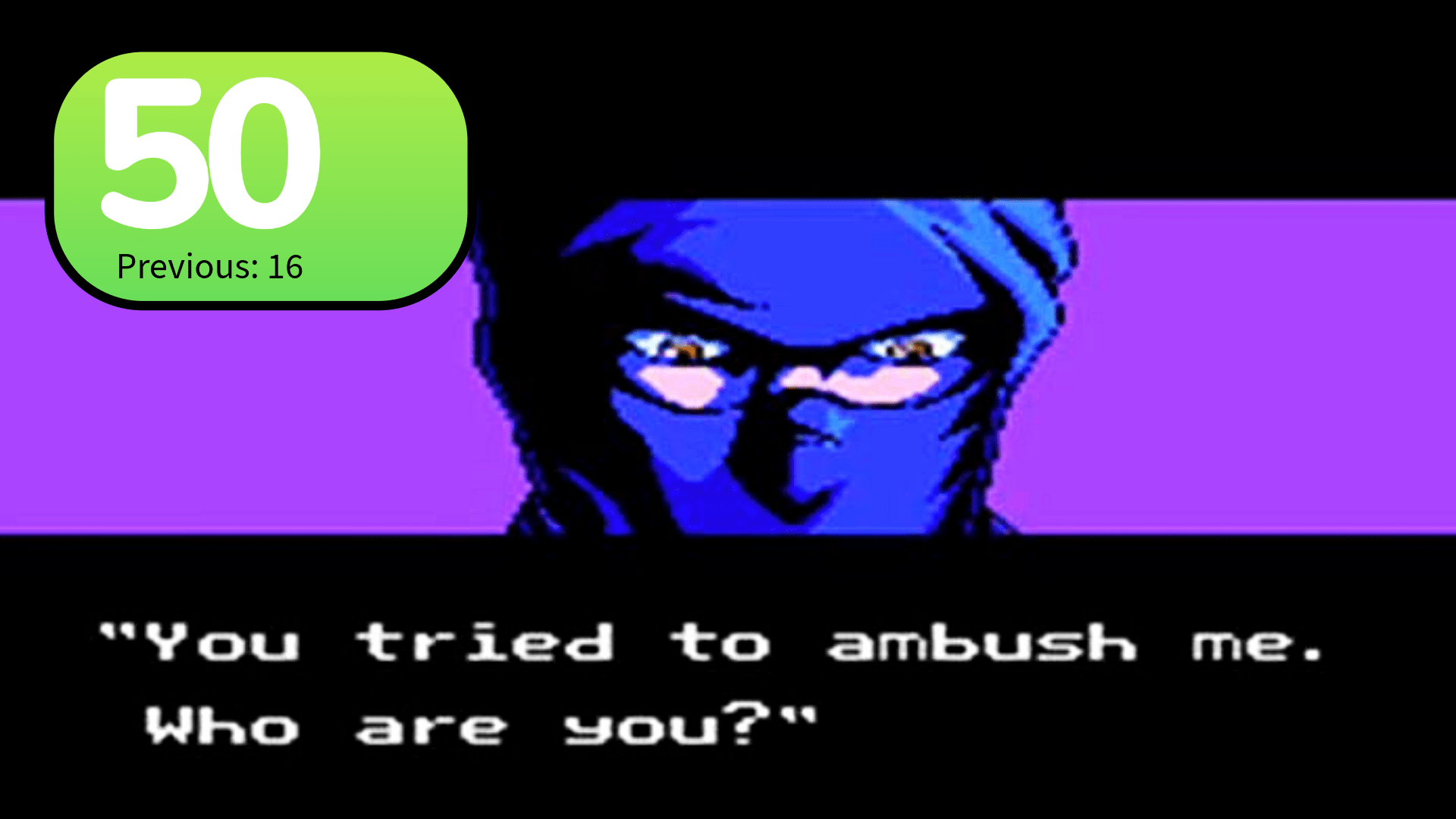
50. Ninja Gaiden II
It did everything that “Ninja Gaiden” did, and it arguably did it better. So why does it not rank higher? Well, that’s more of a philosophical discussion than anything else. The original game was such a breath of fresh air — introducing cinematic elements, like its various cut scenes — that it earns bonus points for innovation that all the sequels could not. That having been said, if someone told me they thought “Ninja Gaiden II” was the best Nintendo game ever, I wouldn’t argue with them TOO much. The presentation and game play are top notch. It only gets dinged with me for its lack of originality … and of course, the series’ continued sadistic nature (which included what seemed like a dozen false endings).
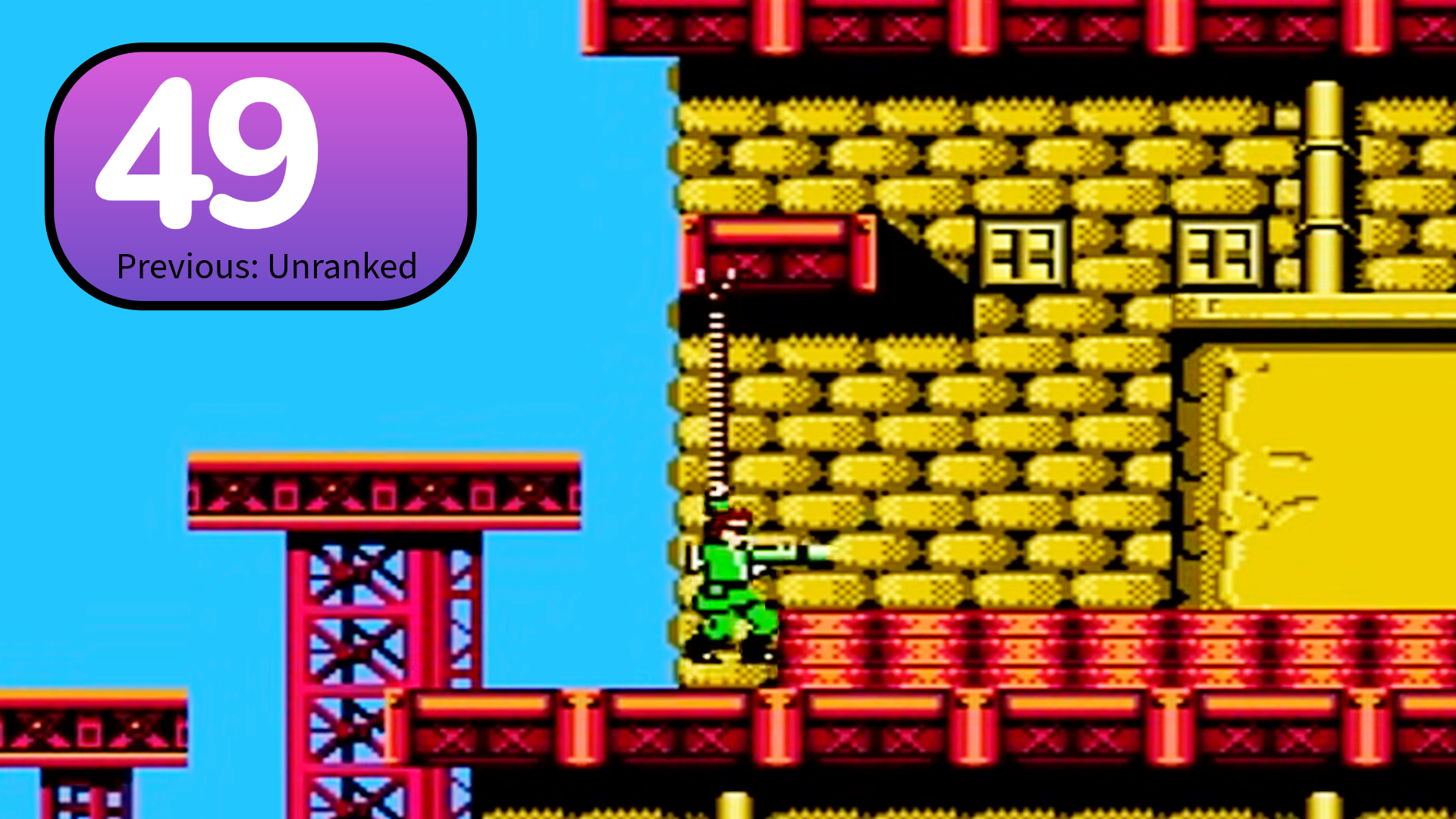
49. Bionic Commando
This game naturally stands out as a platformer featuring a character who can’t jump. I repeat: “Bionic Commando” is a platformer without jumping. Instead, your little Doc-Oc looking guy fires this springy arm at platforms to swing around and upwards, and this dynamic, of him bouncing around with his springy arm like Inspector Gadget, is the whole point of the game. The trouble is: I simultaneously want to penalize and reward this concept of a platformer with no jumping. I think ultimately I’m going to put it in the top half of the ranking because it’s a weird and fairly iconic title for the system. But it ain’t going higher than this because it’s also well and truly unreasonably difficult.
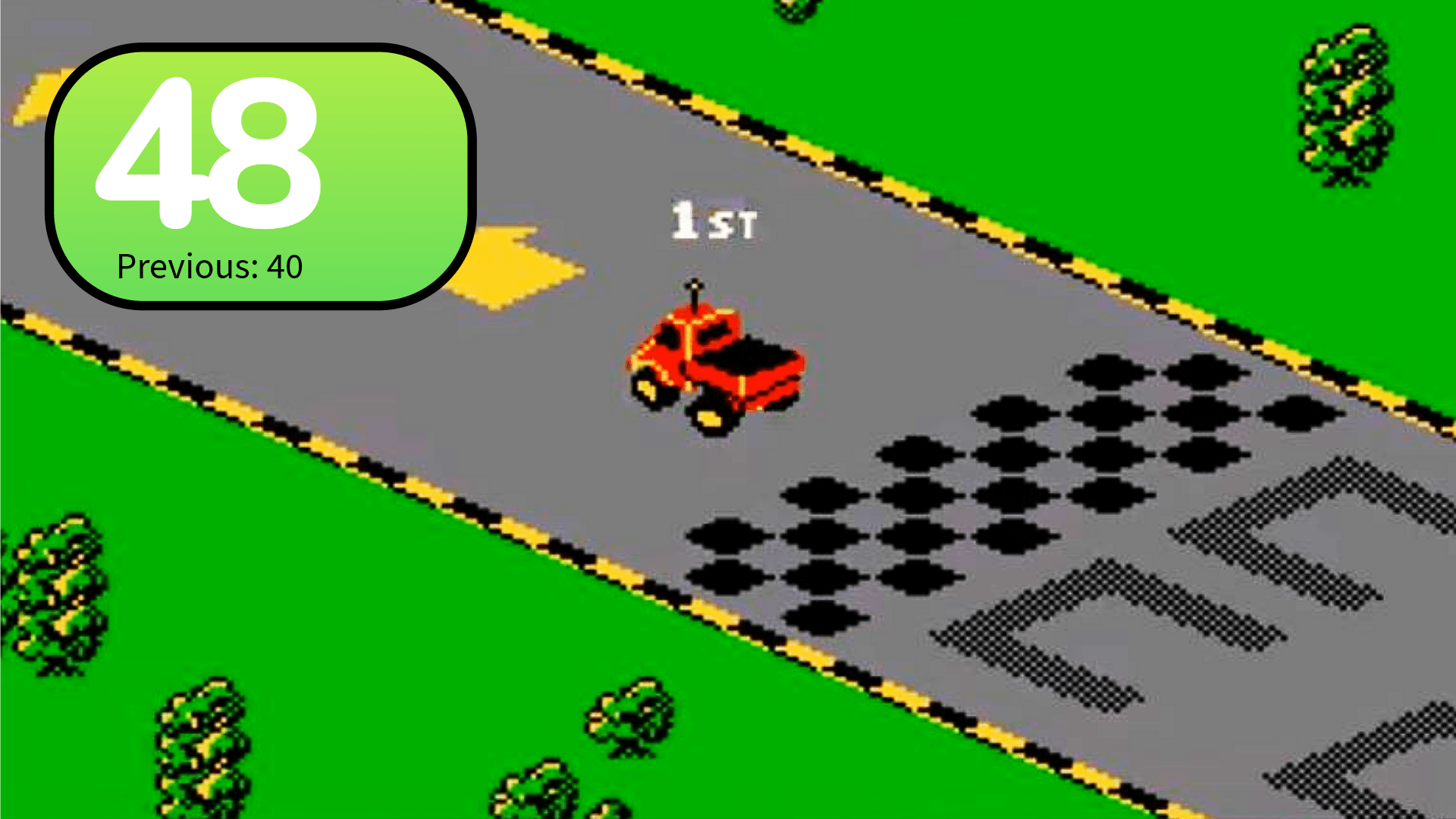
48. R.C. Pro-Am
Sporting a slick isometric perspective, fun gameplay, and a great concept (racing remote control cars!), “R.C. Pro-Am” is clearly one of the best racers on the entire NES console, deserving of all of the praise it has received over the years. The physics of the cars and their tendency to slide around the track, particularly around corners, is really satisfying to experience. Couple that with some nifty powerups and it makes for the game being more strategic than some of its competitors. Now, be warned, the game gets progressively more difficult and doesn’t offer a true ending, so if you’re a completionist, you may get really irritated. But it’s a genuine kick for a few races if you go in with the right mindset.
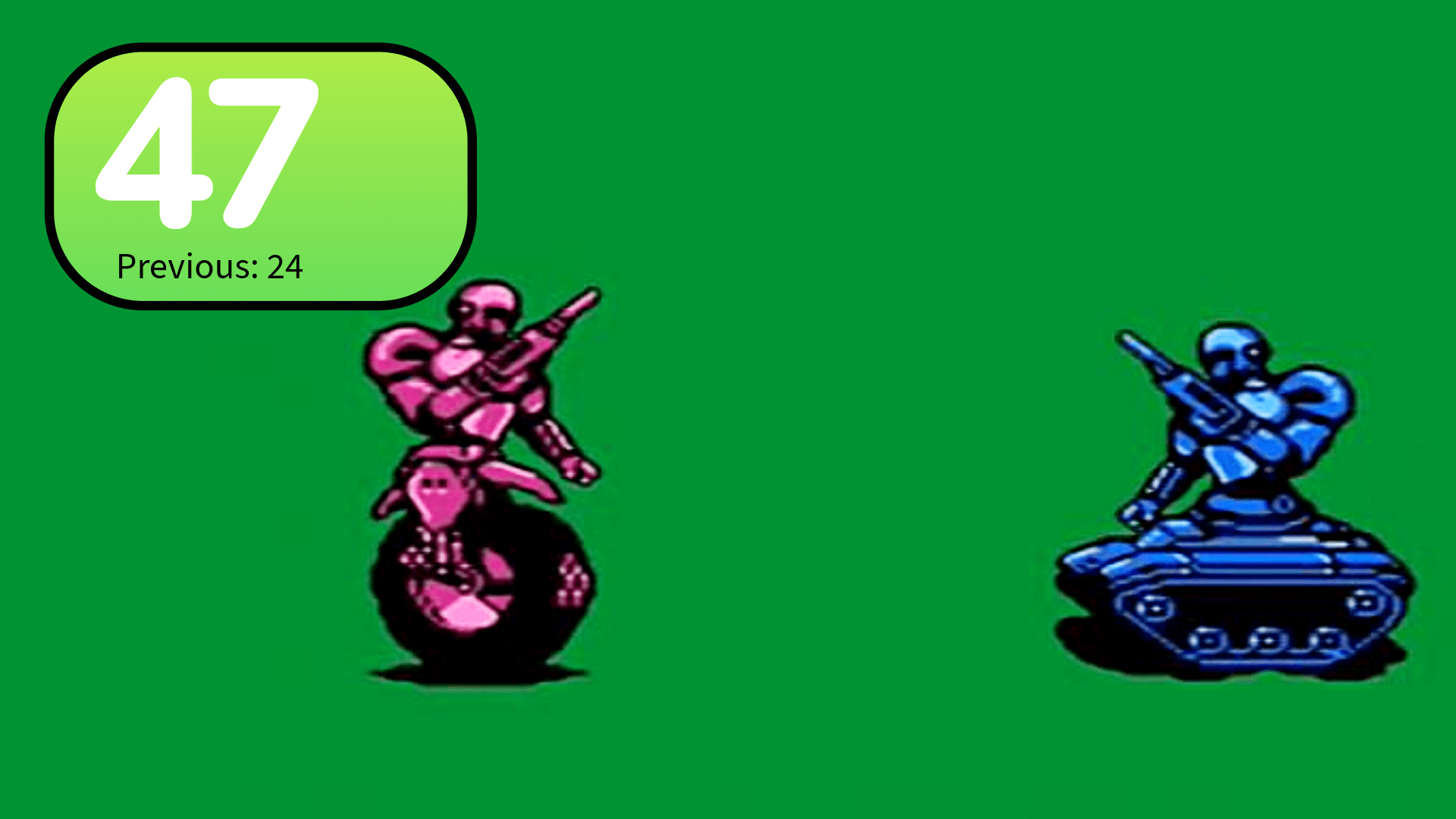
47. BaseWars
If a game involved me virtually beating the crap out of my younger brother, I was totally here for it. And this game (like “Wrestlemania Challenge”) fit the bill. Sporting a weird futuristic motif wherein robots would play baseball, but instead of conceding outs to one another, attempt instead to beat one another to a pulp, “BaseWars” was like a hopped-up version of Rock ’em Sock ’em Robots … except the robots are armed with weapons. And play baseball for some reason. Yeah, it didn’t make much sense, but I remain totally here for it. Weird games have the benefit of being memorable, and this game is certainly that.
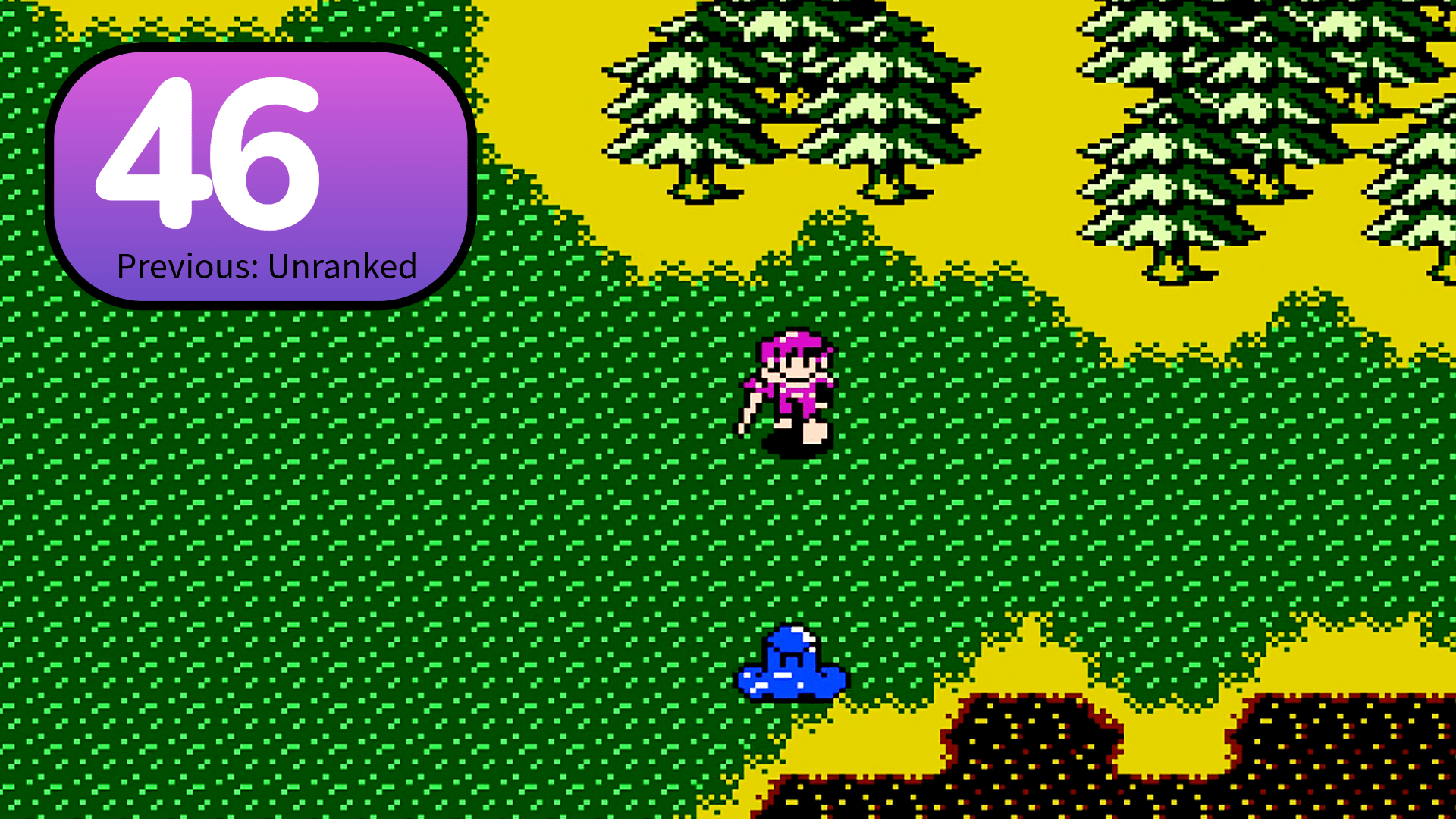
46. Crystalis
Some folks will argue for the under-the-radar “Crystalis” as being the best RPG on the NES. I think it falls a little short of that mark, as it’s not quite as essential or influential a title as something like “Final Fantasy” or “Dragon Warrior.” But it’s definitely got its strengths, including an action-based approach to things, cool abilities/spells (some of which improve one’s quality of life a ton), and a fairly balanced levelling pace that all work in concert to make the game largely enjoyable to engage with. If the game were a little less nonsensical and cryptic in its progression, I’d probably be eager to rank it quite a bit higher than this. Instead, that aspect really holds it back.

45. Tecmo Bowl
I’m not going to sugarcoat this: The sequel is better. There’s some debate about that among die-hards, but I am definitely in the “Tecmo Super Bowl” camp. That having been said, “Tecmo Bowl” — the O.G. — still rules. Bo Jackson is a god among men in this game, so playing as him is joyful in and of itself. But even taking Bo out of the equation, this game leaned into a wild arcade version of football, with the emphasis on two-player shootouts. An underrated touch in single-player mode: having a password system — so you could systematically defeat every team in the game — was key, because it provided the game more longevity.
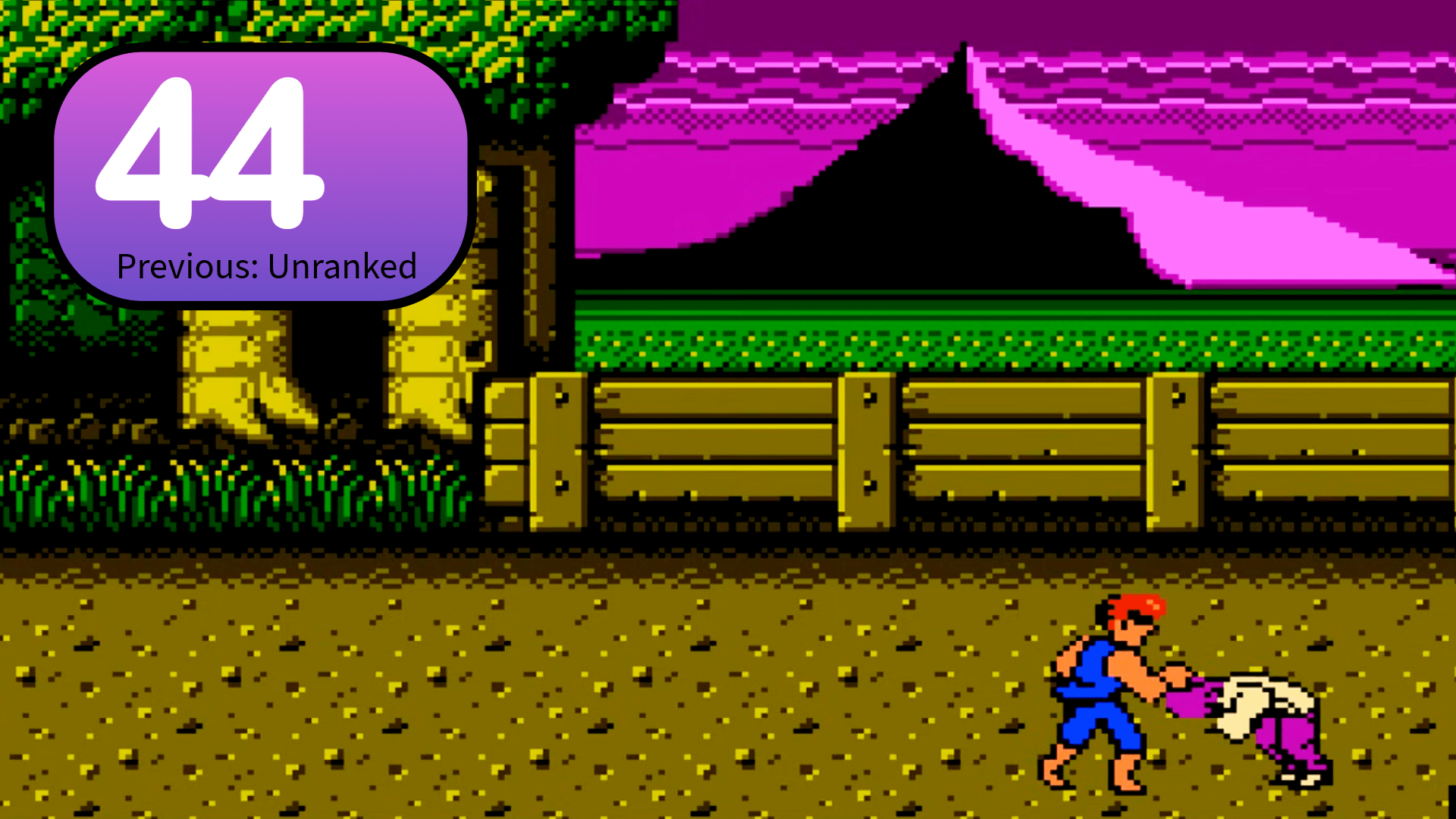
44. Double Dragon
Upfront, we have to acknowledge the elephant in the room, which is the lack of multiplayer in the main game itself. It had a weird vs. mode, but the original arcade game had two-player brawling goodness, and somehow, we’ve lost that here. I mean, the game is called “Double” Dragon for a reason. Sheesh! Anyway, that disappointment aside, the NES port of the arcade classic also struggled with a clear downgrade in visuals and underwhelmed with some slowdown and flicker. But choosing to engage with this sucker is ultimately not a terrible decision, as the gameplay is on point and it utilizes a clever levelling-up dynamic that unlocks better and better abilities. Because of this, and despite its shortcomings, the original NES “Double Dragon” can still provide an enjoyable time.
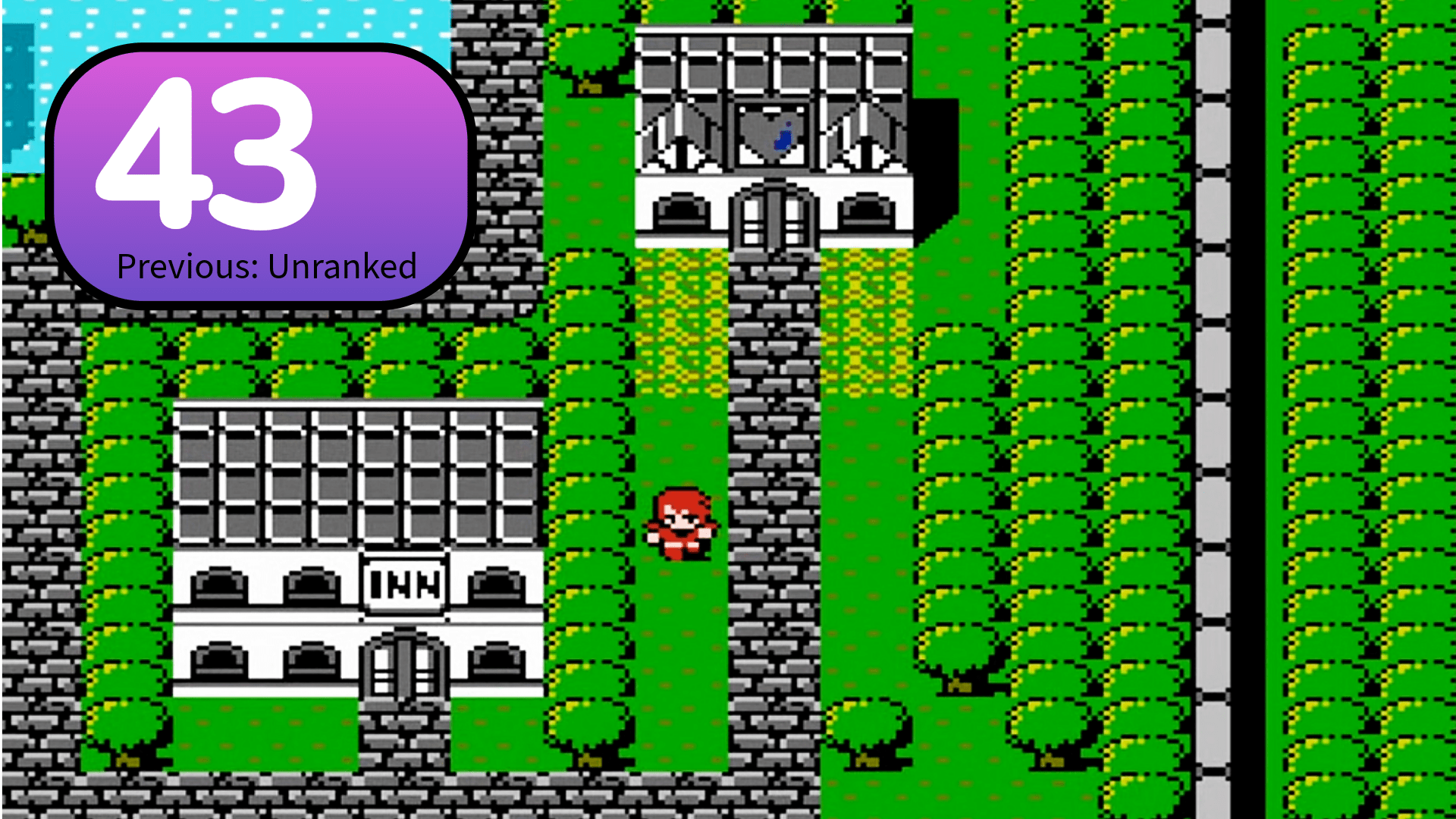
43. Final Fantasy
Well, here’s where I try not to have too heavy a hand criticizing this bad boy in the interest instead of trying to laud it for being a landmark title. To be sure, it’s light on modern quality of life improvements, featuring way too much grinding and the sorts of dead ends and unexplained mechanics (e.g. who to put in your party, how to equip them, how to utilize spells, etc. etc.) that frustrate a great deal. Modern gamers will struggle with a lot of this. But the depth on display here is really sort of baffling to comprehend, as the game is huge and the customization options are equally huge. I have more of a nostalgic appreciation for “Dragon Warrior” (and it came first), so that gets the slightest of nods, but among NES RPGs, I can’t deny “Final Fantasy’s” superior depth and its lasting impact. If you’re okay leaning on a guide, this game can deliver. If you’re not … God help you.
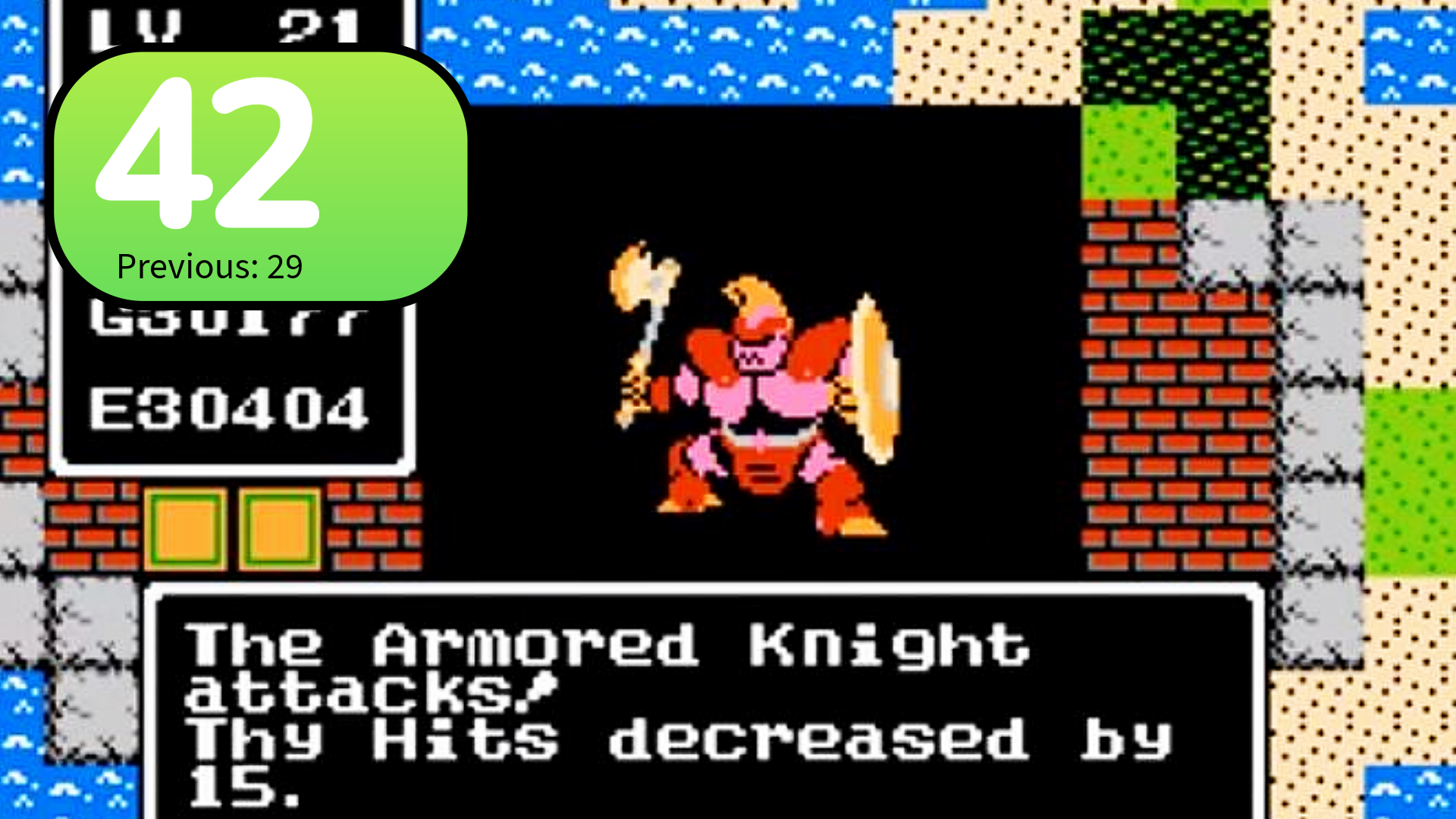
42. Dragon Warrior
I’ve got a love/hate relationship with this game. I cannot in good conscience deny its importance to the RPG genre at large, nor its role as my own personal gateway drug into that huge world. I also have fond memories of this game for it being a free giveaway with my Nintendo Power subscription. But man, oh man, “Dragon Warrior” is notorious for “grinding,” that time-honored RPG tradition of having to fight a ton of ancillary battles with mediocre baddies so as to level up to a point that you can beat the bigger baddies. It’s excessive here, to the point that I struggle to recommend the game at all. BUT, it’s an important title, and I still have good memories attached to it (the music is forever burned into my brain), so here it sits, just above “Final Fantasy.” (And there are ways to cheat the time investment.)
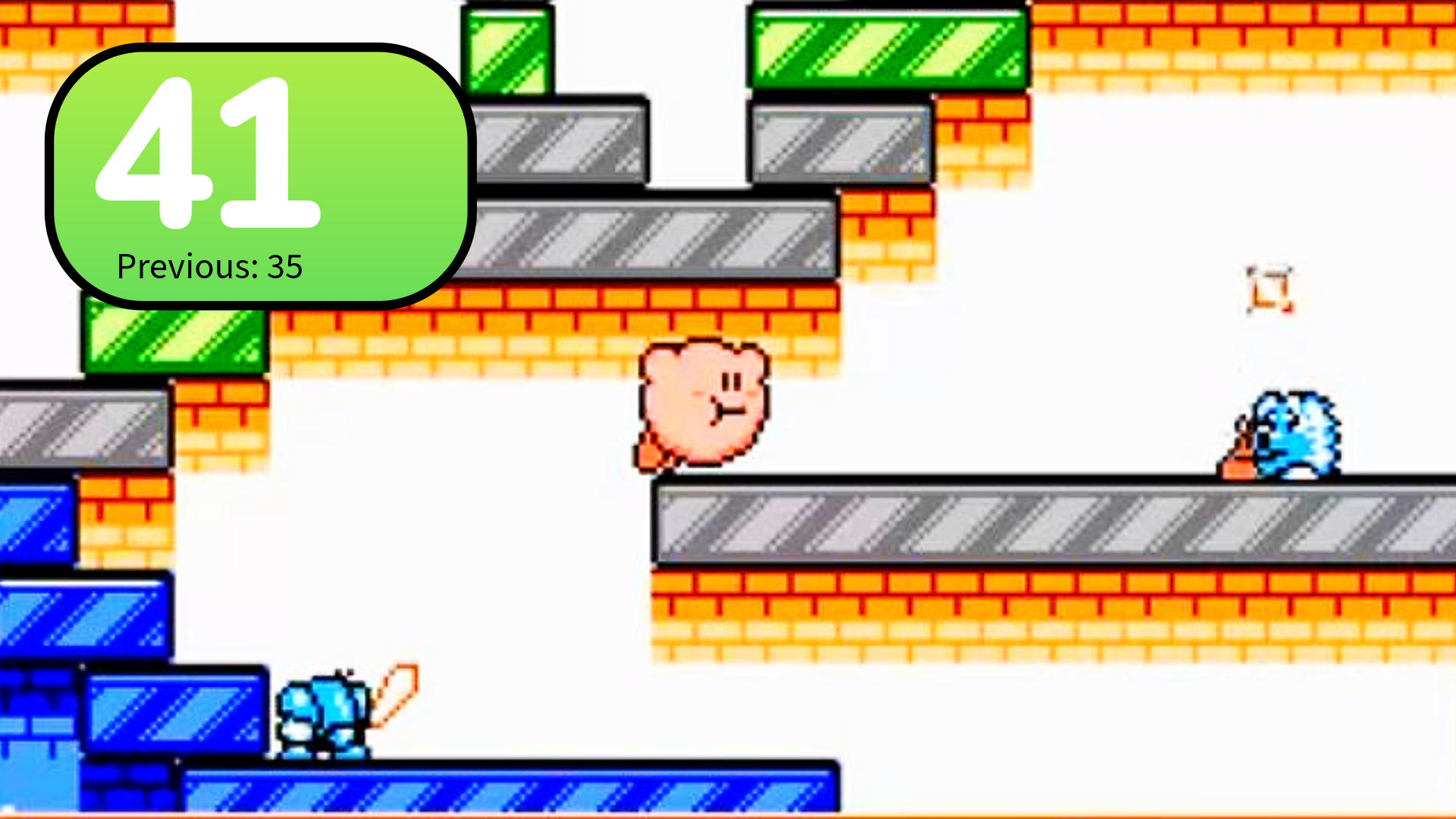
41. Kirby’s Adventure
For any subjective ranking of this type, timing is going to play a significant role in how most of these games are perceived, at least in a nostalgic sense. Some of the early games in the Nintendo’s life cycle came before I had jumped on board, so I didn’t experience them as a kid … so I have less attachment to them now. The same is true for late-life NES games, such as “Kirby’s Adventure,” since the new hotness of 16-bit systems was available. Kirby’s NES adventure is a satisfying play, and you can clearly see the polish and care that went into it. But I was already playing “Street Fighter II” when it was originally released, so there’s just no emotional investment here. Also – and this is probably more important – I think the title character controls better in other games. He’s just a little sluggish here. Sorry, Kirby.
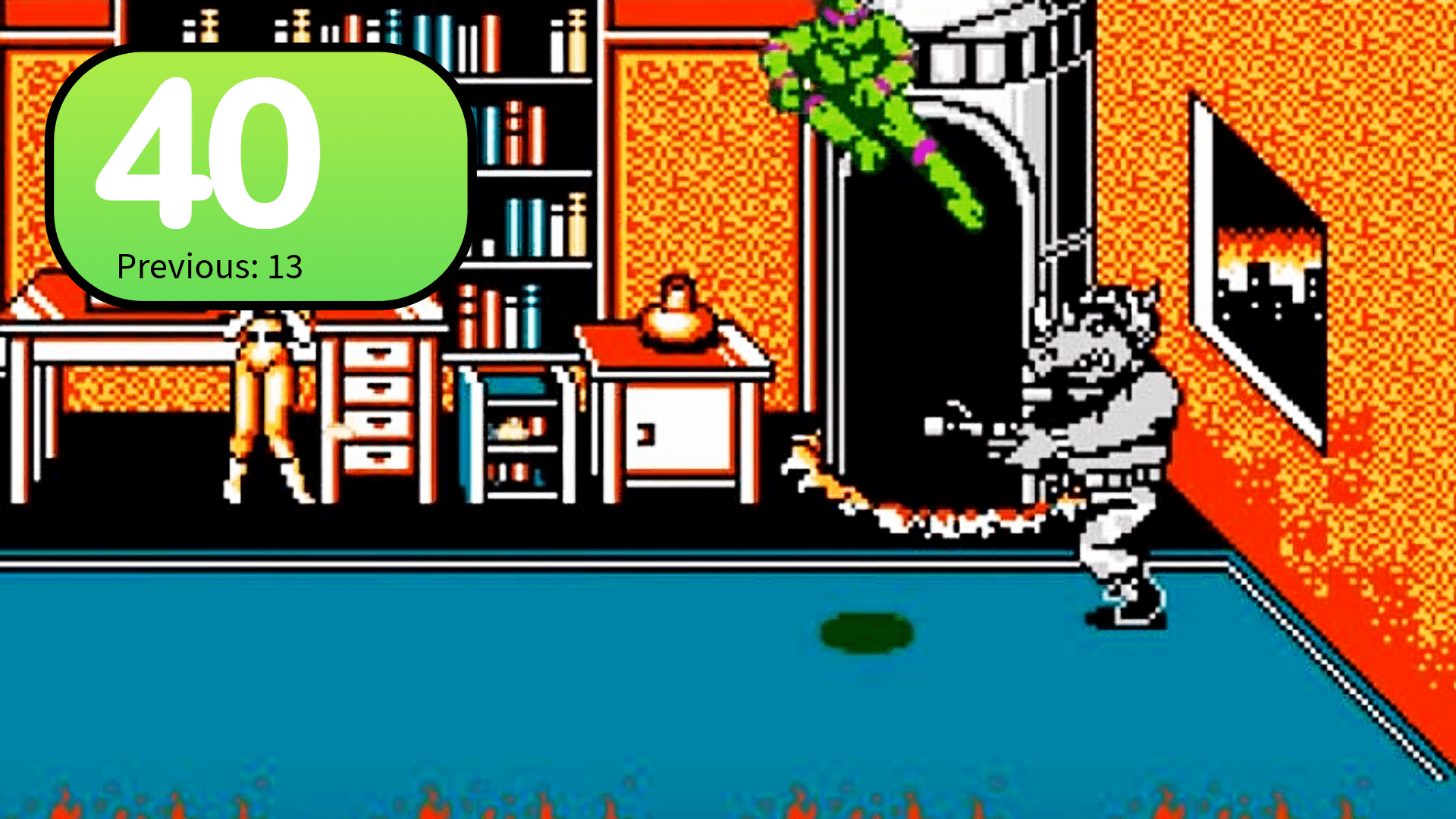
40. Teenage Mutant Ninja Turtles II: The Arcade Game
Every kid was obsessed with the ninja turtles. Cartoons, comics, toys, and of course, the quarter-sucker that was the arcade game. The original turtles Nintendo game was a radical departure from the coin-op, and it left many (myself included) pretty disappointed. So the folks at Komani listened, and their second NES offering was a port of the much more popular arcade game. The bad news? The Nintendo hardware couldn’t handle the big, bold graphical elements of the arcade, so this version suffered greatly from slowdown, flicker, and some pretty ugly/shrunken visuals. The good news? “TMNT II: The Arcade Game” actually played better than its arcade counterpart (no need for quarter suckage = no need to program the game cheaply). The end result is pretty solid, especially taken as an example of programming wizardry at play (they had NO business making this port as successful as they did). It’s dropped in my rankings some, but I still admire it a great deal.

39. Teenage Mutant Ninja Turtles
In terms of sheer, raw commercial impact, the original “Teenage Mutant Ninja Turtles” is the runaway winner for the top turtles game on the NES. But man, it’s a pretty janky game, not nearly so polished as its sequels, and worse, it was undeniably a disappointment for people at the time as a brutally difficult explorer platformer full of flicker, slowdown, unfair traps, and dead ends. Ironically, some of those points (specifically the exploring) now make it distinctive and ultimately give it a slight leg up for me nowadays over its direct NES sequel. It’s ridiculously close though, let’s be clear. All three turtles games are super flawed and yet super fun at the same time (or at least fun for those of us with nostalgia-painted goggles on), and I think all three you can throw in a hat, pick one, and have an okay time with (though not TOO good a time, ha!).
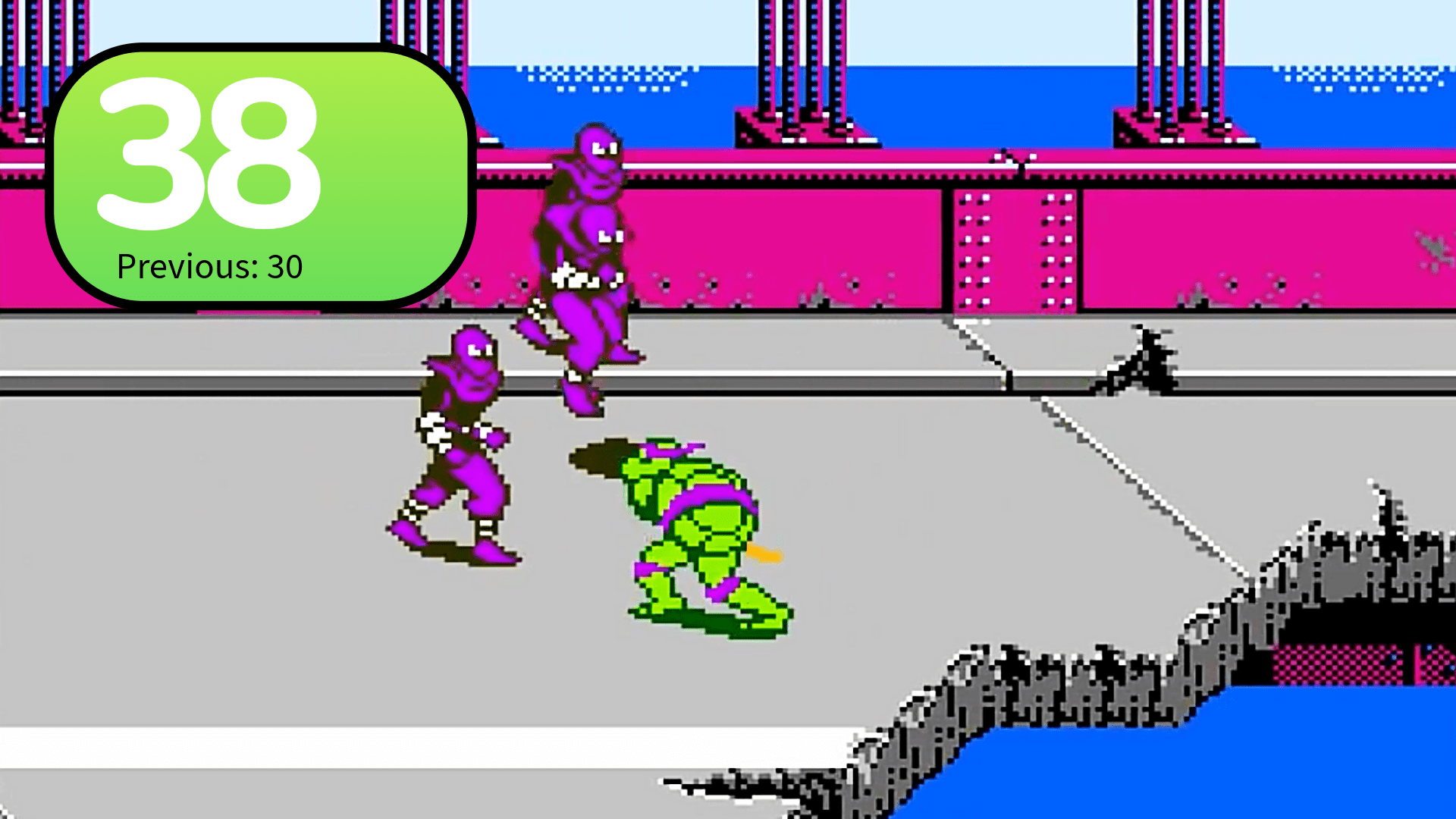
38. Teenage Mutant Ninja Turtles III: The Manhattan Project
So you might have heard about these Teenage Mutant Ninja Turtles. They were a thing, and this game did a good job of taking what had previously been established on the NES and running with it, to the point that I think this has become my favorite game of the bunch. In all honesty, the licensed characters that all made cameos throughout the game were and remain one of the biggest draws of “The Manhattan Project,” and it does run a little long for a brawler. So its biggest selling point won’t do much for non-fans. But whether you’re a fan of the material or not, this is still solid, 2-player brawling action with good mechanics, graphics, and music, and it’s worth a spin.
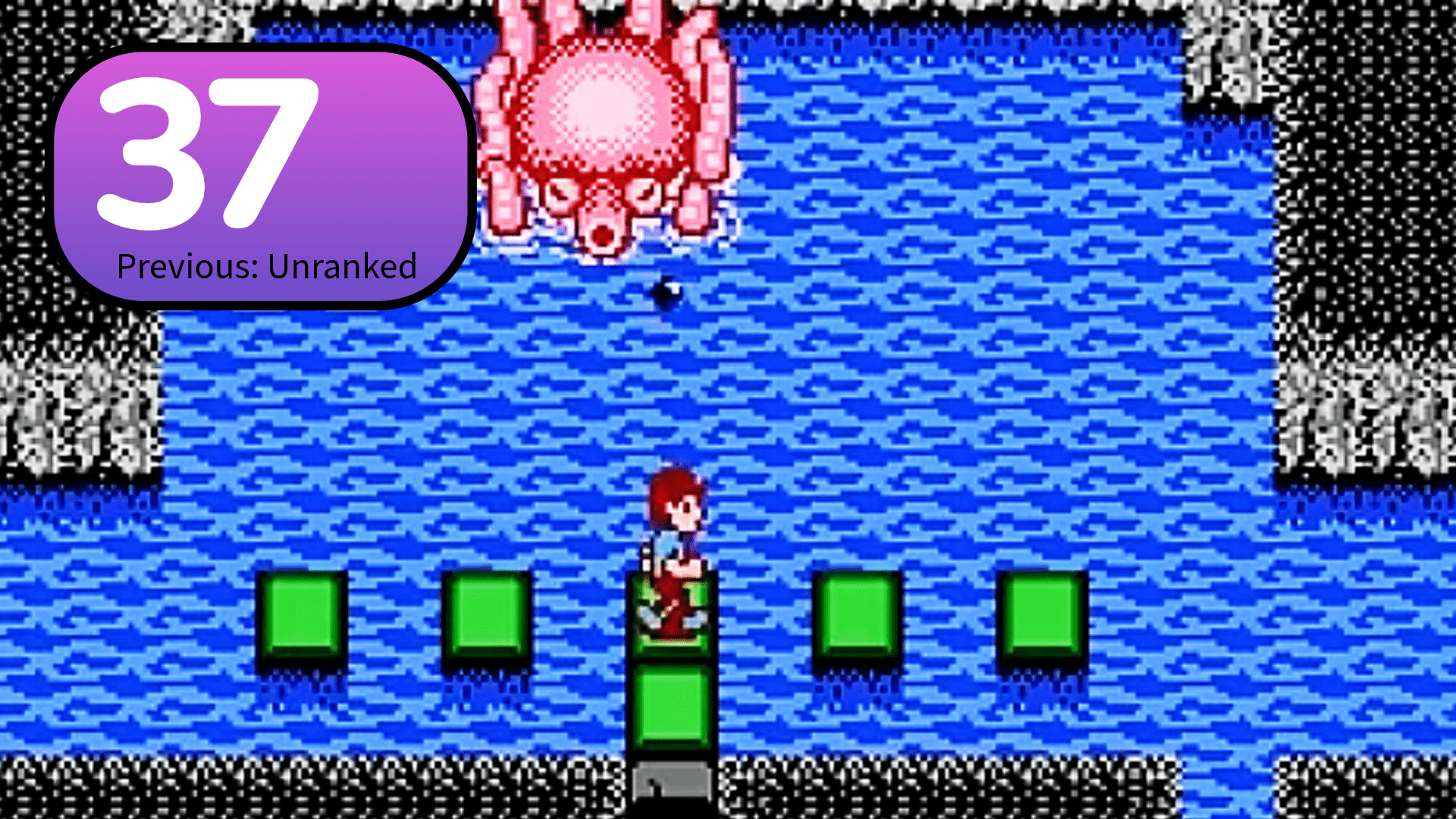
37. StarTropics
A certified oddity in the NES library, “StarTropics” is an action-adventure that somehow didn’t earn a Japanese release despite being a first-party developed game. The caveat upfront is that it’s a bit of a mess and you have to be okay with some flaws if you want to engage with it. What you’ll be rewarded with is a fairly unique experience and an undeniably mirthful game, full of humor, color, and life. It’s also full of dead ends, insta-kills, and clunky controls, but like I said, you take the good with the bad. Maybe stick some bananas in your ears to help you cope. (I don’t think you should actually do this, for what it’s worth. Just play the game.)
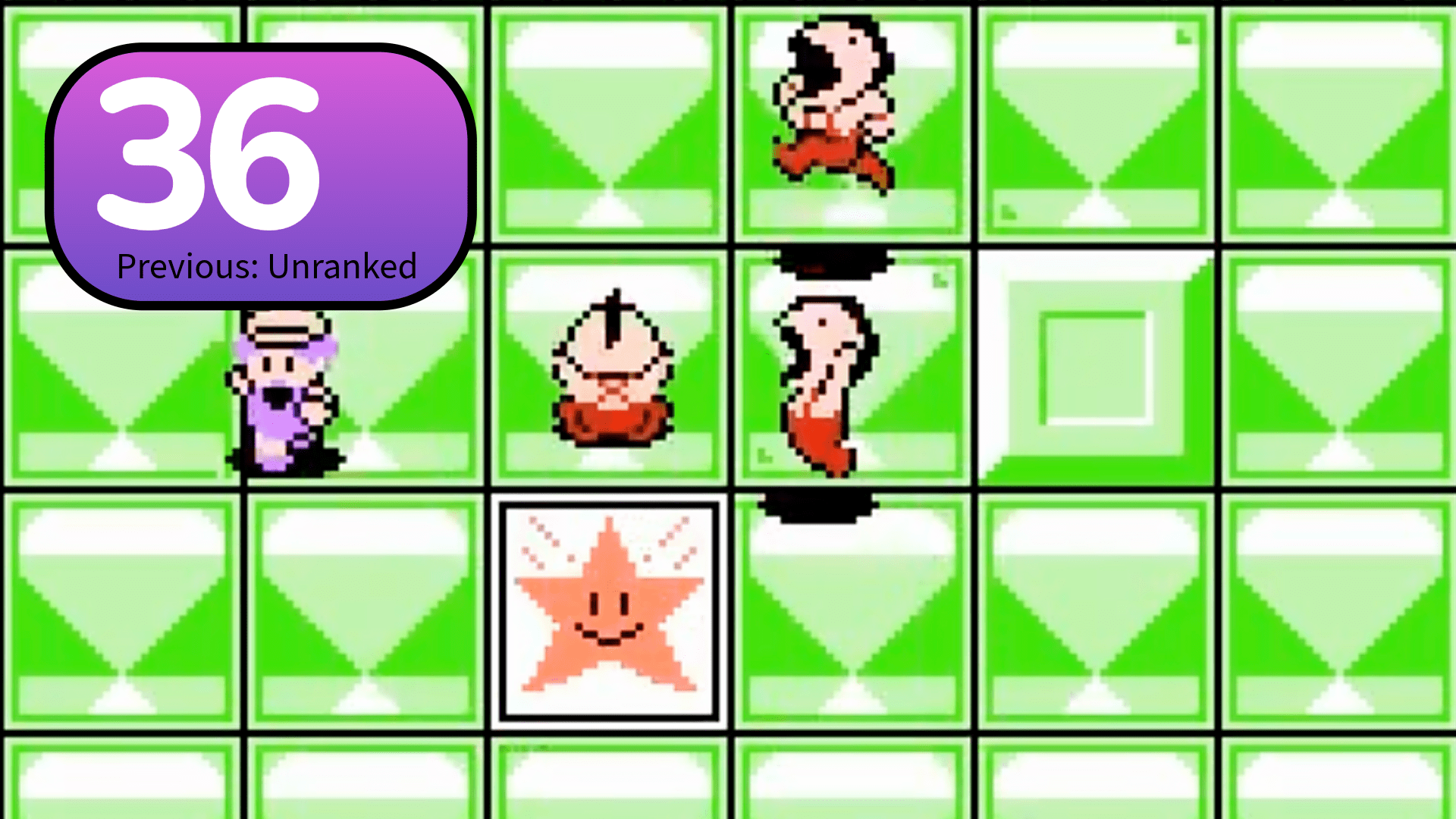
36. Mendel Palace
Part of the reason I was inspired to expand this list was to be able to include games like “Mendel Palace,” which would have been a dicey inclusion in a Top 30 or 40 but is a surefire lock for any reasonable Top 100. It’s a puzzler platformer wherein your little guy walks around flipping floor tiles to acquire abilities and defeat enemies. When all enemies have been defeated, you move on to the next level. It’s a simple enough game, but the concept never tires, as the game does a great job of presenting unique enemies and challenges from level to level. It’s a seriously fun game and it’s much easier to play nowadays too (on Nintendo Online!), so there’s not much reason not to engage with it.
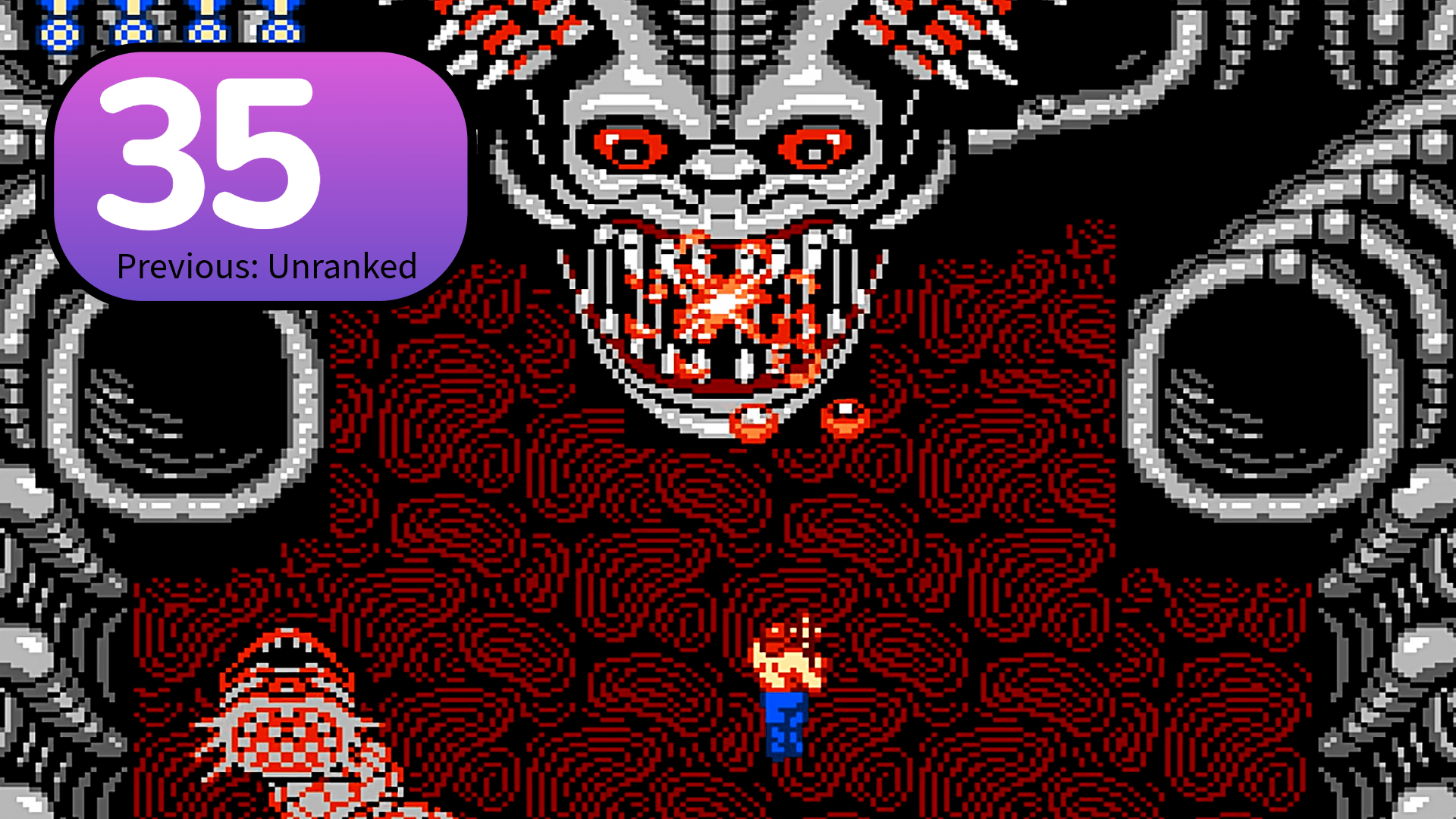
35. Super C
Nostalgia is a funny little bug. I can name a half dozen titles on this list that probably get a nostalgic boost above sequels that one could argue improved on the original in tangible ways, and yet, I do think there’s value in doing a thing first. That’s the situation going on with “Contra” and its direct NES sequel “Super C.” The latter is more refined and has some better sequences than its predecessor, and yet there’s a special sauce thing going on with the original game. Again, that’s probably at least partially attributable to nostalgia, but them’s the breaks I guess. On its own merits, Super C is a great friggin’ game. It clearly rivals the original Contra. It just gets dinged some for coming along second.
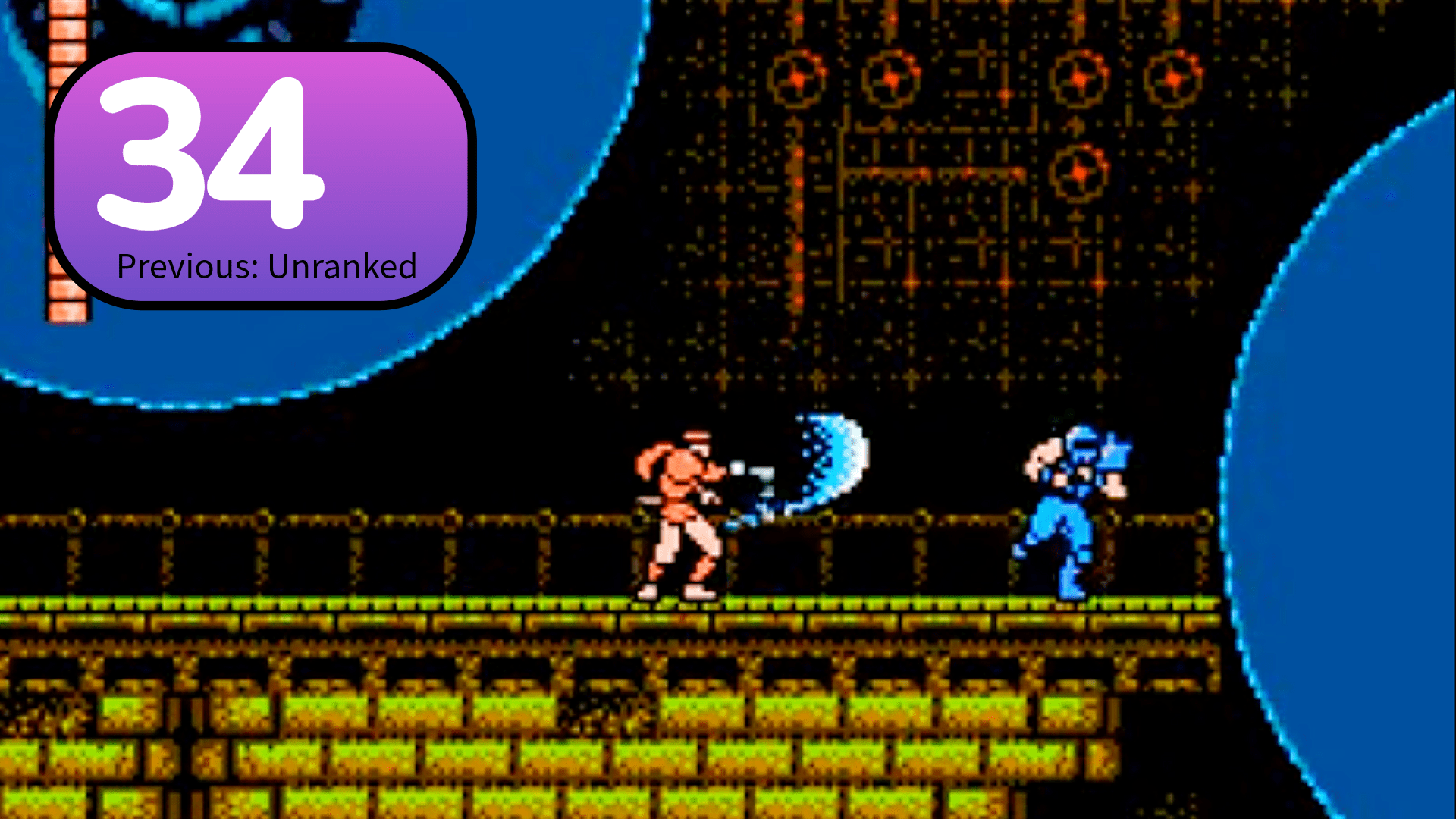
34. Shadow of the Ninja
The depth of fun platformers on the NES is significant. Here’s another fun one centered around ninjas, which should sound familiar, but it differentiates itself with some of the weaponry which add to the gameplay and its capacity to accommodate two players. I’d be lying if I said “Shadow of the Ninja” was high on my list before replaying it recently, but that revisit really elevated it in my eyes. If you’ve played it before, this game might be better than you remember. And if you’ve never played it, it’s very much a great example of what the NES did so well in regards to platformers in particular.
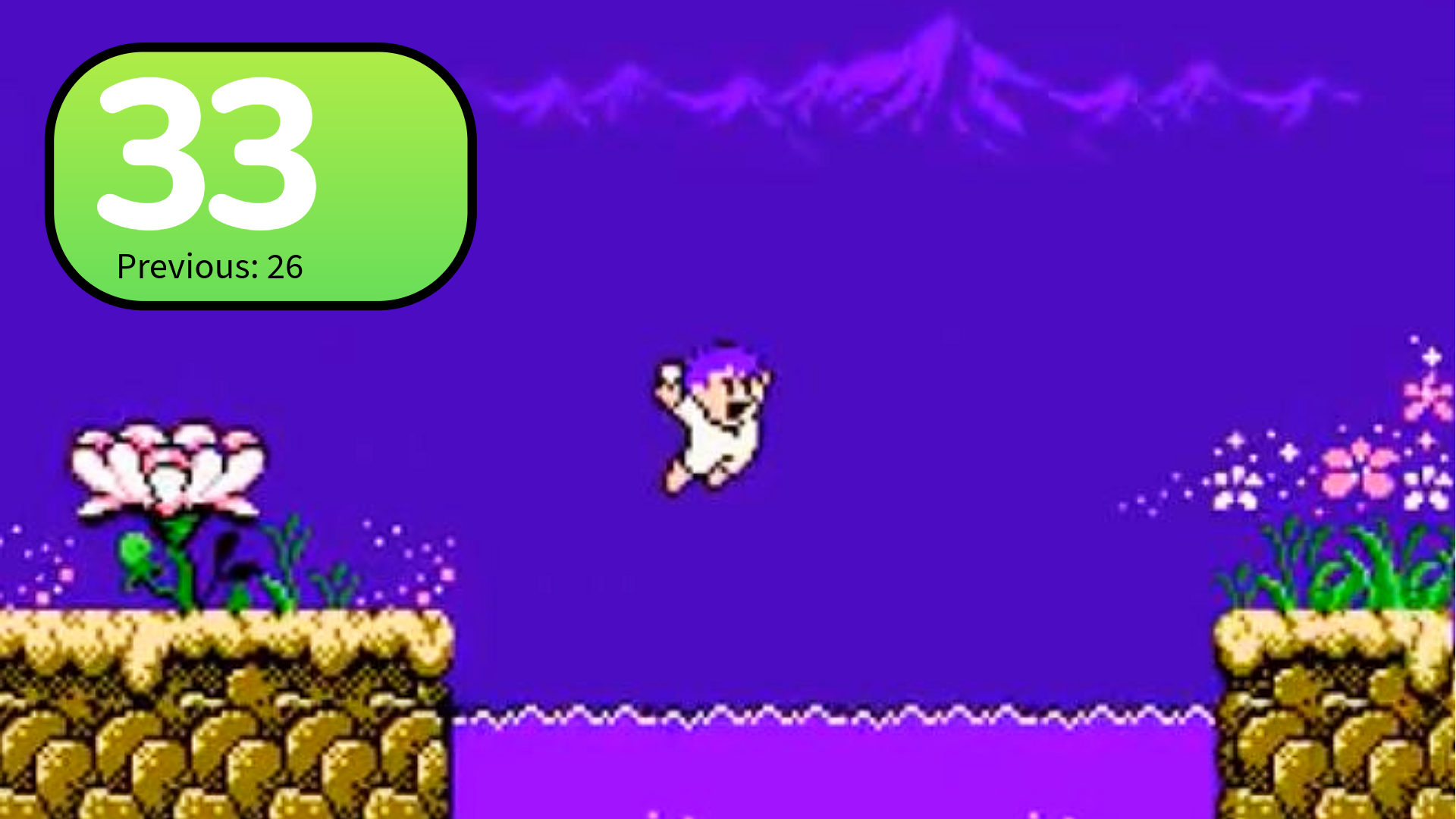
33. Little Nemo: The Dream Master
Drawing its story and characters from somewhat obscure source material (at least here in the States when it debuted), Capcom nonetheless worked its adaptation magic with “Little Nemo: The Dream Master.” The noteworthy play mechanics — in which Nemo would take the abilities of creatures he encountered during standard level play — is something that has gone on to be copied a gazillion times since (even the inspiration for Mario’s dinosaur mascot, Yoshi, may or may not have been conceived of first). So it was an innovative title, but also to be clear: it was gorgeous to look at, sounded brilliant, and the controls were cool (throwing candy at enemies to satiate/defeat them = awesome).

32. Micro Machines
Overhead racers are really hard to do. I know this because I’ve played a bunch of really bad ones, and when they’re done poorly, they’re not only just kind of objectively bad, they also piss me the hell off. Given that context, the odd licensed game “Micro Machines” is a miracle unicorn. At release, I remember a “Who asked for this?” vibe to the thing. But similar to “Rescue Rangers,” part of the appeal here is in dropping the gamer into a stylized, larger than life world, wherein you’re tiny, and you get to navigate everyday objects which are ginormous. This creates its own sense of wonder, and though it wouldn’t matter if the game didn’t play well, thankfully this one does. Such an underrated part of the NES library.
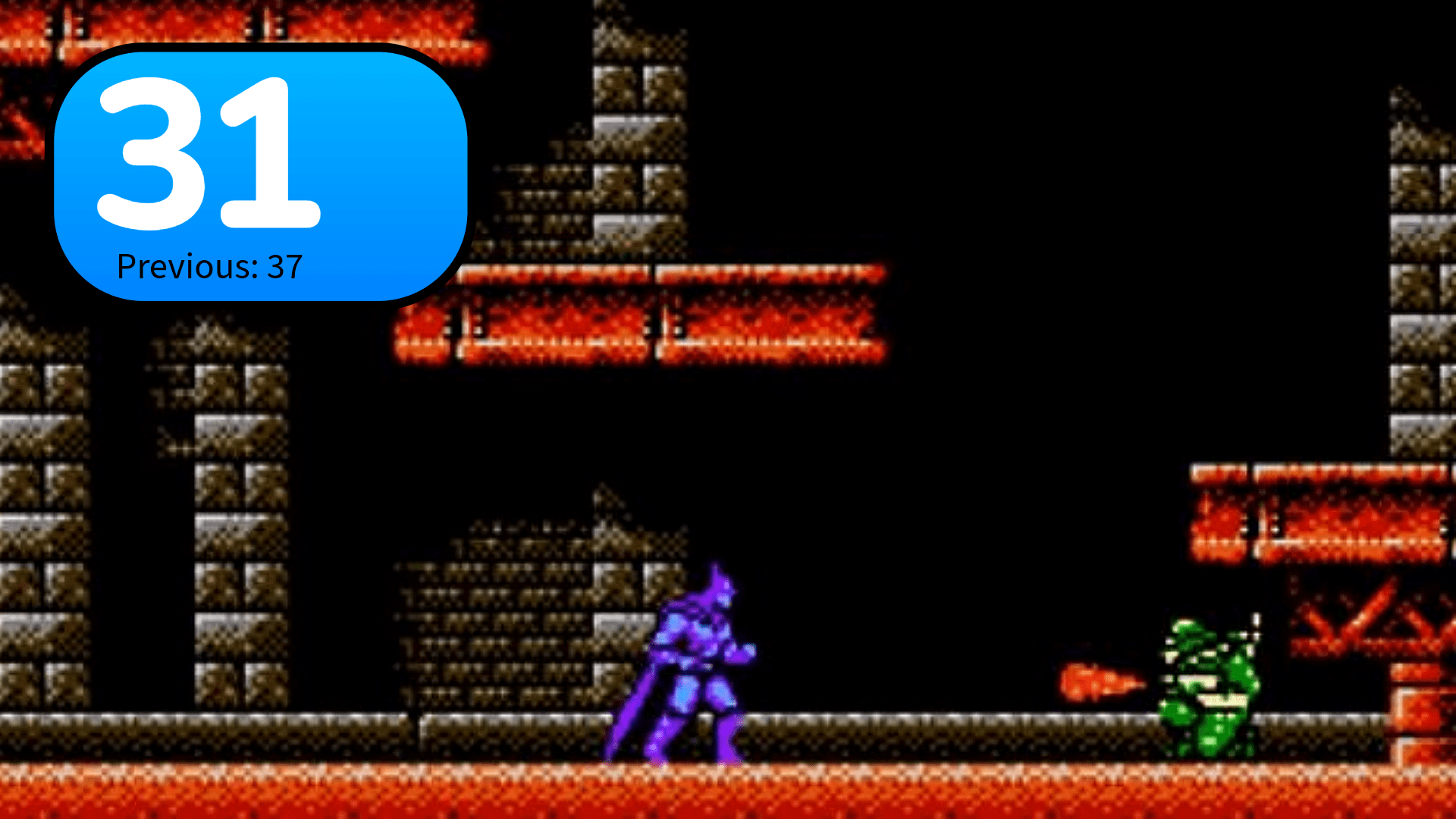
31. Batman: The Video Game
Lots of folks swear by this game, and the more I think about it, the more I can understand why. Loosely based on the 1989 “Batman” movie, the game design here exceeds the licensing agreement — and not the other way around — which is always a rarity in games like this. That wall jump and the power upgrades are all satisfying experiences, while the graphics and sound presentation are on point. My only quibble would be how much of a departure it was from the movie or even the original source material, whereas I think the Genesis version of the license did a much better job of being true to the movie. But “Batman: The Video Game” is good on its own merits, and it deserves to be here.
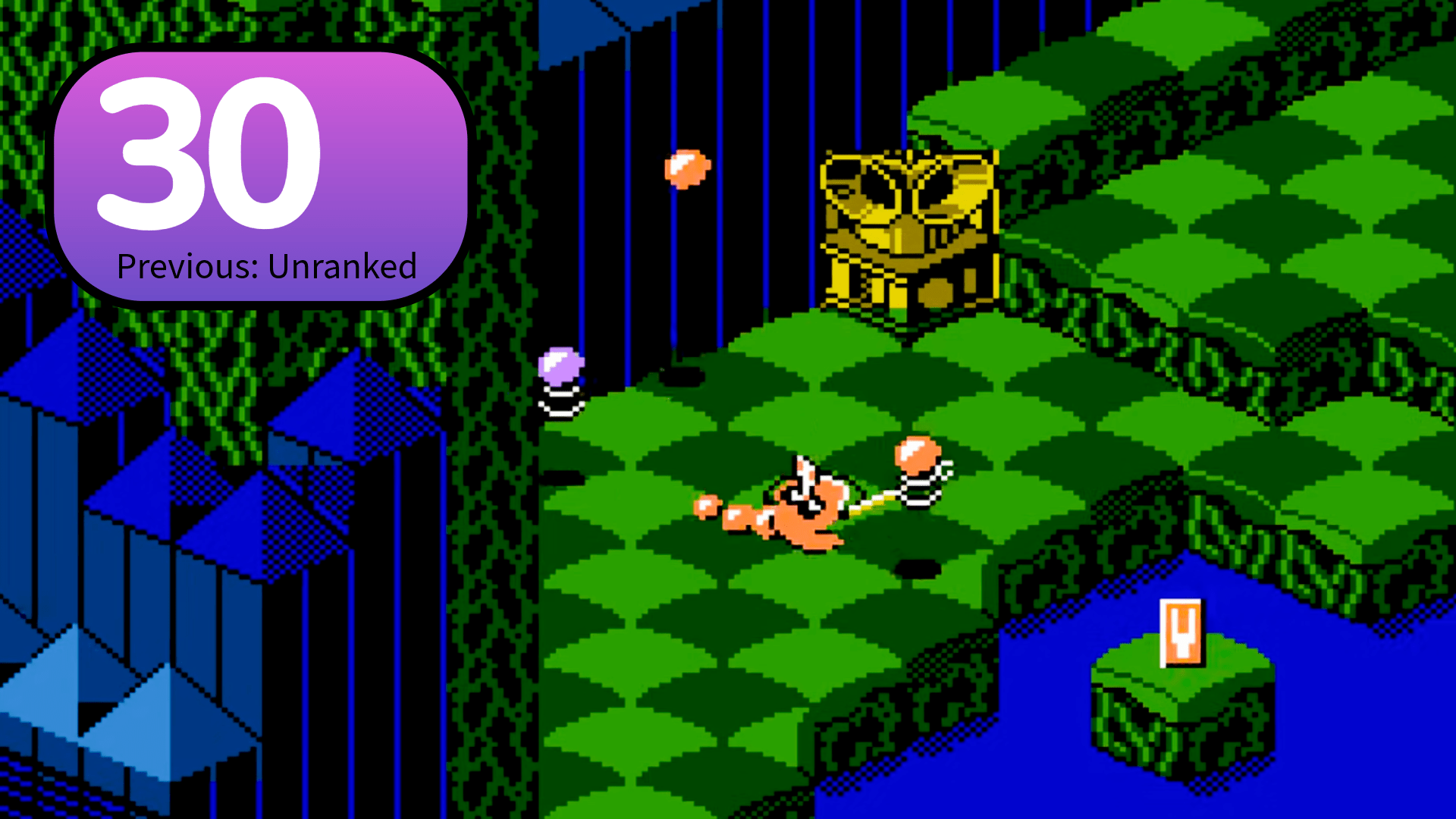
30. Snake Rattle ‘n’ Roll
There’s an interesting disconnect between how “Snake Rattle ‘n’ Roll” was marketed, how it actually plays, and what you think a snake is even physically capable of doing. None of it lines up. But check your expectations at the door, because the game, weird as it is, works really, really well. The basics are you have to move this little snake guy around an isometric landscape – one that is big, colorful, and boasts a vibrant soundtrack (and a ton of enemies trying to whack you) – and consume a designated amount of food to be able to progress to the next stage. The description probably doesn’t do it justice, and it’s certainly tougher than it sounds (be warned!). But the design is sound, and the execution mostly sings. Play this sucker!
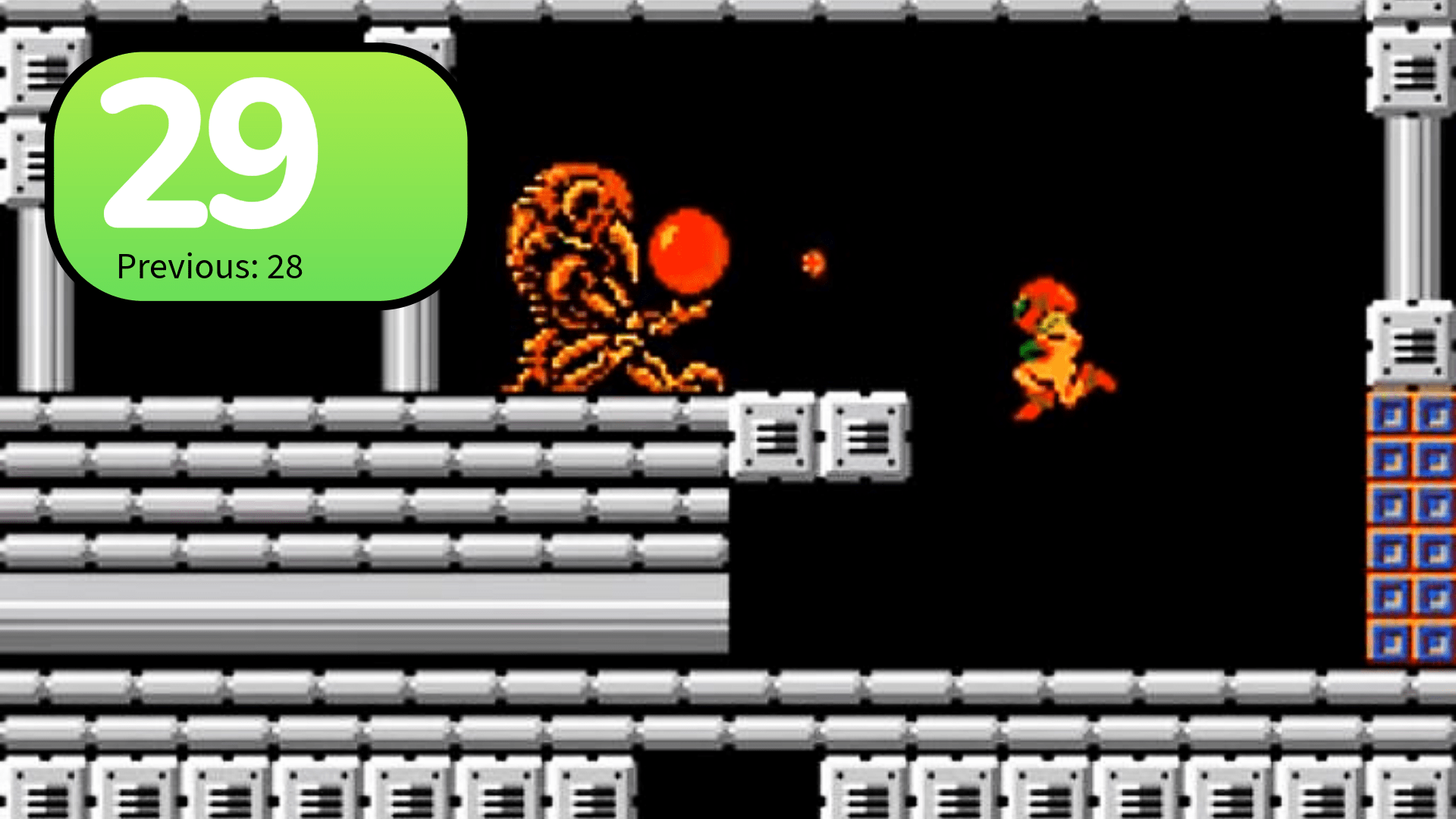
29. Metroid
Most observers who revisit this game in the wake of its sequels tend to get tunnel vision about what the first “Metroid” lacks rather than what it possesses. Yes, you’re dropped in without a map or any kind of direction, but those classic controls and the eerie atmosphere are instantly recognizable and a great hook. The critiques of the original Metroid have some merit (you WILL get lost), and I absolutely feel like “Super Metroid” is a vastly superior game … and yet this game grabbed me right away and made me wonder why I hadn’t played it before. Why indeed? It’s considered a classic for a reason.
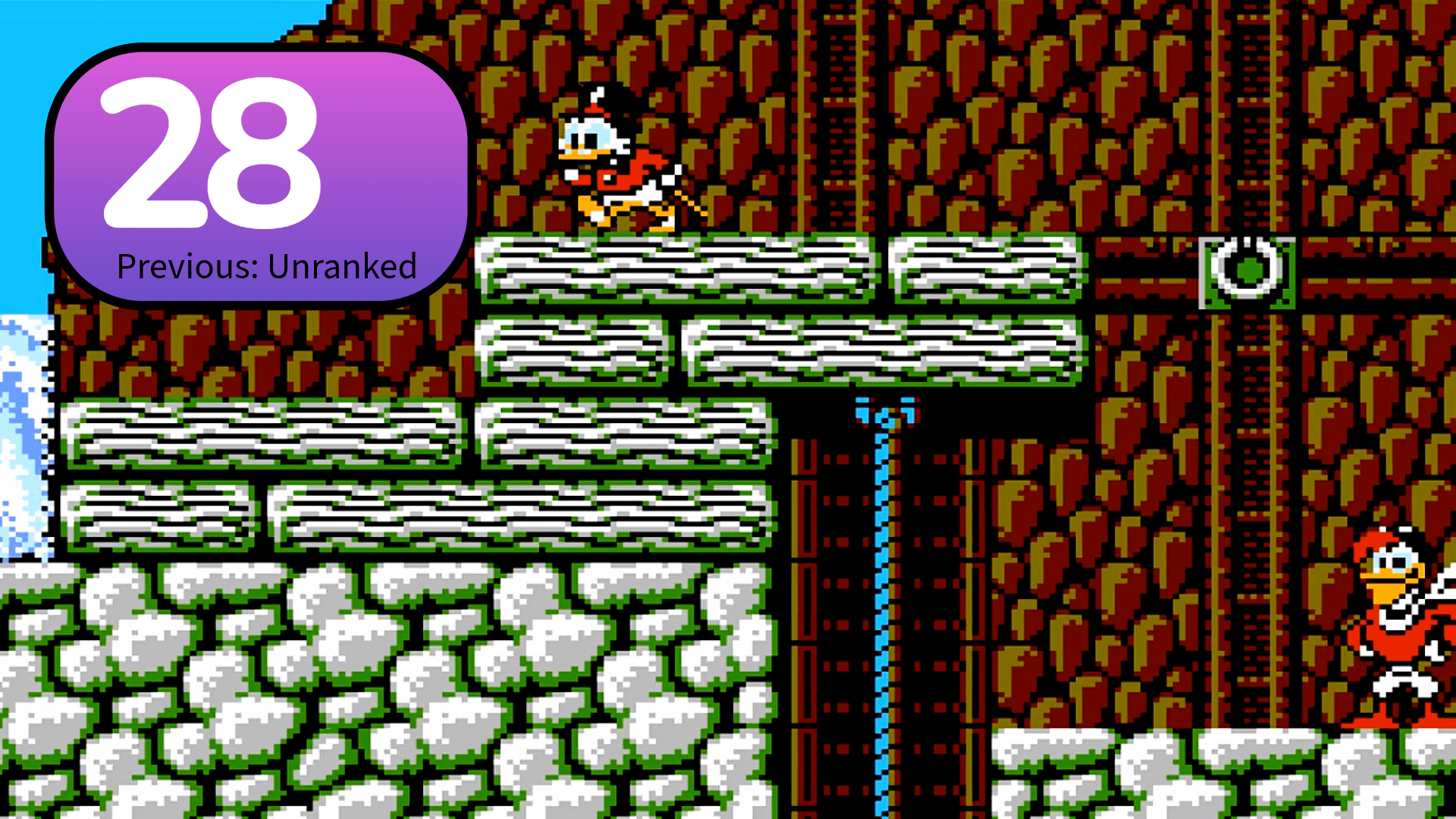
28. DuckTales 2
Featuring a few game mechanic additions over what you could do in the first game, a more sensible approach to level design, as well as a bright, beautiful cartoon visual style in keeping with its license, many modern gamers might actually select this sequel over the original NES “DuckTales” game. Spoiler alert: I don’t quite agree (partly due to a lackluster soundtrack the second time around), but this game is definitely still worth spending some time with. It’s another example of Capcom doing the platformer super well (and also doing the Disney license proud).
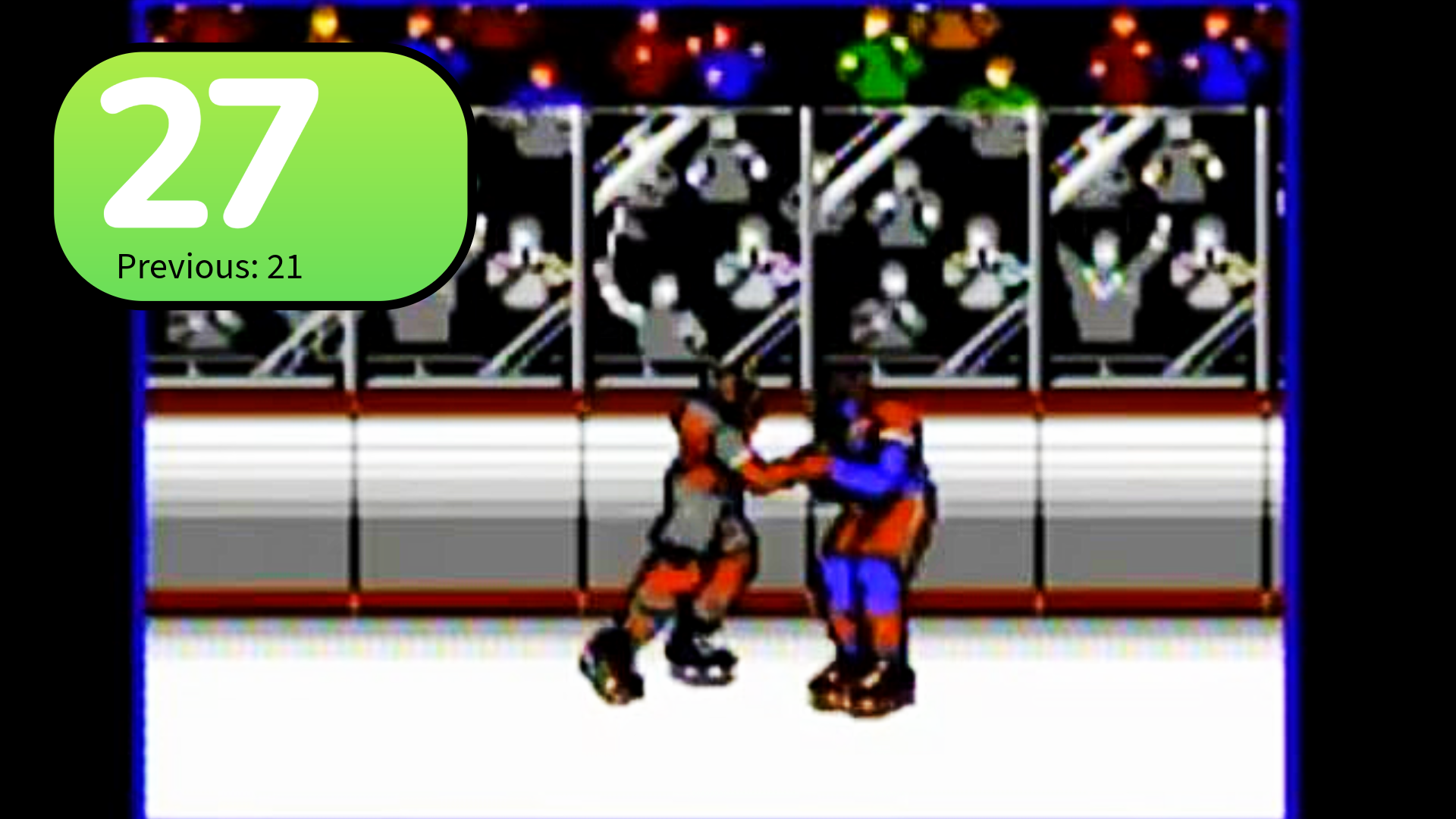
27. Blades of Steel
Some of us were Team “Ice Hockey” and others of us were Team “Blades of Steel.” I was most definitely the latter, in no small part because the game included a special brawl mode, in which the victor then got to enjoy a power play. This actually added to the strategy of the game, and let’s be honest: there’s something appealing about a hockey game that celebrates fighting in this manner. (Other games had fighting too, but this had cut scene animations devoted to it.) Also, I need to mention the mini-game with a “Gradius”-like spaceship shooting stuff, which was one of the first examples of this happening in a video game and just mind-bending to me as a kid. A game within a game? What is this sorcery? Blades of Steel being a love letter to fighting and “Inception” … of course it’s high on my list.
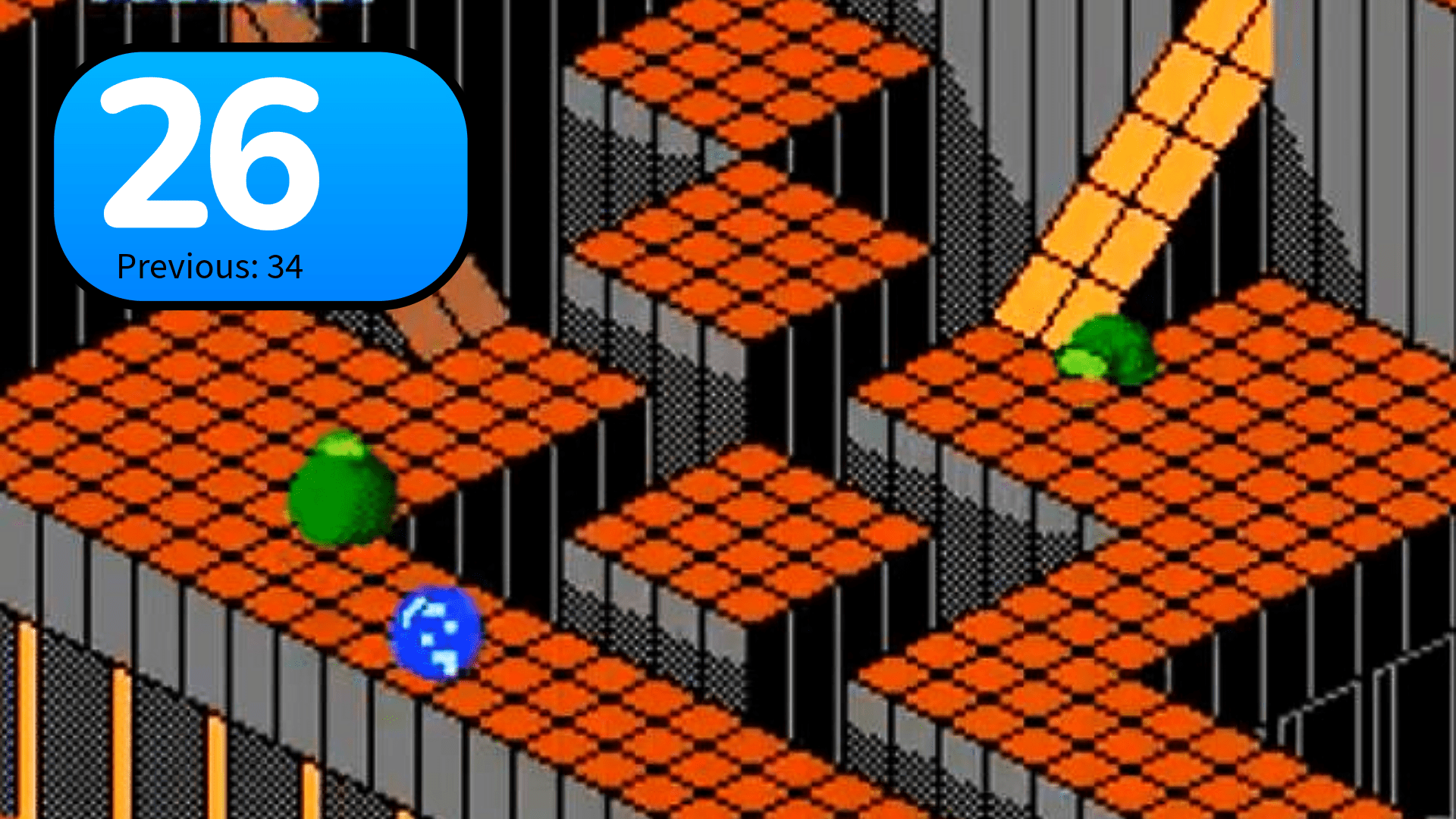
26. Marble Madness
It wasn’t a particularly important or influential game, but “Marble Madness” was nonetheless a fun and creative one. Essentially co-opting the concept behind those nifty wooden labyrinth games (remember these?), it was a simple idea — get the ball to the finish line — executed across crazier and crazier M.C. Escher-like obstacles. The graphics and ball physics here were outstanding, and it was quite fun to race a friend. The only issue with this arcade port was trying to manipulate the game with the standard d-pad instead of the arcade’s track ball. It wasn’t easy and would basically make your thumbs bleed. But darn it, it was still fun, bleeding thumbs be damned.
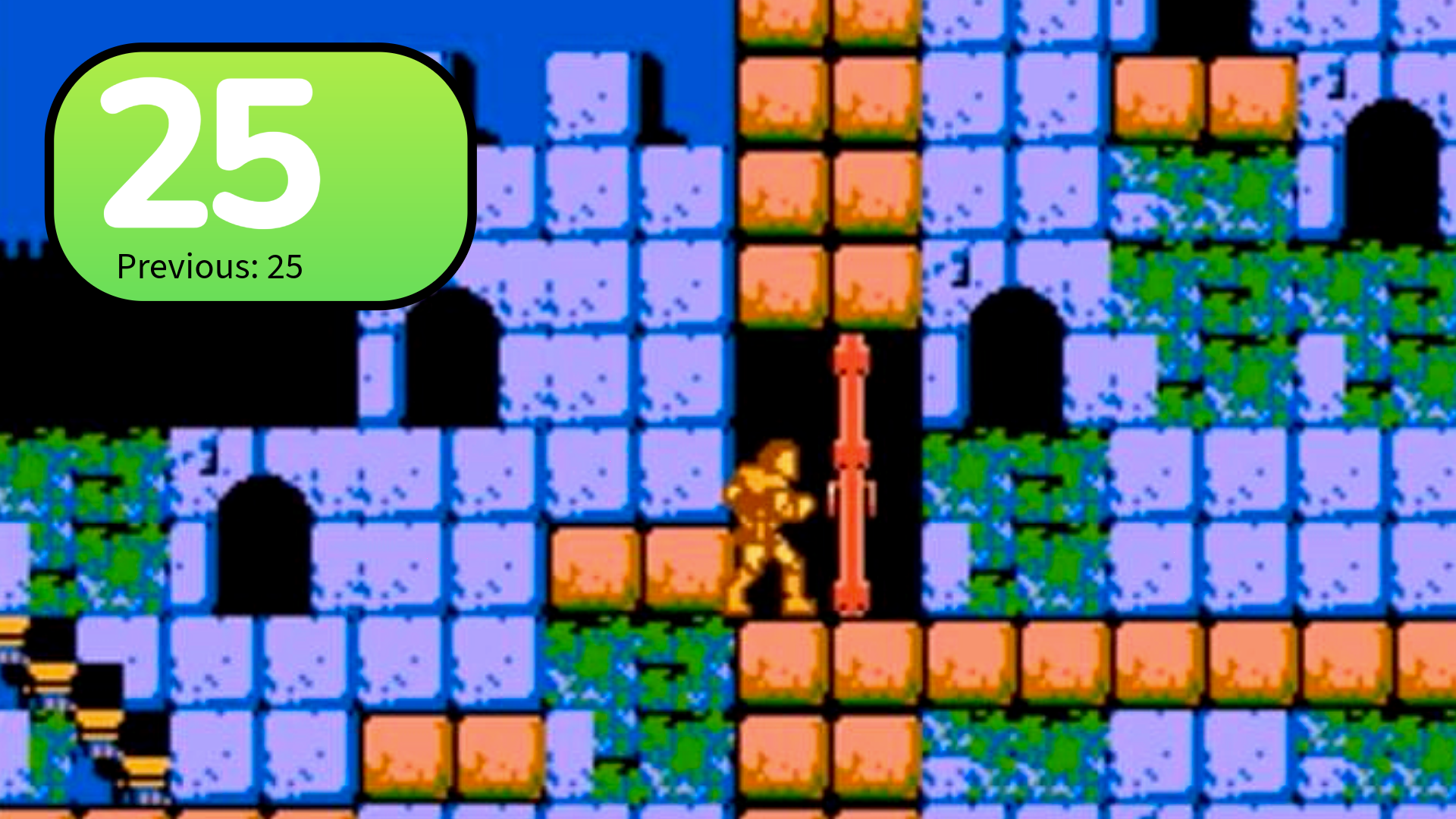
25. Castlevania
This is the granddaddy that inspired an entire franchise, and it’s definitely still got the goods. Play through “Castlevania” for the first time (or the first time in a while) and you’ll notice some comparatively drab visuals and super basic gameplay. But these tight controls and Dracula-inspired themes were the building blocks that were so key in establishing this series as one of the best in existence. Yes, I like the immediate sequels even better for the innovations and polish they added, but this game remains rock solid and a must-play for any fan of the series.
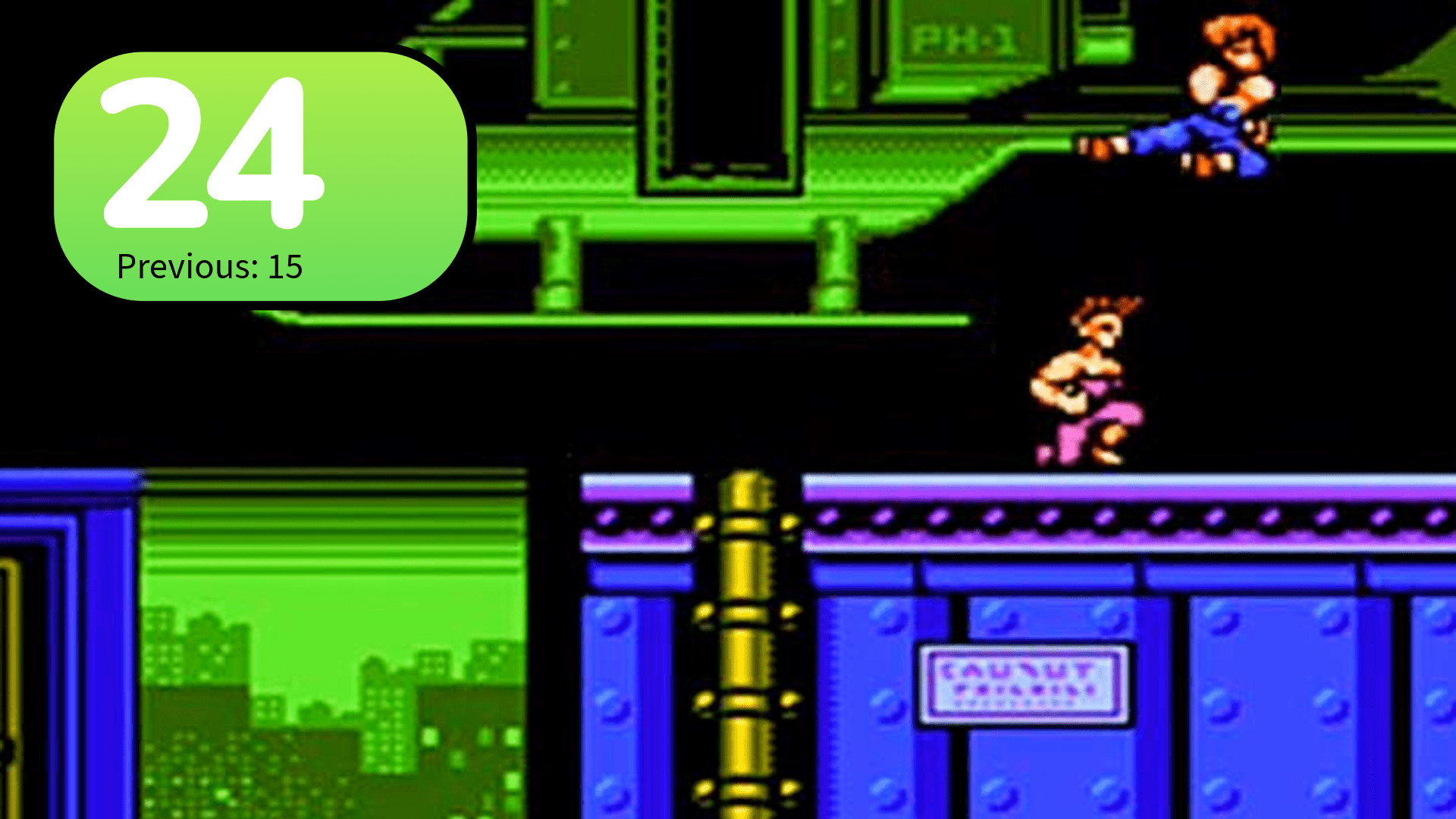
24. Double Dragon II: The Revenge
Stepping back from it, “Double Dragon” as a series is pretty problematic thematically. Moreover, the sheer volume of ports and iterations of the game make it difficult to determine the true cream of the crop. “Double Dragon II: The Revenge” being two-player was enough of a change from the first NES port to elevate it over its predecessor considerably, while subsequent games didn’t have anything nearly so significant in terms of advancements. Don’t discount the social aspect of being able to play something two-player in this era; it was really half the fun. And breaking it down more plainly than even that: this game was balanced, creative, and fun … with two players or not.
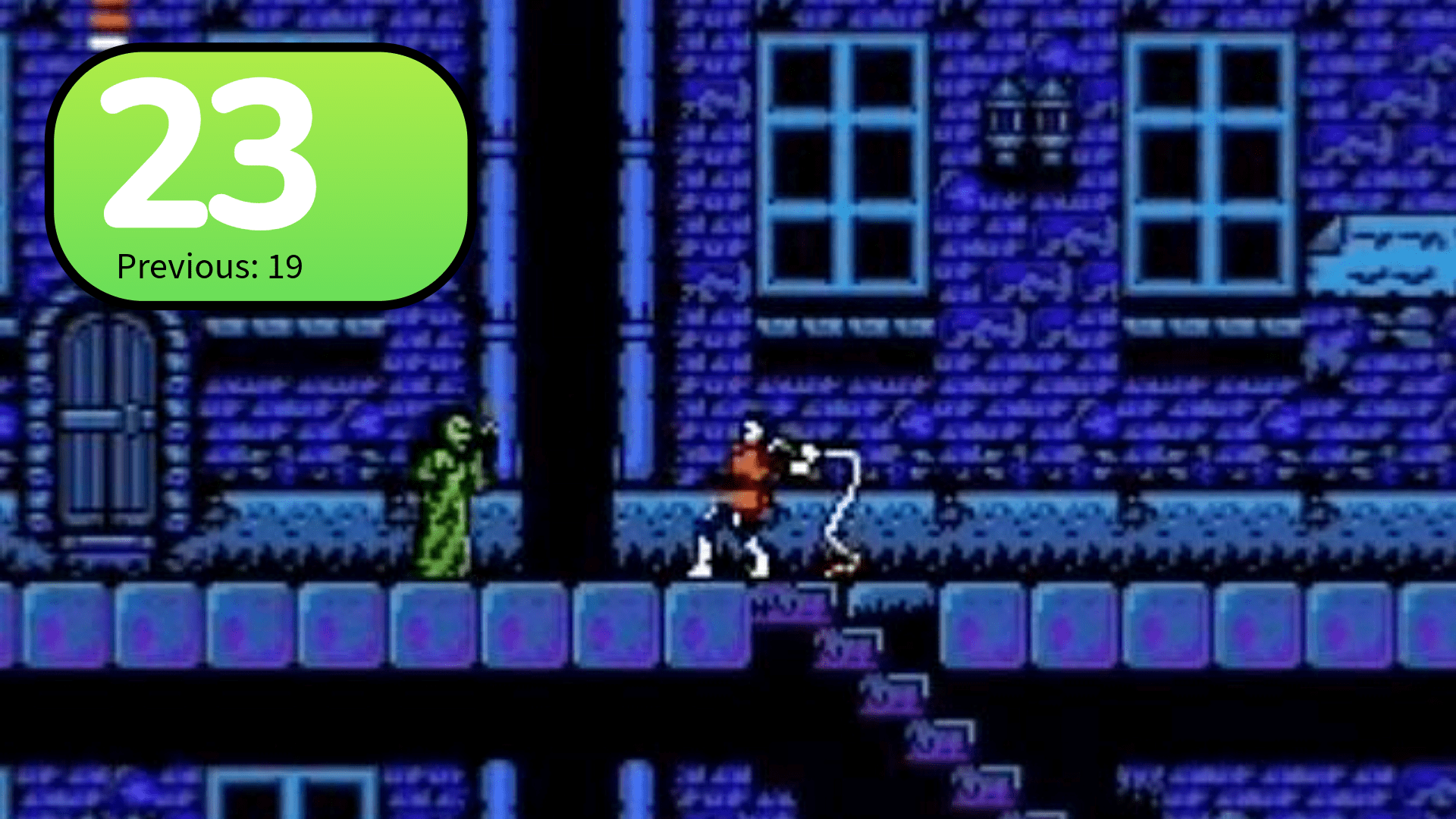
23. Castlevania II: Simon’s Quest
This game is a beautiful mess, to the point that advancing the game is a real struggle due to poor design choices and a terrible effort at translation. But to that I say: get a guide or read a FAQ. Because if you can traverse the few incomprehensible hurdles laid out in front of you, the game is innovative as hell and actually not that awful in terms of challenge (the game differs from “Crystalis” or “Metal Gear” in that way … it limits its obstructions and doesn’t revel in them). The day-to-night dynamic, though somewhat obnoxious to deal with, is still a fascinating design choice to this day. And the open world, complete with exploration and RPG elements, was equally innovative. “Simon’s Quest” laid the groundwork for future “Metroid-vania” style games … and it did it in 1988. That makes it an important game, an iconic game, and one I still enjoy playing.
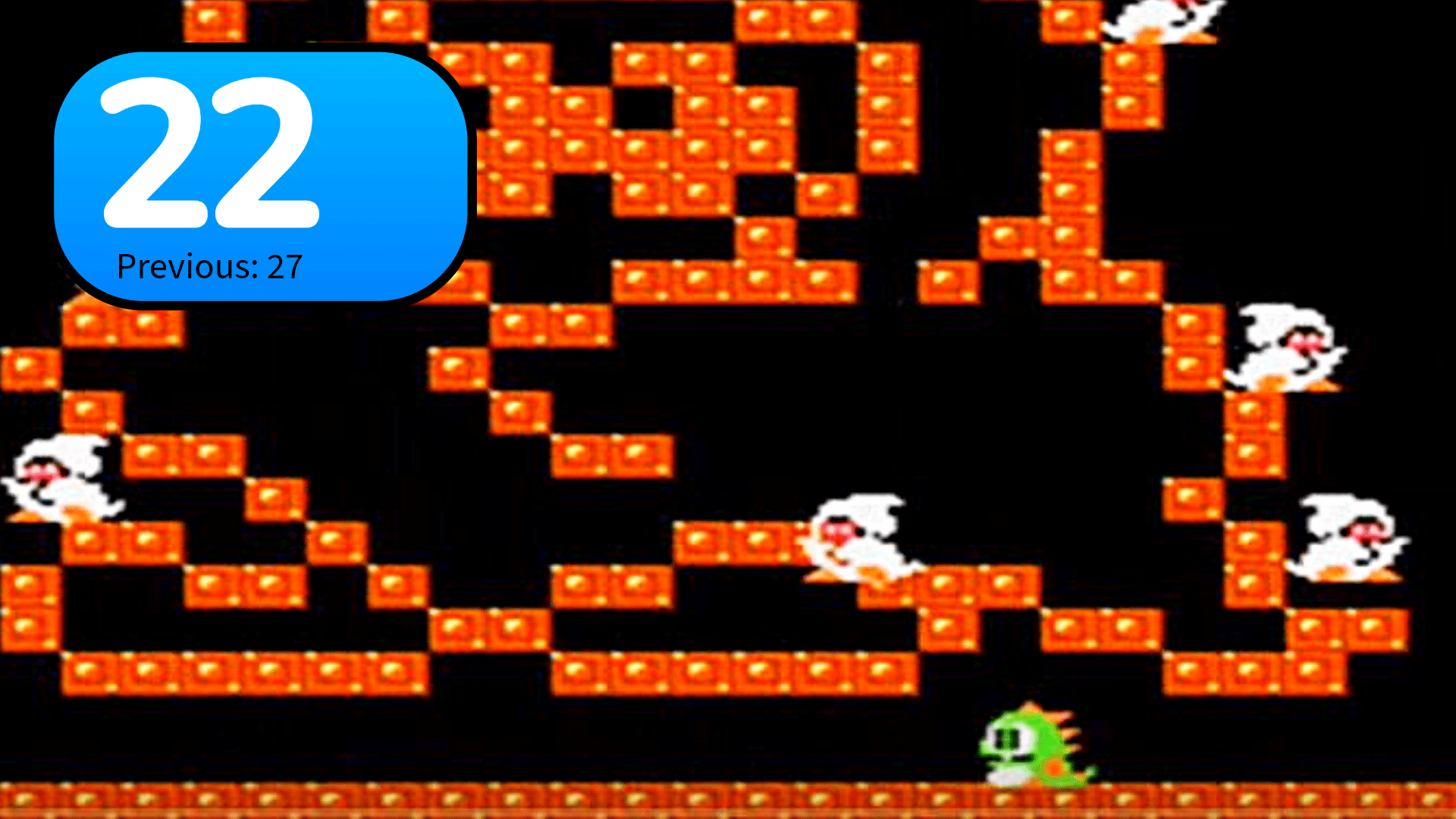
22. Bubble Bobble
This is an arcade port I have no real nostalgia for (other than seeing the advertisements in the back of comic books), so it had to earn this slot the hard way: by its actual merit. “Bubble Bobble” is a non-scrolling platformer in the tradition of “Popeye” or “Donkey Kong,” and features little dinosaur-like creatures trying to capture enemies in bubbles before popping said bubbles to clear the stage. It’s horribly addicting, and it’s about 3,000% more fun in two-player mode … meaning you WILL HAVE FUN WITH THIS GAME. It is a commandment, and you must follow it.
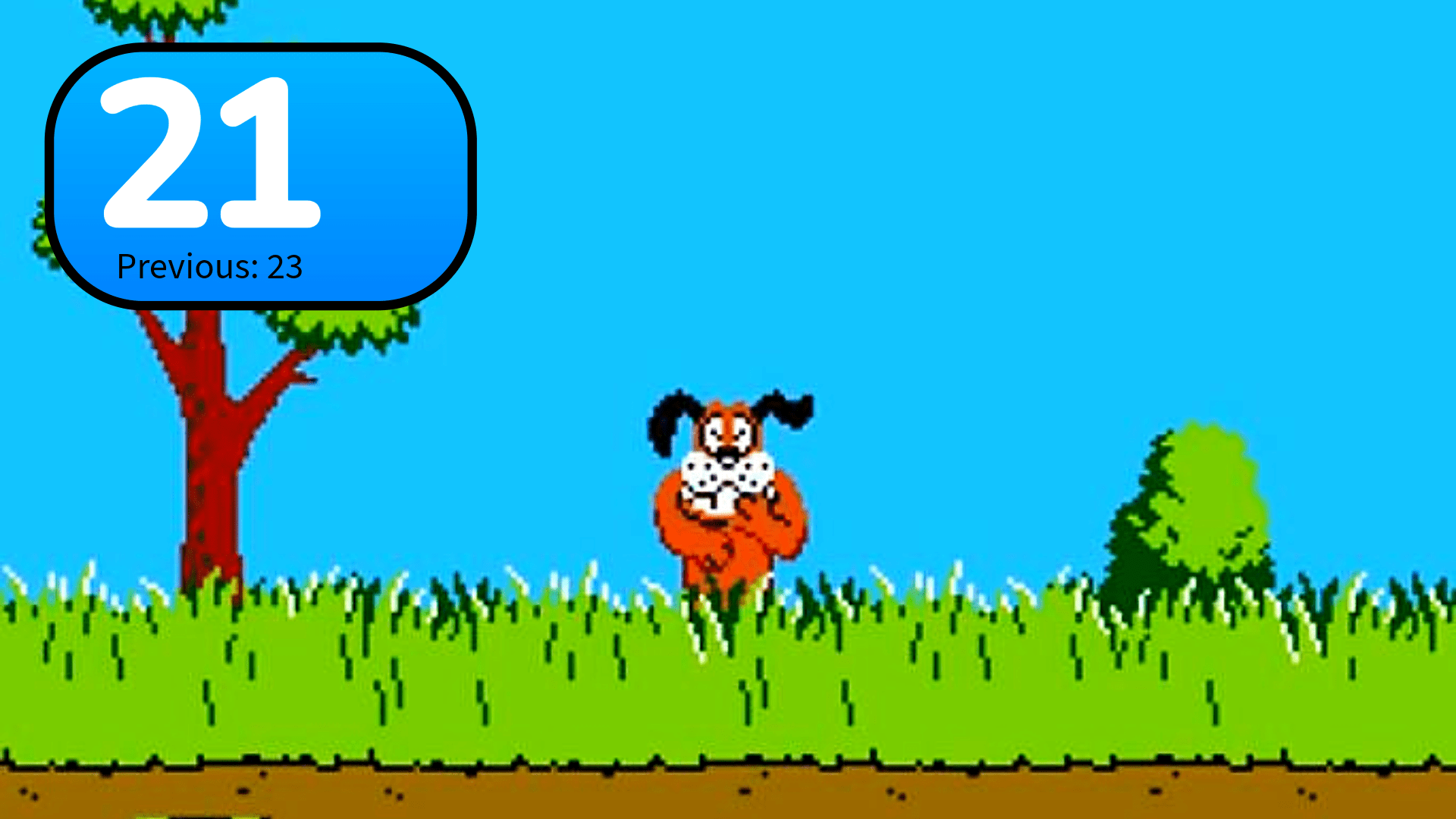
21. Duck Hunt
This was such an iconic game for the original NES that it’s tough to not include it on that basis alone. The good news in this is that the game is a strong one, building off of what could have been a simple gimmick (the light gun) and putting in smart, effective game design. Developers are still building games to this day that take this basic concept and run with it, so it’s an influential game as well. My biggest critique of “Duck Hunt” – other than the game being fairly shallow; it usually seemed to lose my interest quickly – is just that stupid dog. Jerk face dog.
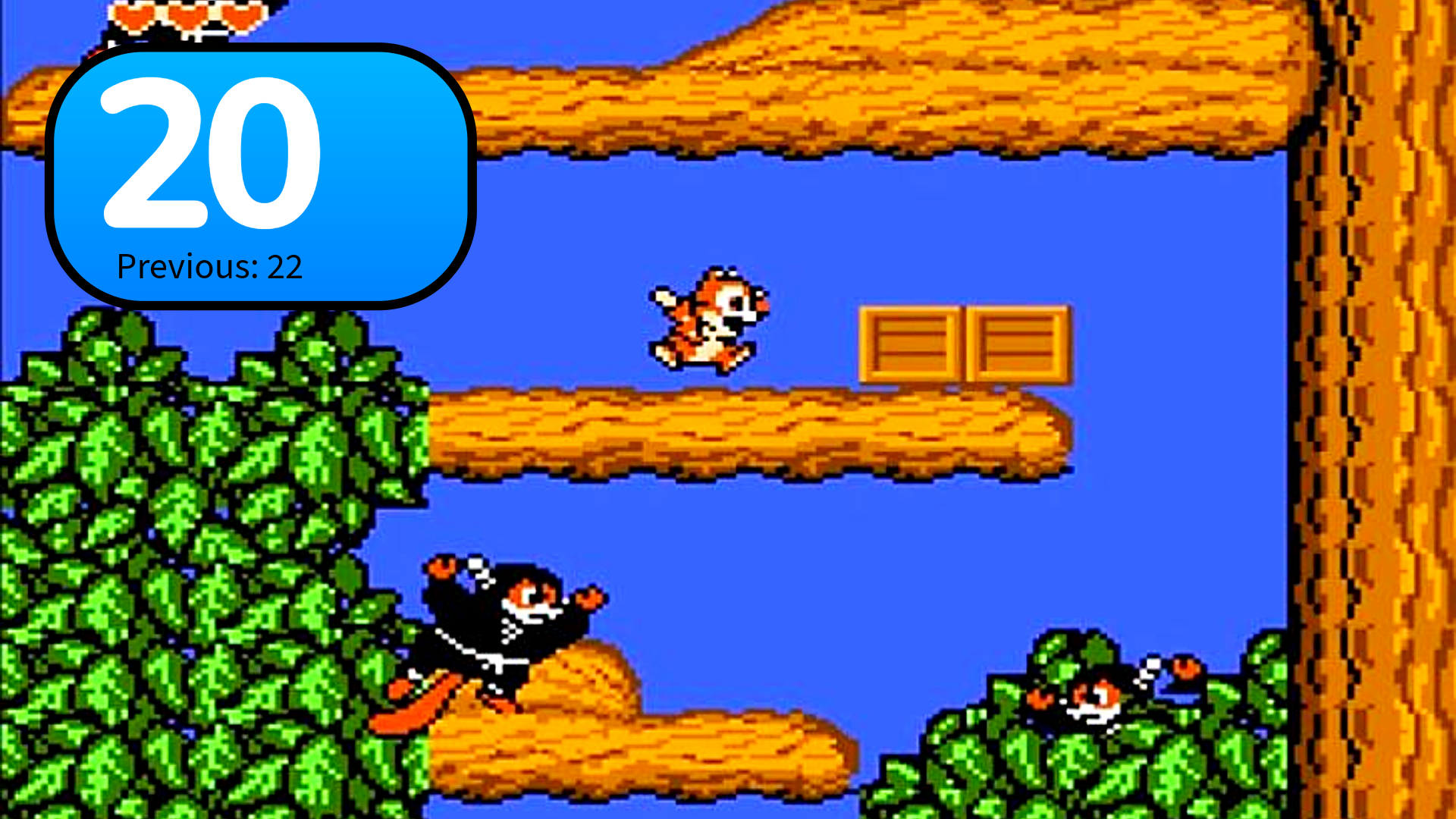
20. Chip ‘n Dale Rescue Rangers
As a spiritual sequel to “DuckTales,” “Rescue Rangers” tapped into that same Disney afternoon cartoon appeal and even added two-player to the mix, which made this game pretty much a must-play for a kid like me who had a brother to co-pilot with. The game was absurdly easy, which dings the replay factor quite a bit, so back in the day this was more of a rental than a must-buy, and even revisiting it today it doesn’t quite sing in the same way DuckTales does. But even with that, it has big, creative worlds – including that magical perspective shift of navigating everyday objects that are bigger and therefore suddenly dangerous – cool music, and fun gameplay (chucking things at your friends could be entertaining on its own). So yes, it’s an absolute winner.
19. River City Ransom
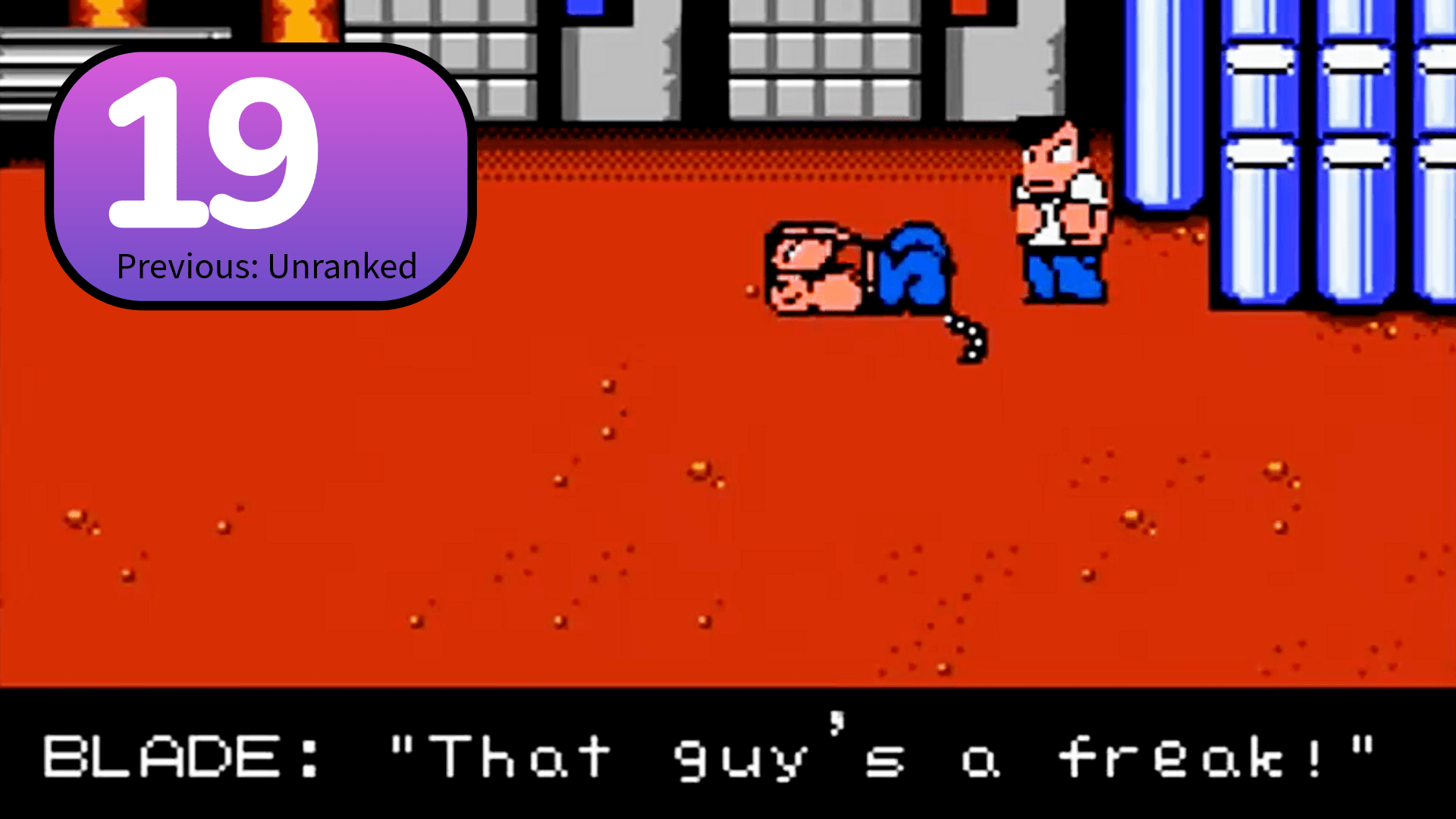
This game gets a huge bonus for being a distinctive experience, because after you’ve played a few hundred games that all resemble one another, you NEED variety. Weird = good. From the makers of “Double Dragon,” this brawler innovates by grafting RPG elements onto the side-scrolling beat ‘em up template. More modern brawling games like “Scott Pilgrim” got their start here. You really don’t have to squint to see it either. Yes, you’ve got levelling up and the ability to purchase upgrades, but it’s also stylistically similar, featuring cute, pixelated, blocky designs, and it’s not fully linear, allowing you to explore your surroundings and revisit areas. It’s pretty dang cool.
18. Blaster Master
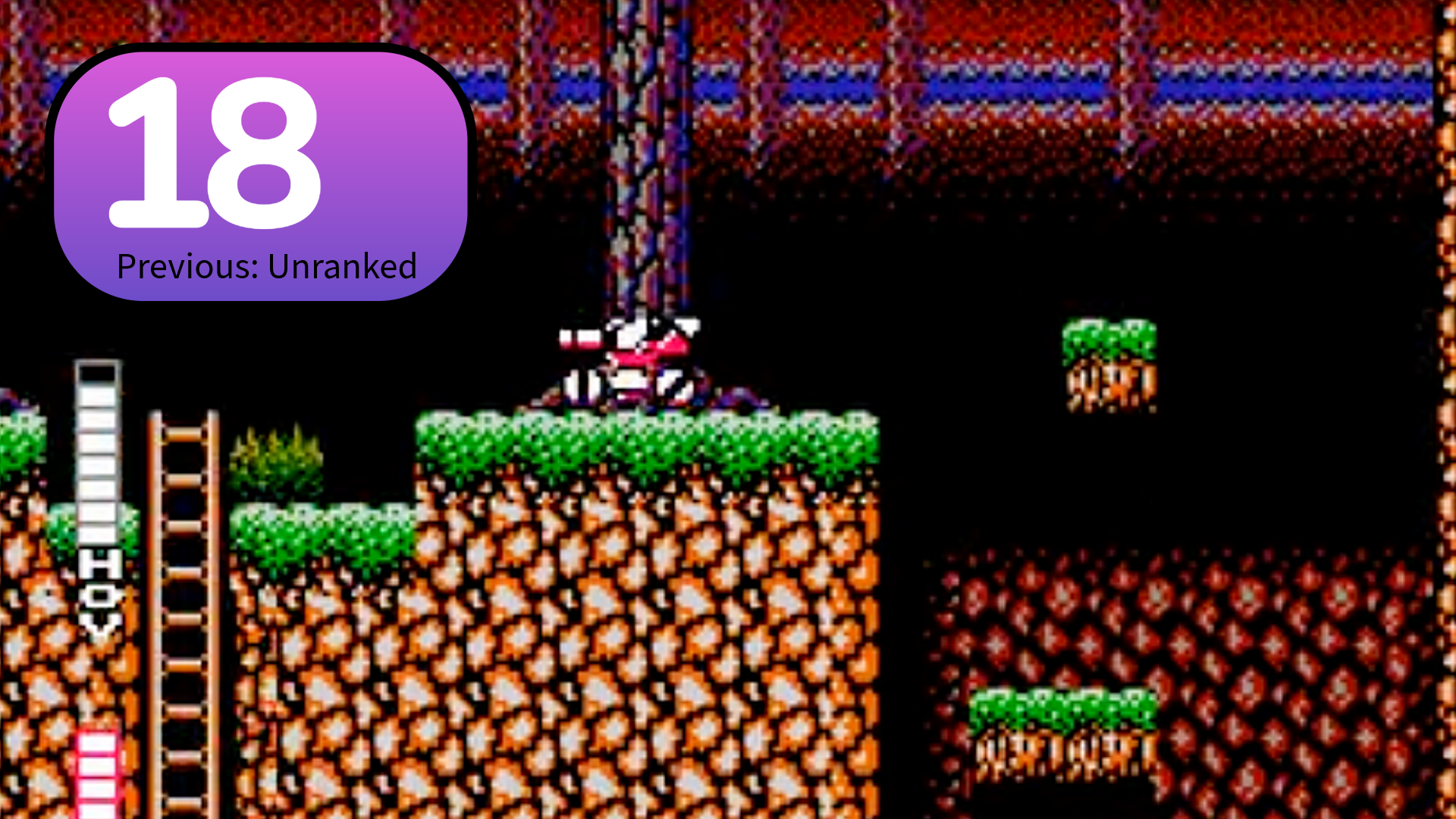
This is such a creative game. While it didn’t have a save option originally and that’s sorta ridiculous (the game is REALLY tough to beat in a single sitting), and navigating the maze-like structure can be, at times, way too cryptic an undertaking, it’s a fantastic experience overall. Mixing a 2D explorer-platform style of game (wherein you pilot a big shooty tank) – one of the first of its kind – with an overhead platformer shooter, “Blaster Master” manages to do both styles so well that you never get into a longing for the other. The mash-up keeps things fresh, and truly, this is one of the coolest pieces of gaming history you can play – one of the first exploring platformers to do the concept genuine justice. I highly recommend playing in such a way that you can save your progress (such as on Nintendo Online), but it’s great regardless.
17. Battletoads
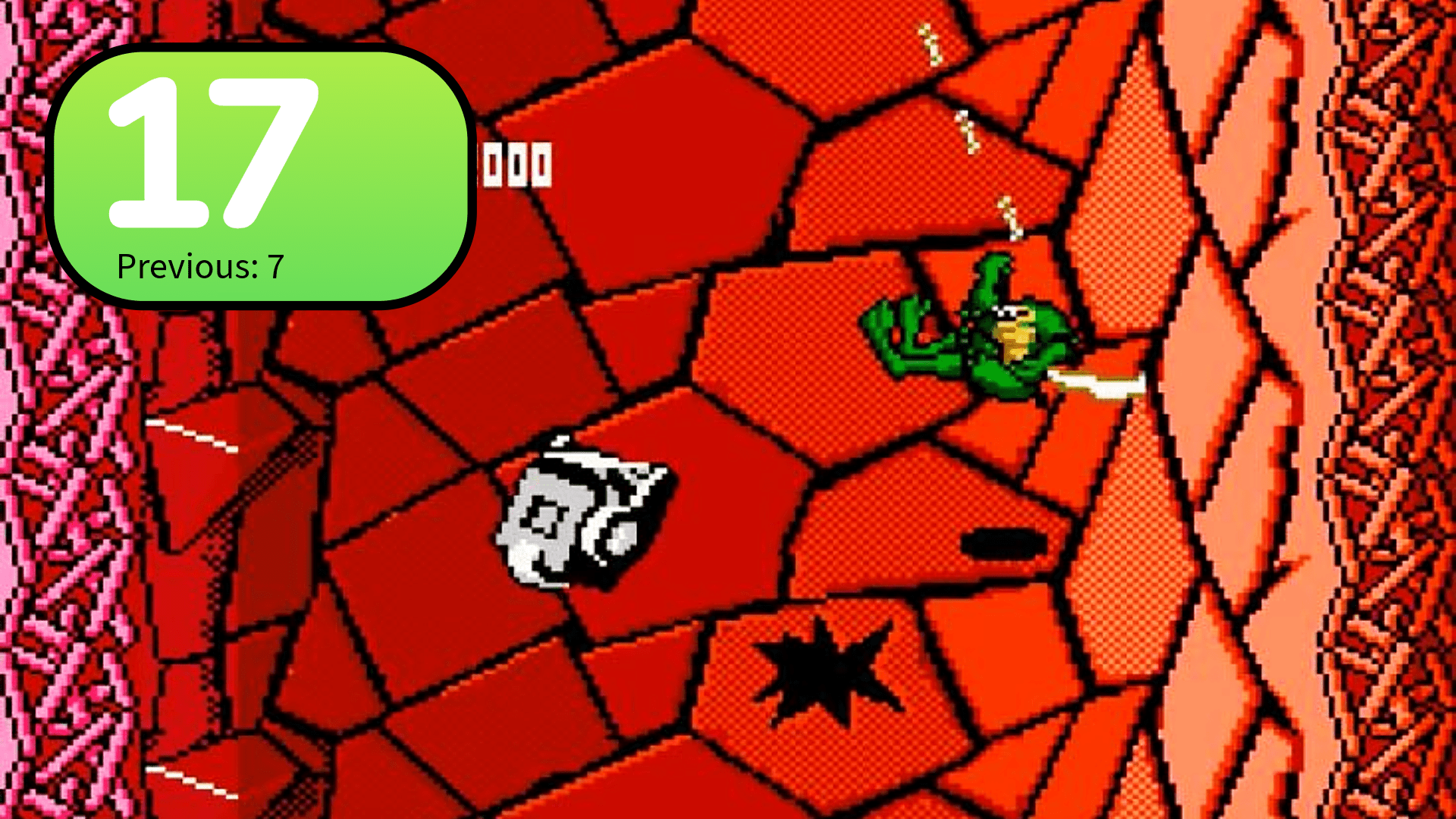
You will get destroyed. But that’s not always a bad thing, and “Battletoads” is the perfect reminder of that. No doubt originally conceived as a shameless attempt to cash in on the “Teenage Mutant Ninja Turtles” phenomenon, the developers decided to make a quality product in the process, and Battletoads was born – a superior game to the Ninja Turtle offerings on NES. The gameplay, sound and visuals are all great, and the fact you could clobber your friends was actually a plus, not a minus. Sure, some friendships/families were probably broken because of this, but so what? It was hilarious. And oh yeah, the challenge … when you can still have fun even when getting crushed by a game, you know you’ve stumbled onto something special.
16. Metal Storm
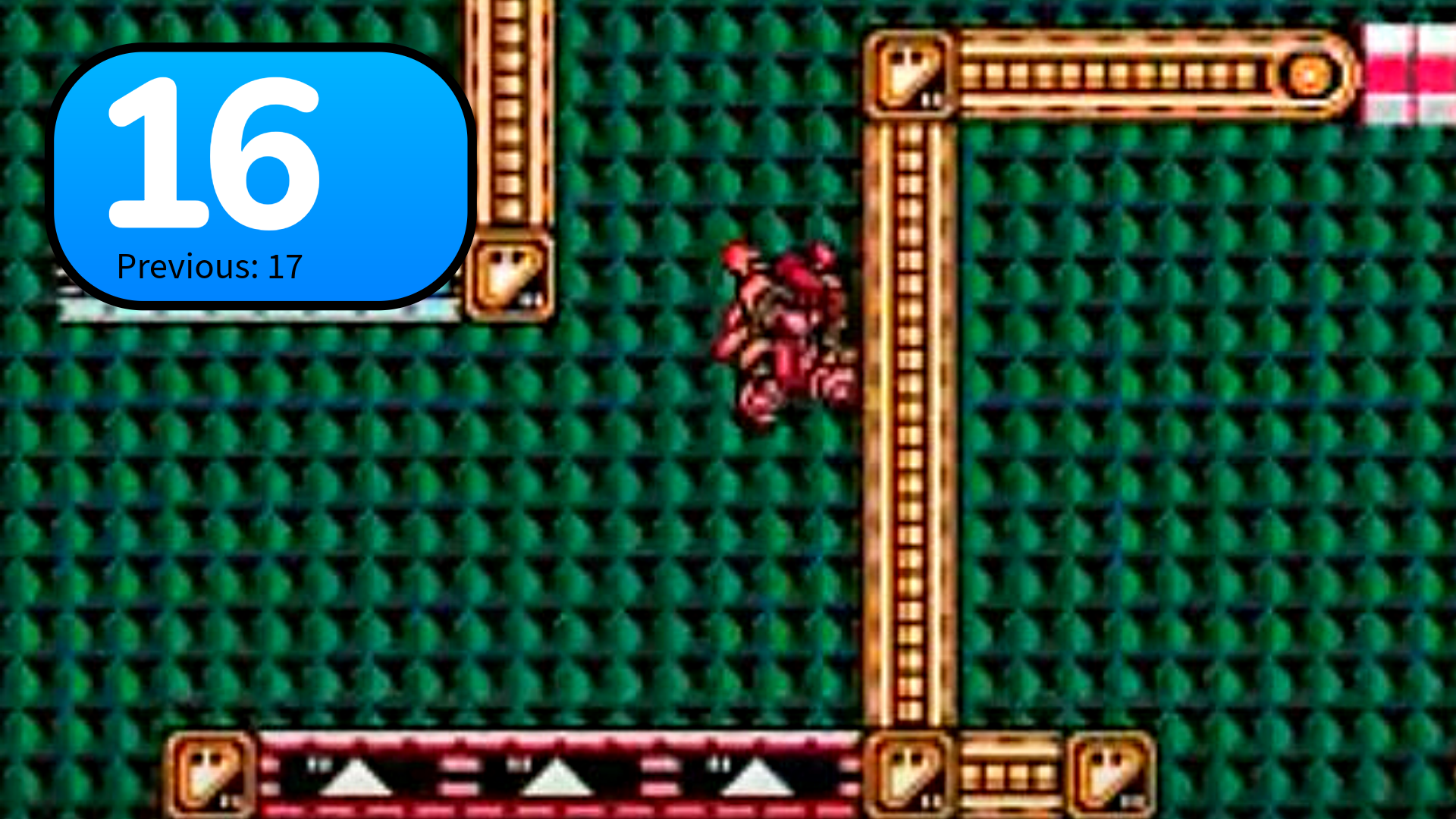
This game played brilliantly, with a clever gravity-switching dynamic that would flip your character from floor to ceiling and back again. It opened up new areas, dangers and techniques for passing areas, and it was genuinely novel at the time (Mega Man, among others, would copy the feature in future games). But beyond the gimmick, “Metal Storm” still had excellent controls, sound, and graphics, and it allowed you to pilot a mech (a unique thing for its time) making it a quality game with or without the gravity flipping. (But clearly the gravity flipping was pretty darn cool and remains a major selling point.)

15. Ninja Gaiden
Okay, so let’s be clear: the “Ninja Gaiden” games are hard. Frustratingly hard. “Having to memorize every enemy attack pattern after many, many deaths” hard. But as mentioned above with this game’s sequel, the presentation matters a whole heck of a lot. The cinematic nature of including a deeper story told through cut scenes was truly innovative and a really big deal. The graphics (particularly those cut scenes!) are great, the controls are tight, and the soundtrack is awesome. And as “American Ninja Warrior” has taught us all, becoming a ninja is absolutely peak male fantasy. “Ninja Gaiden” was American Ninja Warrior before American Ninja Warrior.
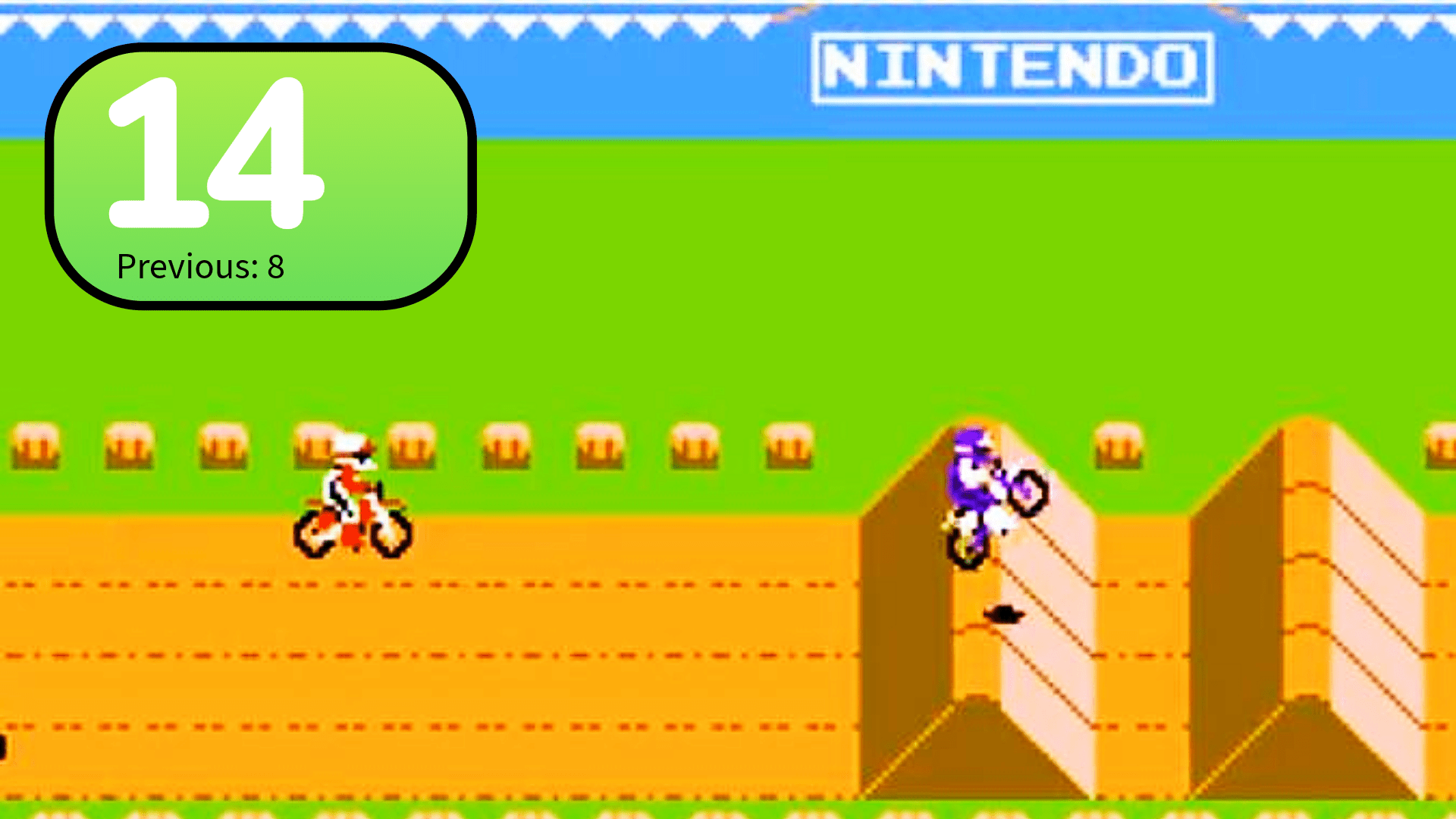
14. Excitebike
When I was a kid, a local hotel/restaurant had this in a cabinet in its game room, and thusly I was pretty well obsessed with it throughout my youth. I didn’t really get to play it much, because Dad was stingy with the quarters. But once I had the ability to play it at home (mostly at friends’ houses), it lived up to my expectations and played like a dream. And the create-a-course was literally hours of fun too. It may not look like much in today’s terms, and it’s certainly not the deepest experience out there (the racing was over pretty quickly), but “Excitebike” still has it where it counts in regards to gameplay. I’m super happy it’s readily available for play today, as more people should experience it.
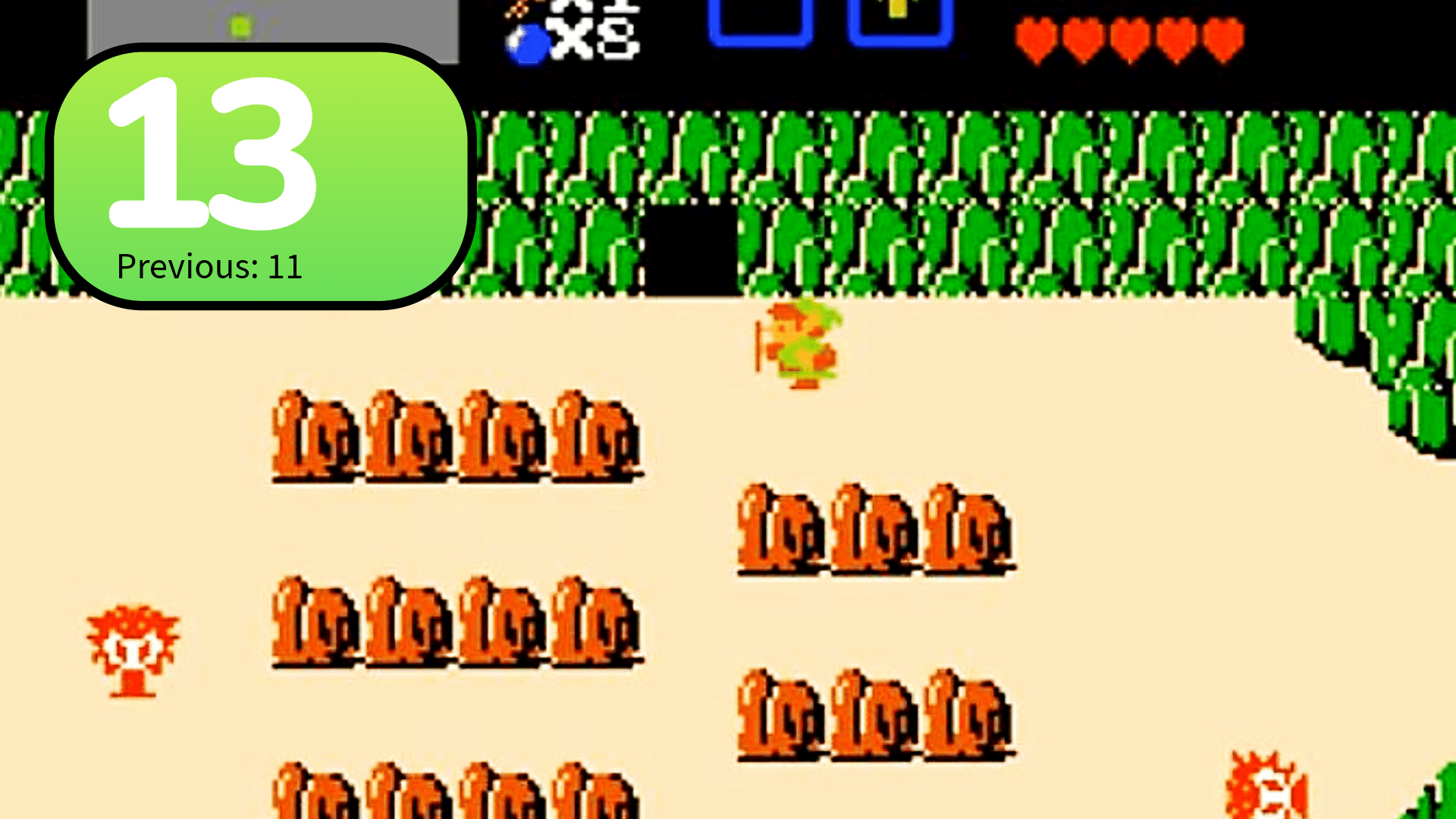
13. The Legend of Zelda
Here’s what it’s like playing this game: You get maimed. You start over and get a little bit further … and then you get maimed. You start over and get a little bit further than that … and then you get maimed. Layer on top of this that you have no earthly idea where you’re supposed to go within a giant open world. Sounds awful, right? Well oddly enough, it’s not. Those small increments of improvement are as addictive as crack cocaine, and if you manage a huge leap forward (like conquering a dungeon), the surge of endorphins will keep you going another several minutes/hours/days/forever. This is Zelda in its most distilled form, and why some people insist to this day that “The Legend of Zelda” remains the best in the series.
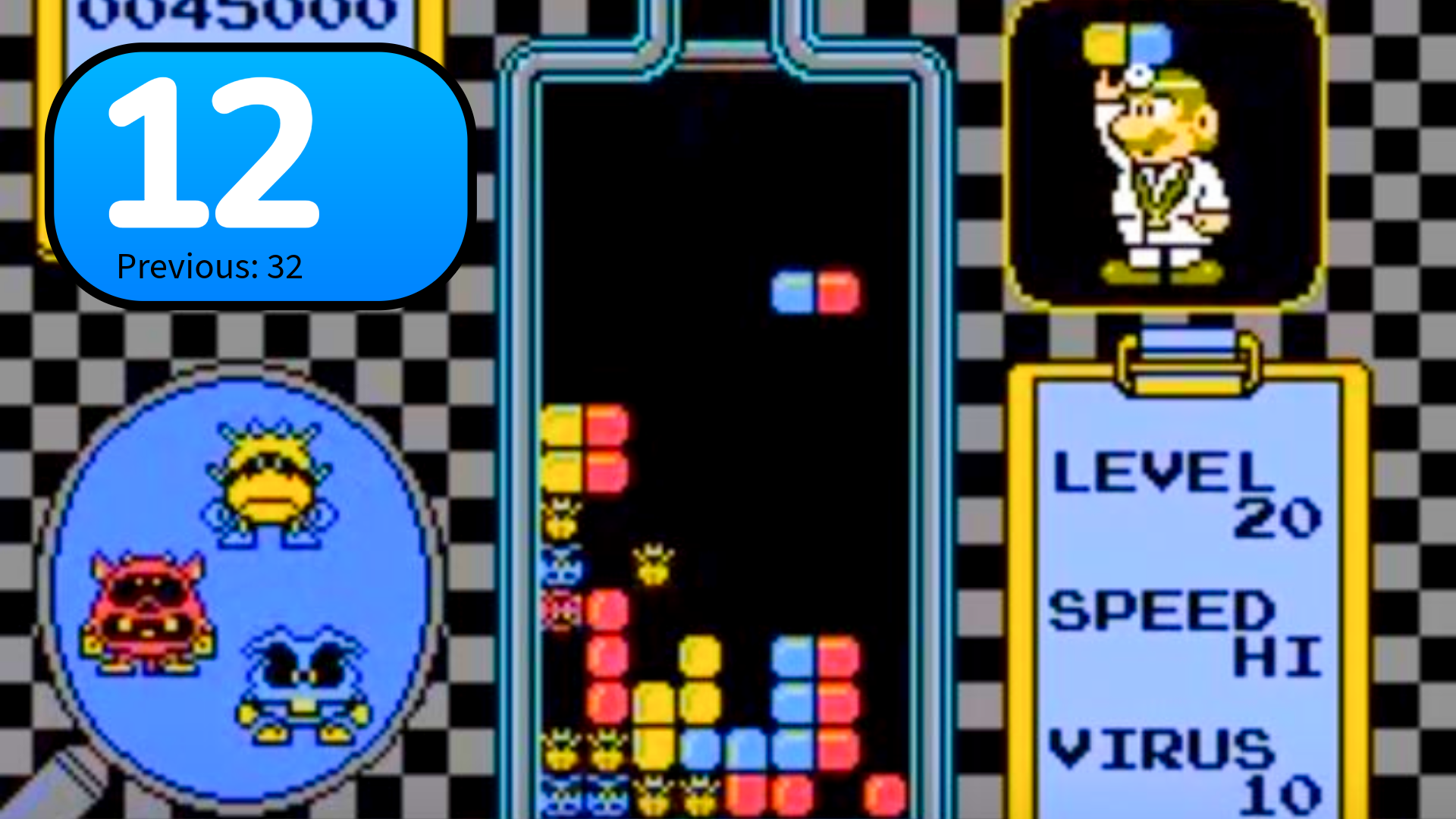
12. Dr. Mario
This puzzle game is so obviously directly inspired by “Tetris” that it would be easy to dismiss it on that basis, but that’s not something anyone should do. “Dr. Mario” took the “falling block” mechanic, upped the ante with a color-matching dynamic and obstacles to clear, and consequently (and justifiably) gained a cult following of its own. Properly easy to access, hard to master, and impossible to stop playing, this for me is one of THE definitive puzzle games of this system, and I’m thankful it’s an easy game to access nowadays. It’s legitimately great.
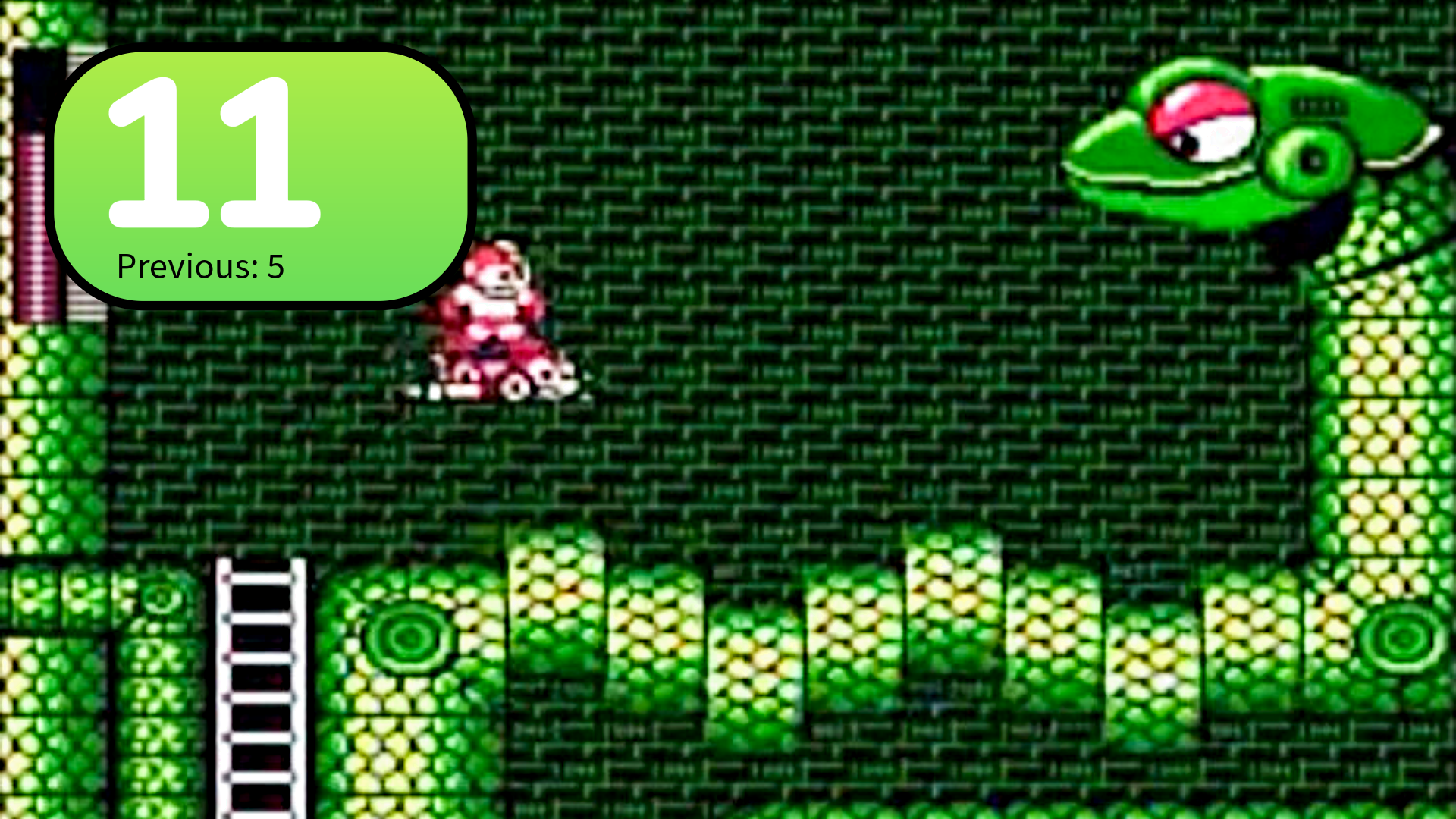
11. Mega Man 3
Having already been obsessed with “Mega Man 2,” the release of this game was a momentous occasion for me at the time. And there’s a good argument to be made that this is the better game. It certainly upped the visuals and depth (adding elements like the slide and characters like Rush and Protoman), while also tightening the controls and advancing the story in a cool way. I don’t think there’s a question that the series became somewhat stagnant after this game. For me, “Mega Man 3” didn’t quite equal its predecessor in the following areas: weapon design, boss design, and music. But let’s be clear: this game is still awesome.

10. Castlevania III: Dracula’s Curse
Something I’ve noticed about this list — especially as we get toward the top — is it seems to have a lot of sequels on it. The early days of the NES were really the wild west in some ways, with a bunch of folks just throwing stuff against the wall. Later on, refinement made good ideas into things that were great. I think that’s certainly the case with the “Castlevania” series, which started strong, then just got better and better until it peaked with “Rondo of Blood”/”Symphony of the Night” later on. “Castlevania III” represented a shift away from a more open world back to a more traditional approach, though it left in diverting paths and added the concept of diverting character paths as well. Being able to switch between multiple characters – but having to choose which single one you wanted to take the majority of your adventure with – was a pretty novel thing at the time. Add in the requisite improvements in music/graphics, and this becomes without a doubt the deepest and best 8-bit Castlevania offering out there.
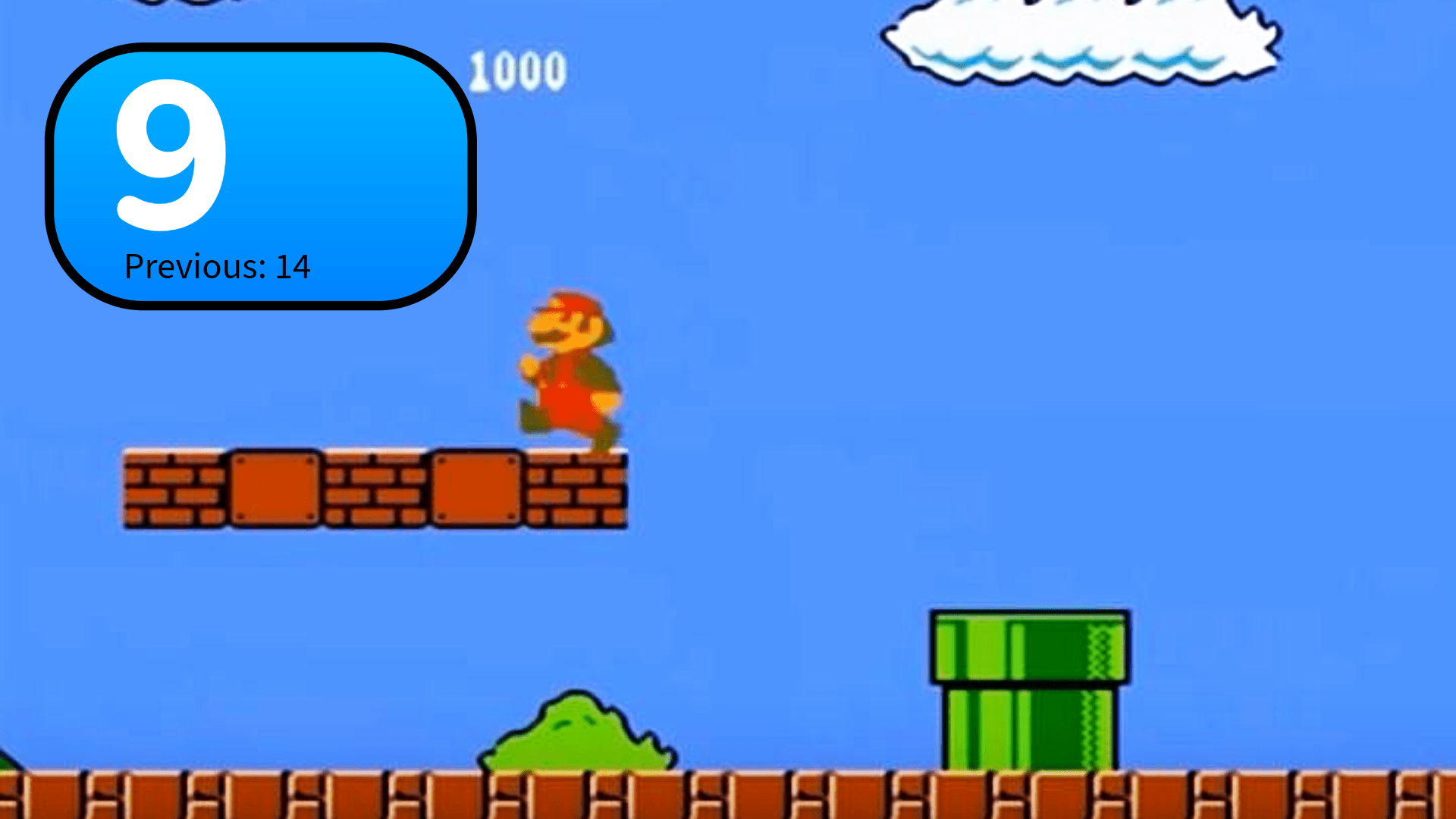
9. Super Mario Bros.
I mean, what can be said here that hasn’t been said already? My personal anecdote is a vague exposure to the game, mostly in arcades and at friends’ houses, until I finally was gifted the ultimate gift from my parents on my birthday with a Nintendo Entertainment System, complete with pack-in games “Super Mario Bros.” and “Duck Hunt.” Those two games were my only games for months, so this game was put through its proper paces and was (and remains) extremely meaningful to me. Sure, it has warts, but like most of the other classics of the early ‘80s like “Donkey Kong,” “Pac-Man,” and the like, it remains playable and fun to this day, and it is a must-play as a masterclass in game design (let alone its importance to the industry at large).

8. DuckTales
Capcom had a pretty badass track record in the 8-bit era, and some of its Disney-licensed titles still hold up to this day. Their most famous — and best — Disney title is “DuckTales,” which played supremely satisfyingly (pogo jump!) and brought to life every kid’s weekday cartoon obsession. I guess you could ding this game for being short or easy, but to me that just made it more accessible (and if I’m being honest, I couldn’t always execute that jump attack consistently anyway … which made the game a bit tougher). It’s a very, very good game.
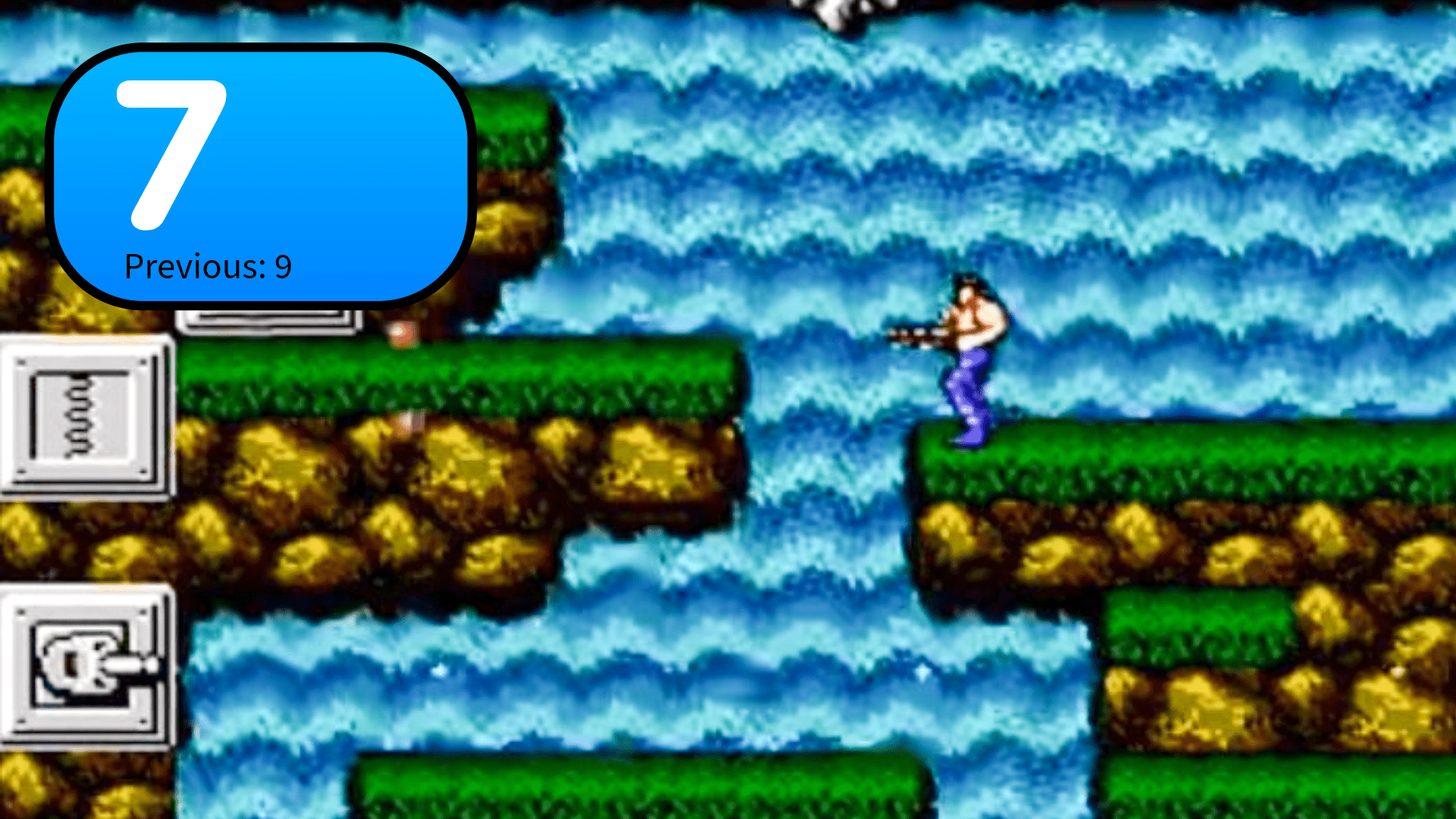
7. Contra
Get yourself a partner, put in the Konami code, and you might still have trouble defeating this game. But it’s a blast of a play whether you win or lose, embodying the “run and gun” philosophy perfectly. This is a true classic that paved the way for a slew of games to come after. As stated, it’s a great co-op game, and “Contra” also has great depth in its weapon system and determining whether to opt for a “power-up” or not … sometimes, you’re just better off keeping that spread gun, you know?

6. Super Mario Bros. 3
Considered by many to be the best Mario game in existence, and considered by many more to be the best game on the entire platform, I’m somewhat less bullish by comparison merely ranking “Super Mario Bros. 3” as my No. 6 game on the NES. I do love the game without reservation. It’s definitively an improvement on “Super Mario Bros. 1” – the game it’s based on – in every single way. The lackluster boss battles have been ramped up considerably, as have the power-ups, the controls, the overall scope, the graphics, the sound, and yes, well, everything. The quirky rare power-ups like the big boot and the hammer brothers suit and the occasional oddly designed level were small touches that made a huge difference. If I have a critique, it’s how much it circles back to Mario 1 at the expense of “Super Mario Bros. 2” … and we really haven’t done the world of Mario 2 (and its play mechanics) any justice since. But this game, taken on its own merits, is superb and basically flawless.

5. Tetris
I didn’t originally have “Tetris” listed here, because honestly, is it super important for anyone to experience the particular versions of Tetris that hit the NES back in the day? I think the answer to that is, “No, of course not.” But I’ve changed my framing a little for this update, instead thinking, “In what order would I recommend someone play NES games to get the best overall NES experience?” Considered that way, Tetris jumps from unranked up to darn near the top of the list. The good news is that the Nintendo-branded version is now easily playable in Nintendo Online. Some folks will point to the original Tengen port as being superior, but here’s where I circle back to the “Tetris is Tetris” argument. Yes, play that other one if you want to based on whatever principle dictates you to do so. But if you can’t, the “official” Nintendo one is a great version too. I basically co-list them here.
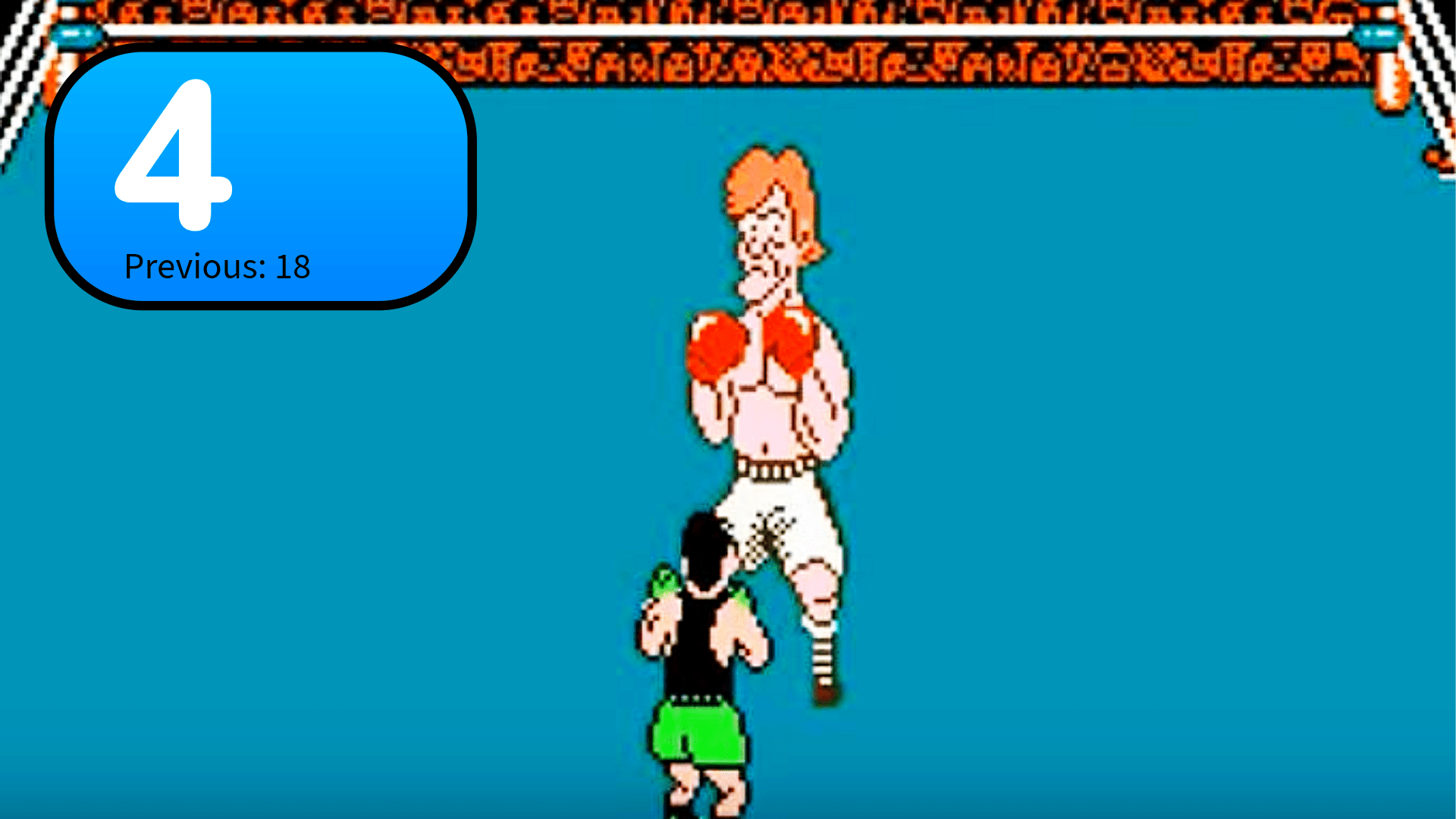
4. Punch-Out!!
There’s no debating this is one of Nintendo’s true classics, especially the version with Mike Tyson in it (the game has famously been re-branded due to an expired license). There’s the cultural impact of course, wherein the game became a big deal outside of gaming circles because of the Tyson tie-in. But it was also a badge of honor title due to its brutal difficulty. Defeating it carried some weight. It’s such a creative game, requiring the learning of unique patterns to advance from fighter to fighter, and that experience is ultimately a rewarding one. It took me a good long while to fully learn to appreciate its brilliance, but I eventually got there. Blending huge, bright sprites with strategic gameplay, I recognize “Punch-out!!” as an all-time great, not only one of the best games on the NES, but also one of the best video games of all time.
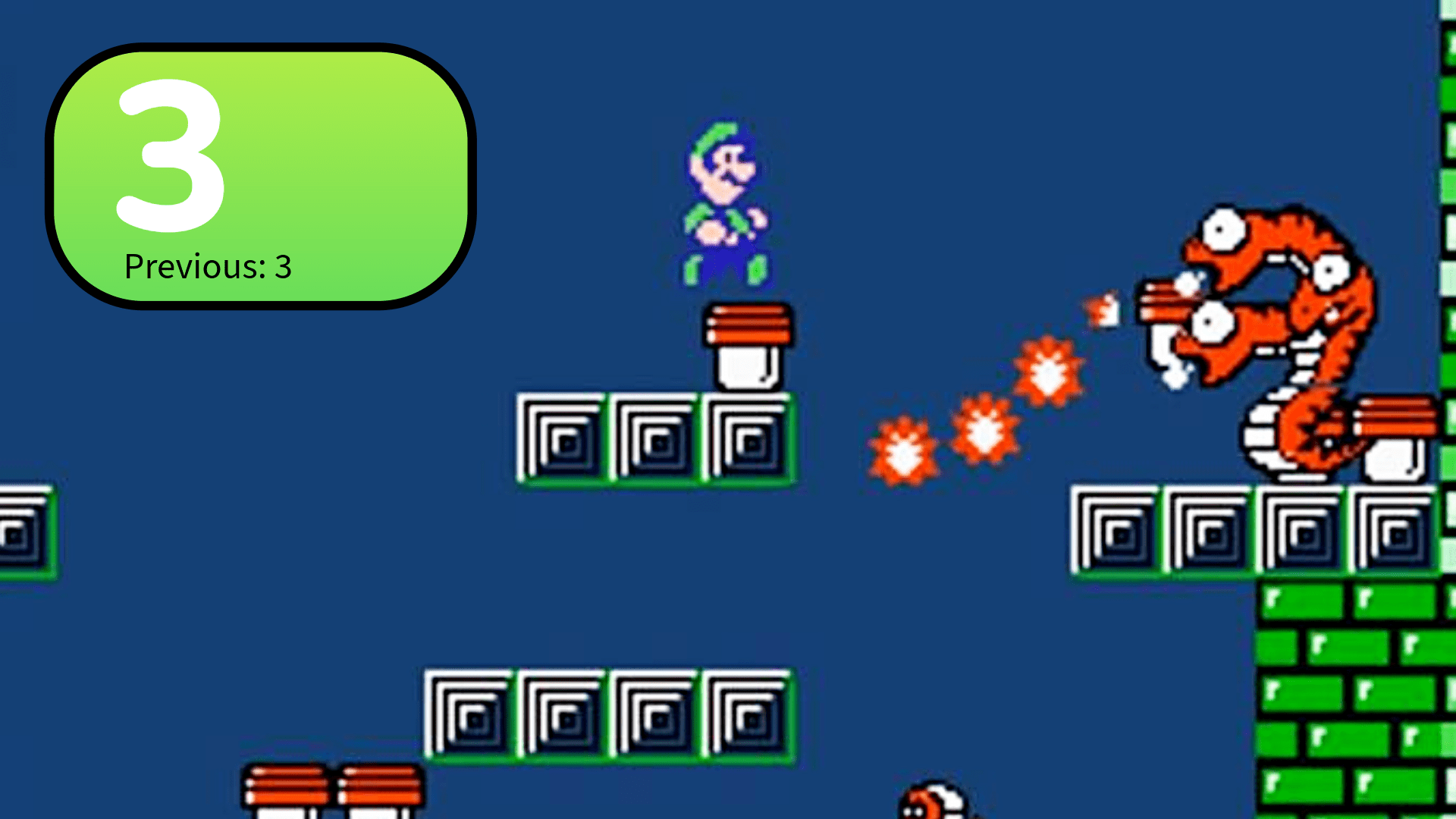
3. Super Mario Bros. 2
Is this the most underrated game of all time? People who downgrade this one are sucking exhaust fumes out of a hose or something. “Super Mario Bros. 2” has everything you could want in a sequel. The soundtrack, visuals, and gameplay are all a delight. It incorporated some of the best things about the first game and added a bunch of really cool new stuff – such as the ability to switch between four unique characters with varying abilities – while making the game easier/more approachable than what was on offer in Japan (ugh), and everyone at the time freaking loved it. If you don’t like it now because you think it’s too weird or is based on a game that isn’t Mario, fine. You can quibble over placement, but I will fight you over this basic point: This game is brilliant. Period.
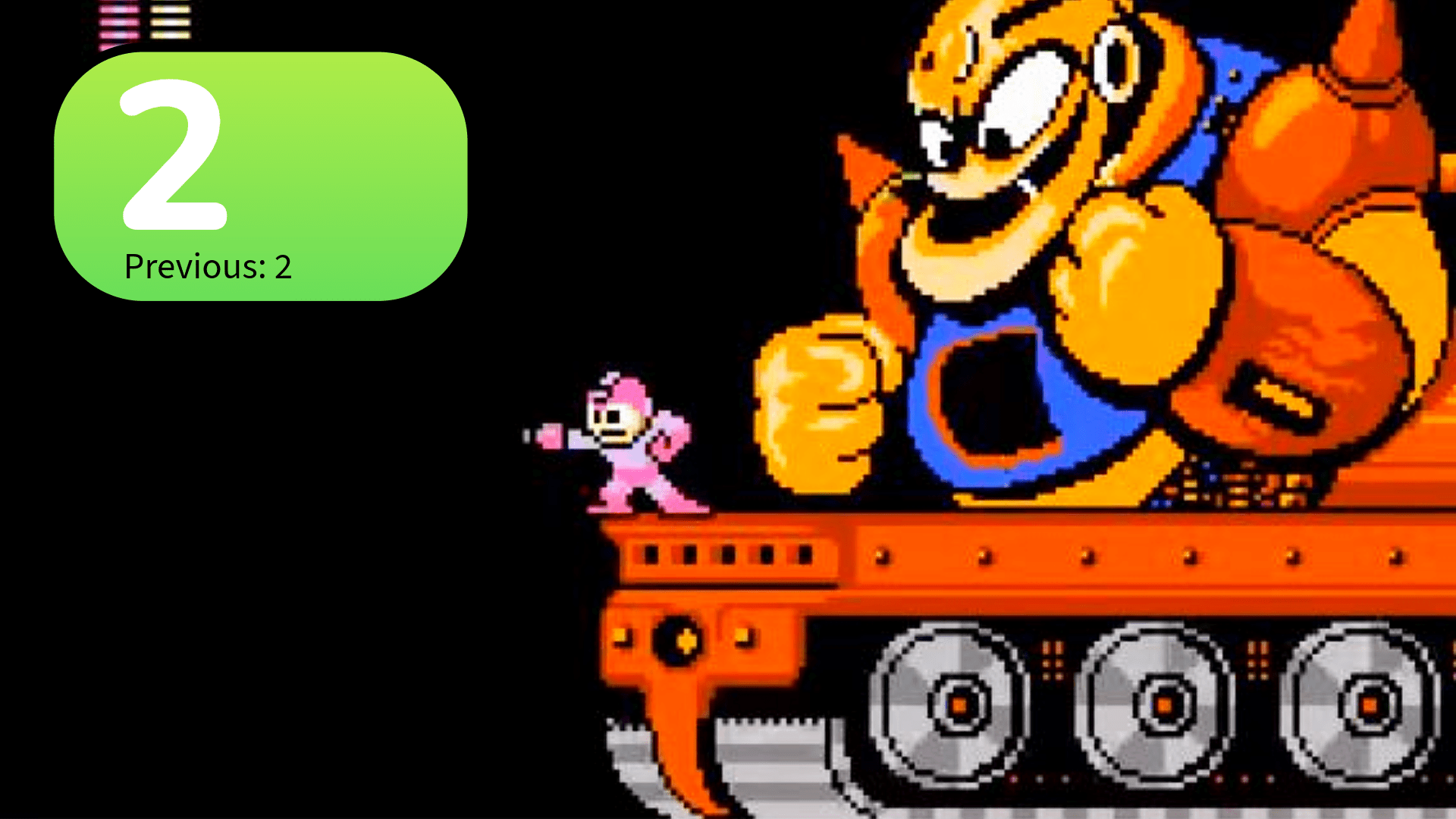
2. Mega Man 2
If any one game convinced me that I HAD to have a Nintendo Entertainment System, it was probably “Mega Man 2.” Oddly, I’d never actually owned the game until I acquired a Mega Man collection disc for the PS2 – nearly 15 years after the fact. But that didn’t stop me from playing it over and over in the early ‘90s by borrowing/trading for it, playing it at friends’ houses, or renting it from the store. To this day I consider this the peak of the Mega Man series, thanks to its balanced gameplay, weapons, bosses, its creative worlds and plot twist at the end, and of course the absolutely killer (and somewhat bonkers) soundtrack … which in my view has an argument in the conversation of best scores of all time.
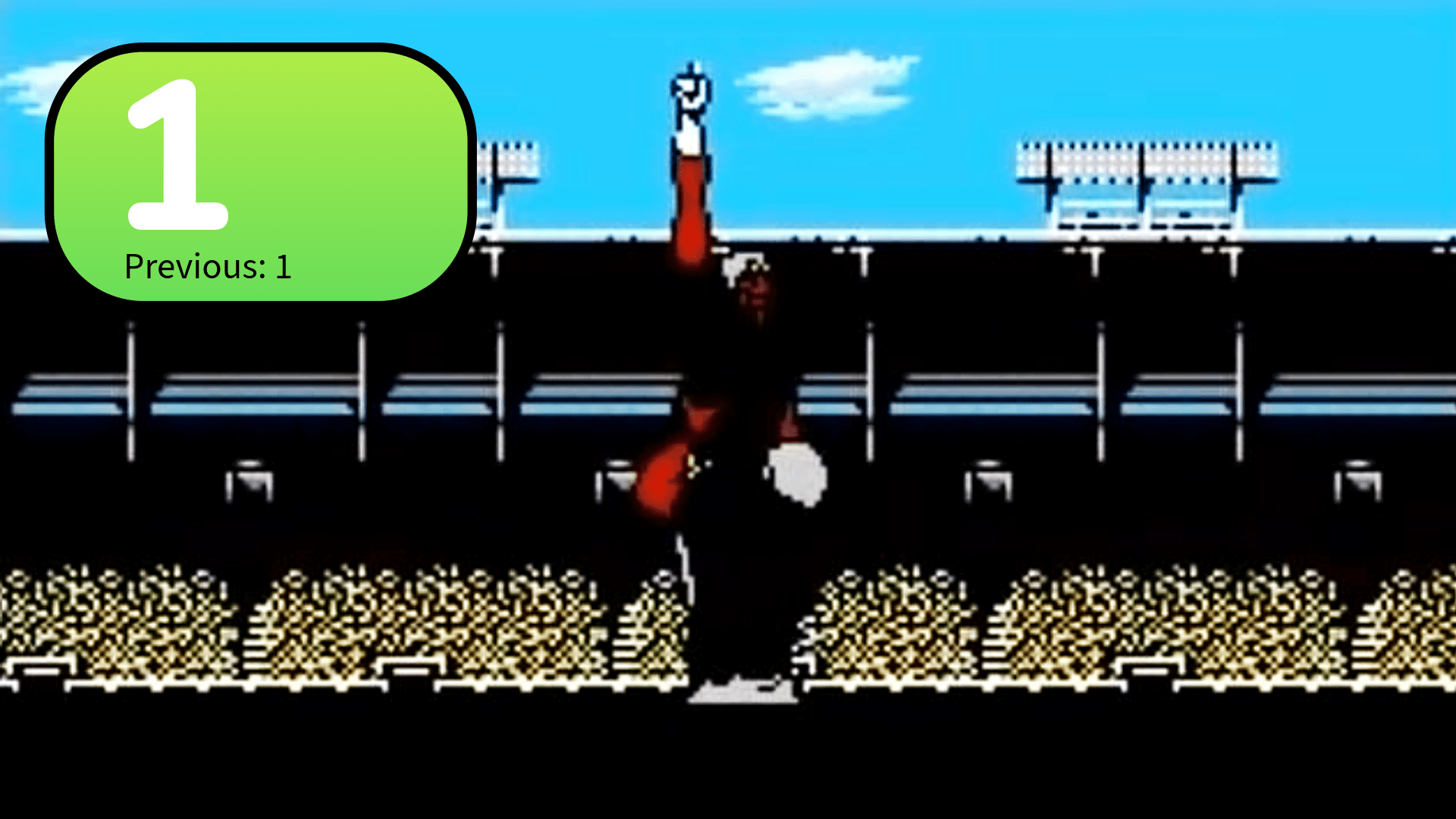
1. Tecmo Super Bowl
What a revelation this was at the time! My brother and I played the SHIT out of this game as kids, and honestly there can be no other choice for my No. 1. The good news here is it’s a pretty deserving choice, widely considered a hugely influential sports game to this day, and in some circles, it remains the top football game in existence on any platform. It improves on the original game in the series by including every position on the field (absurdly, this wasn’t the case before) AND every team, as well as licensed team logos/names, nifty new cut scenes, a proper full season mode, and the god-like figure that was QB Eagles (to pair with previous god-like figure Bo Jackson). People are still modding and playing “Tecmo Super Bowl” to this day, which is just something that doesn’t happen with most sports games. And did I mention QB Eagles? In summation, this game is fabulous, my favorite game on the system, and in contention for my favorite game ever.
Whew, we’re done!
Ready to get angry with me all over again?
Reminder that you can check out my Retro Gaming Essentials countdown too.